
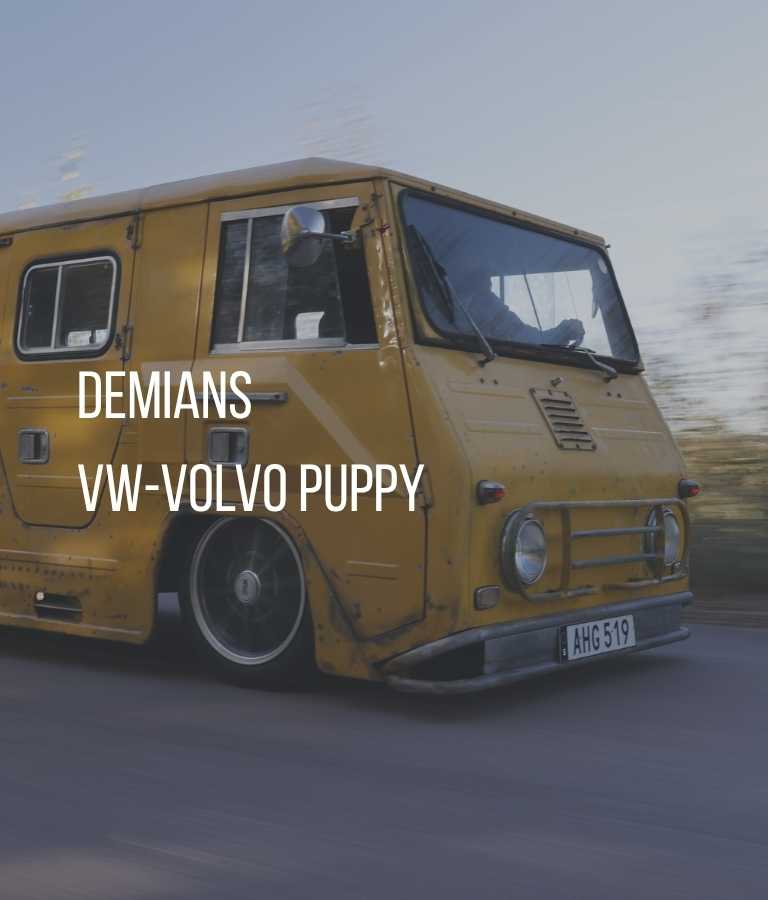
DEmians vw Volvo - Laplander Puppy
"This is completely idiotic" - Demian
- by Peter Edenberg 2026-04-07
When I did my military service, 10 months at Väddö Firing Range in 1995, out in the Stockholm archipelago, the Volvo Valp was one of our daily vehicles. We drove it around in the forests, across the meadows, and into the small town to buy beer, snacks, and other unhealthy things we could indulge in while the summer heat washed over us.
When I drove it, it felt like it would tip forward onto its nose if I braked too hard, just like our own puppy did when he tripped over his big ears. Rough, bouncy, and uncomfortable, it pushed its way over anything, and it felt like a full-time job just to drive it.
If it wasn’t a muddy forest trail we didn’t really need to take to get to lunch, it was a meadow full of sticky ditches we forced our way through. Everywhere we went, we drove the Valp with joy, always making sure everyone in the car had to hold on tight, because more often than not, we weren’t exactly traveling on regular roads.
And the day the captain told us to improve the paint on the old ’70s vehicle, we simply grabbed regular house paint, a couple of rough brushes, and filled in the camouflage colors on the car. Were the lines straight? No. Did we blend into the forest? We didn’t care, because we were too busy trying to get over muddy stumps that gave us hell.
Since then, the Valp has always held a special place in my heart.
The Valp “puppy” – the vehicle
In the late 1950s, the Swedish military ordered an off-road vehicle from Volvo. After several prototypes in 1959, Volvo began production of the Volvo L3314 in 1962. But the nickname “Valp” was already given during the prototype stage. Valp simply means “puppy” in Swedish.
The vehicle has a somewhat puppy-like appearance with its large off-road wheels and short wheelbase. Volvo didn’t only build military Valps but also produced some civilian versions. In total, around 10,000 units were built before production ended in 1970.
However, the demand for a small off-road vehicle remained, so Volvo restarted production in 1977 with an updated version of the Valp. The new name was C202. The body was largely the same, but with a different front end and new door handles.
Volvo stopped building this version, and the Valp overall, in 1981, producing 3,222 units during this final run.
THIS PUPPY IS NOT FOR THE WOODS
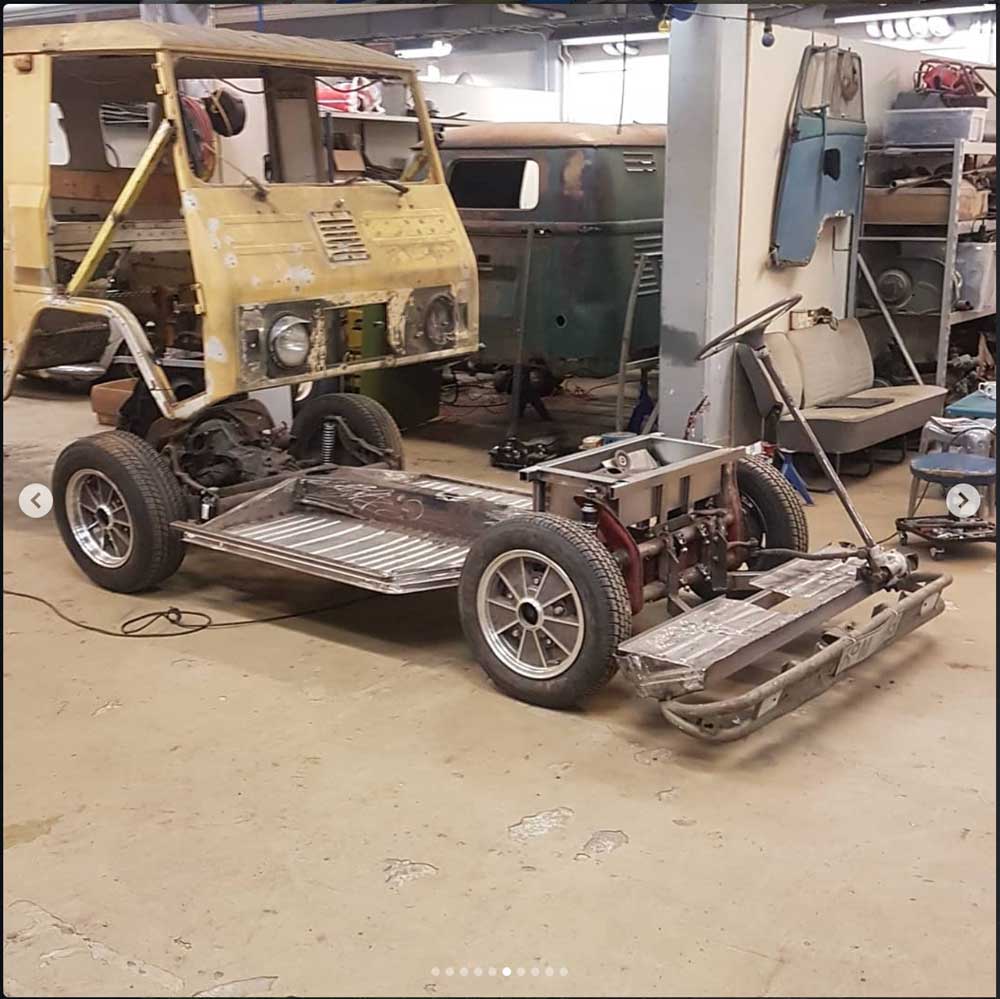
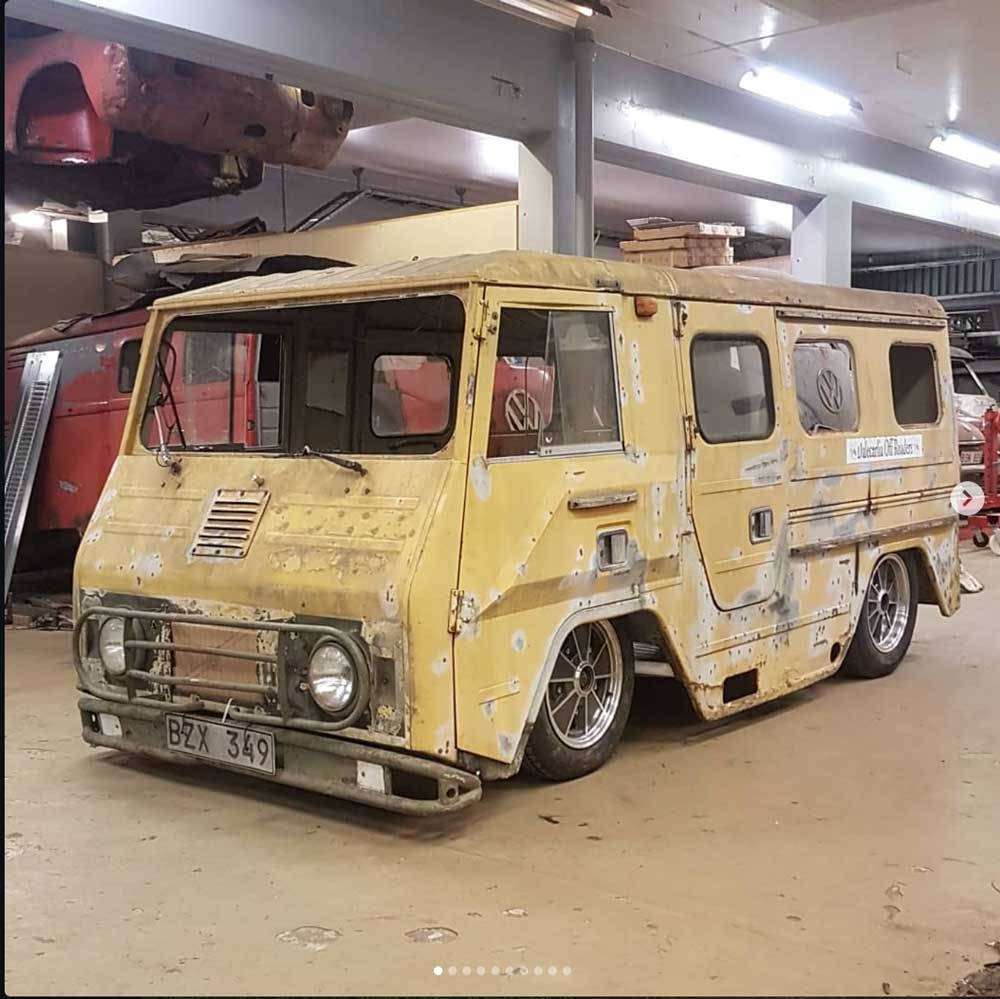
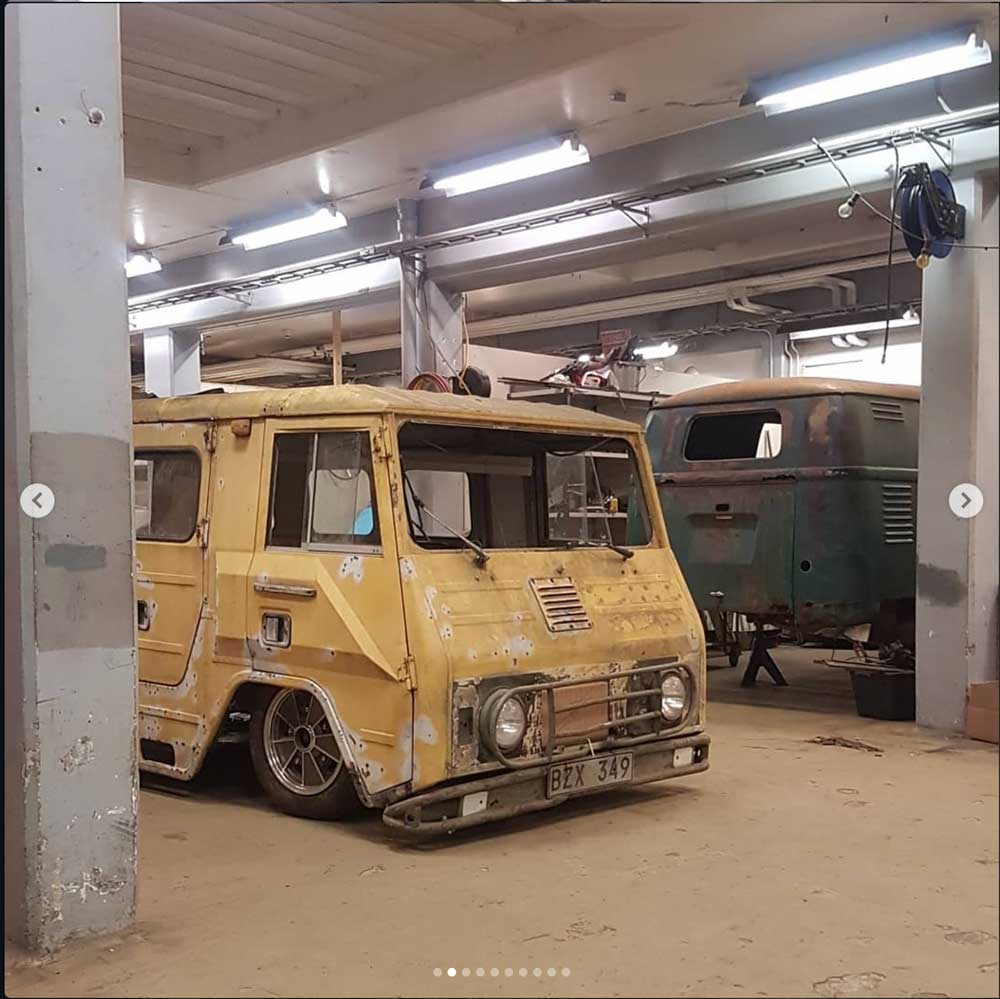
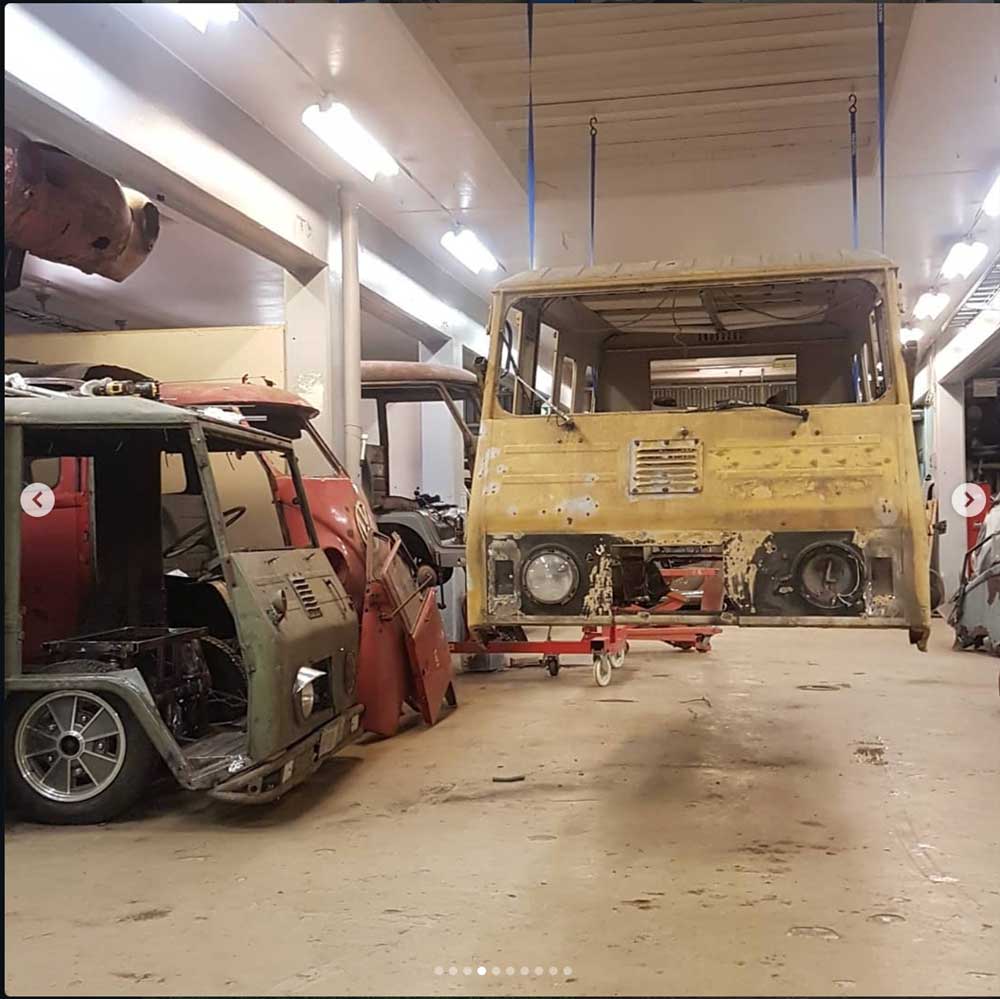
Then came the day when Demian posted pictures of his yellow Valp build in February 2019.
Time almost stood still as I sat looking at the ten images of the Volvo body, like a cat among ermine in their VW garage just outside Borlänge in Sweden.
In the first photos, the body is actually sitting on a chassis, and there’s a lot of empty space around the wheels, but the whole setup still made my jaw drop.
A few images later, the body is hanging from the ceiling, looking battered. One headlight and the grille are missing from the yellow, boxy shell, its paint faded by the sun with patches of rust showing through. In the background, you can see the rear ends of several VW buses.
In the next photo, a fresh Beetle chassis has been rolled partially underneath the body.
Six years later, it’s on the road
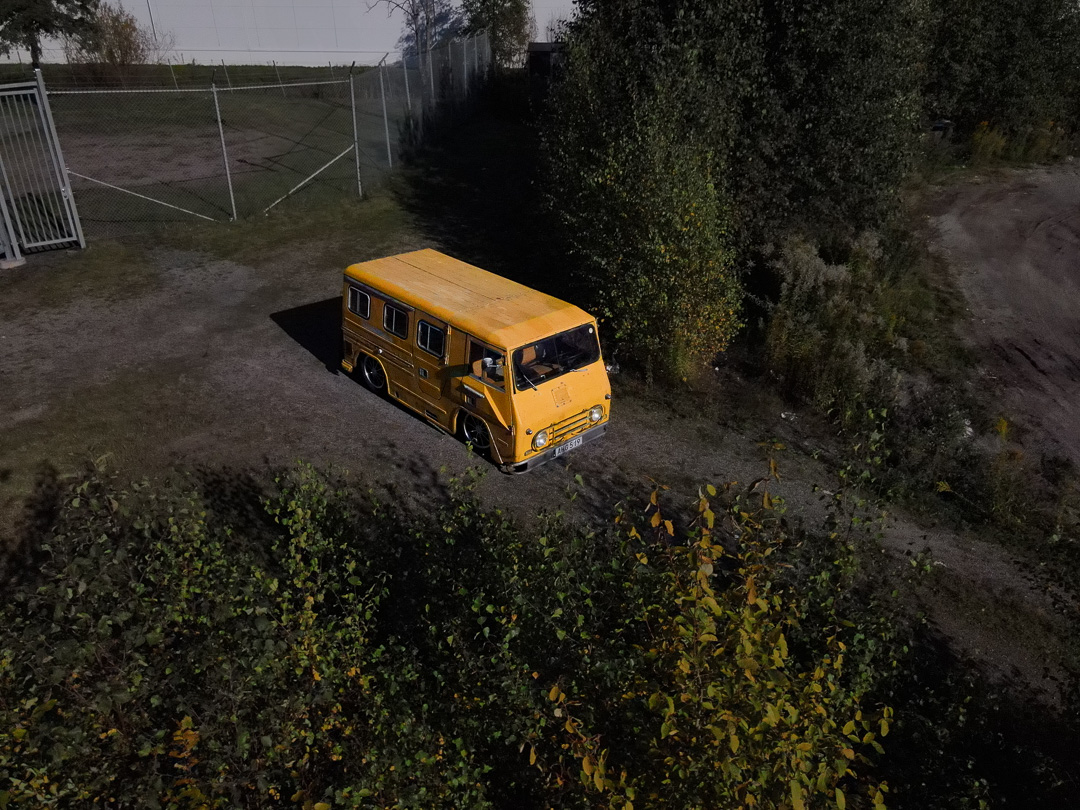
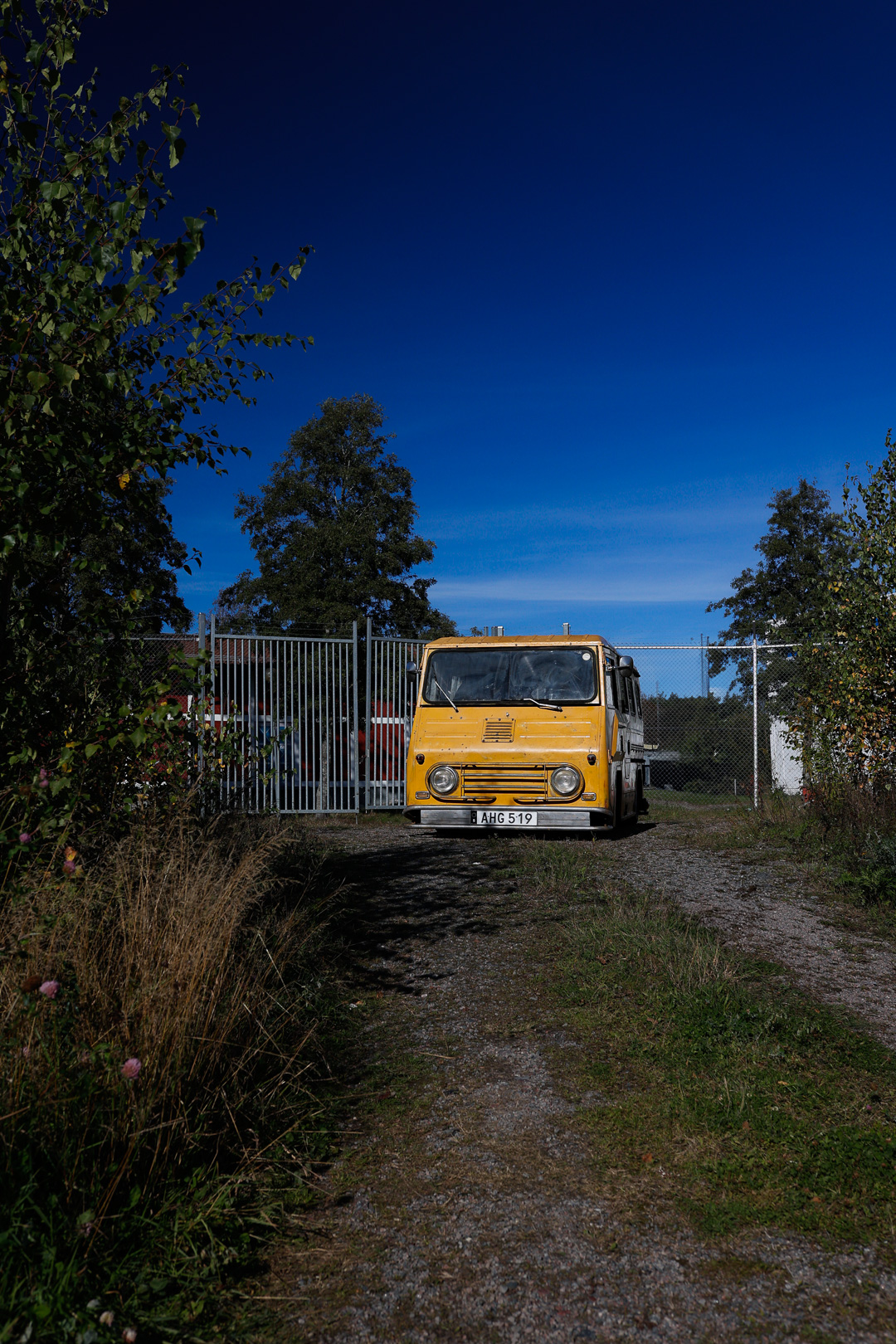
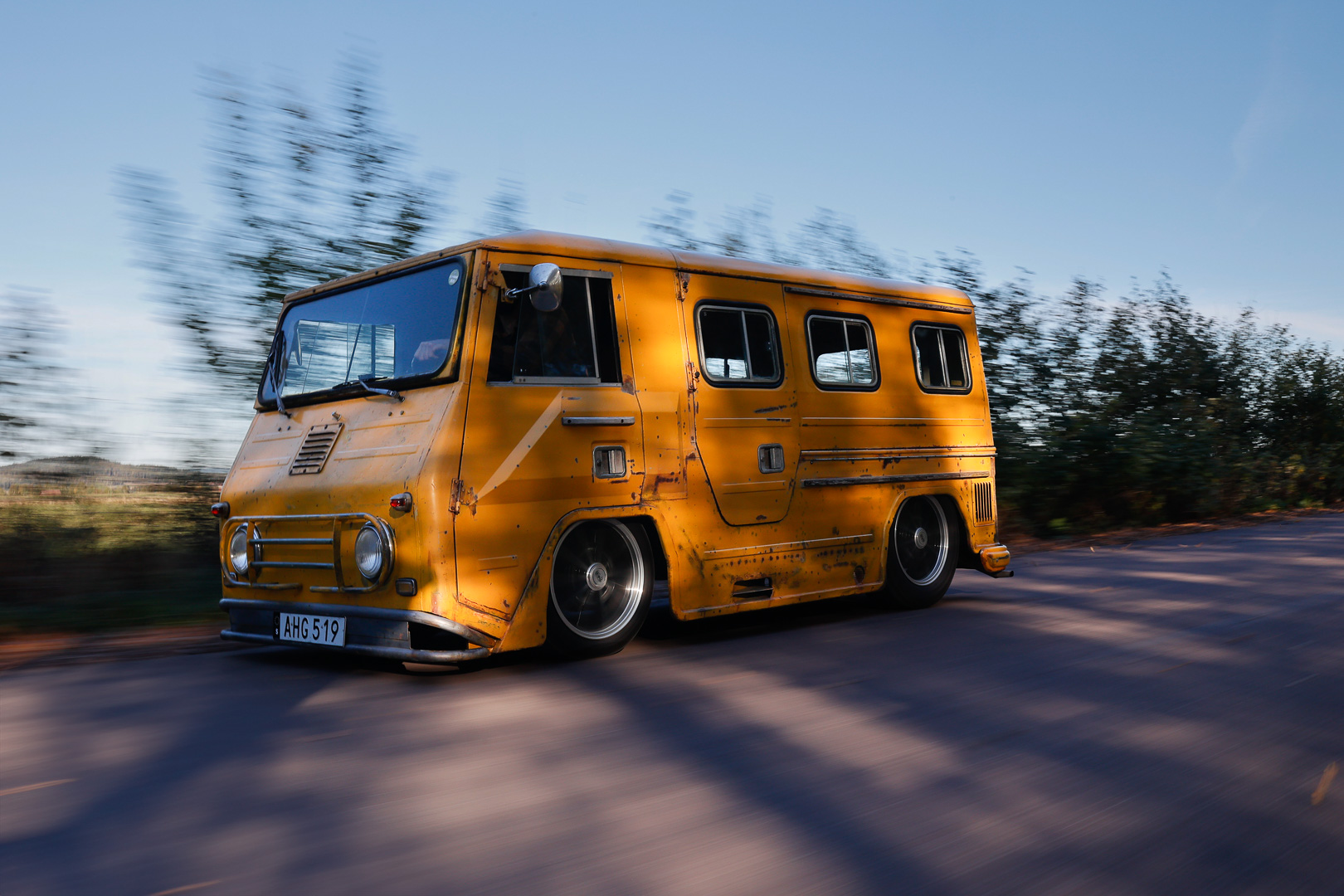
This is, without a doubt, one of the coolest builds I’ve ever seen. After six years, in the autumn of 2025, we finally meet to see the finished result.
The dream, as stated in the Instagram post back in 2019, was to drive down to the biggest VW-meet in Europe - the Le Bug Show on the racetrack SPA in Belgium - with the Valp. That summer back in 2019 , however, Demian did not make it to Belgium in a slammed Volvo Valp.
“It’s pure madness to build something like this, this is complitly idiotic.” Demian blurts out just ten minutes after we meet at his place.
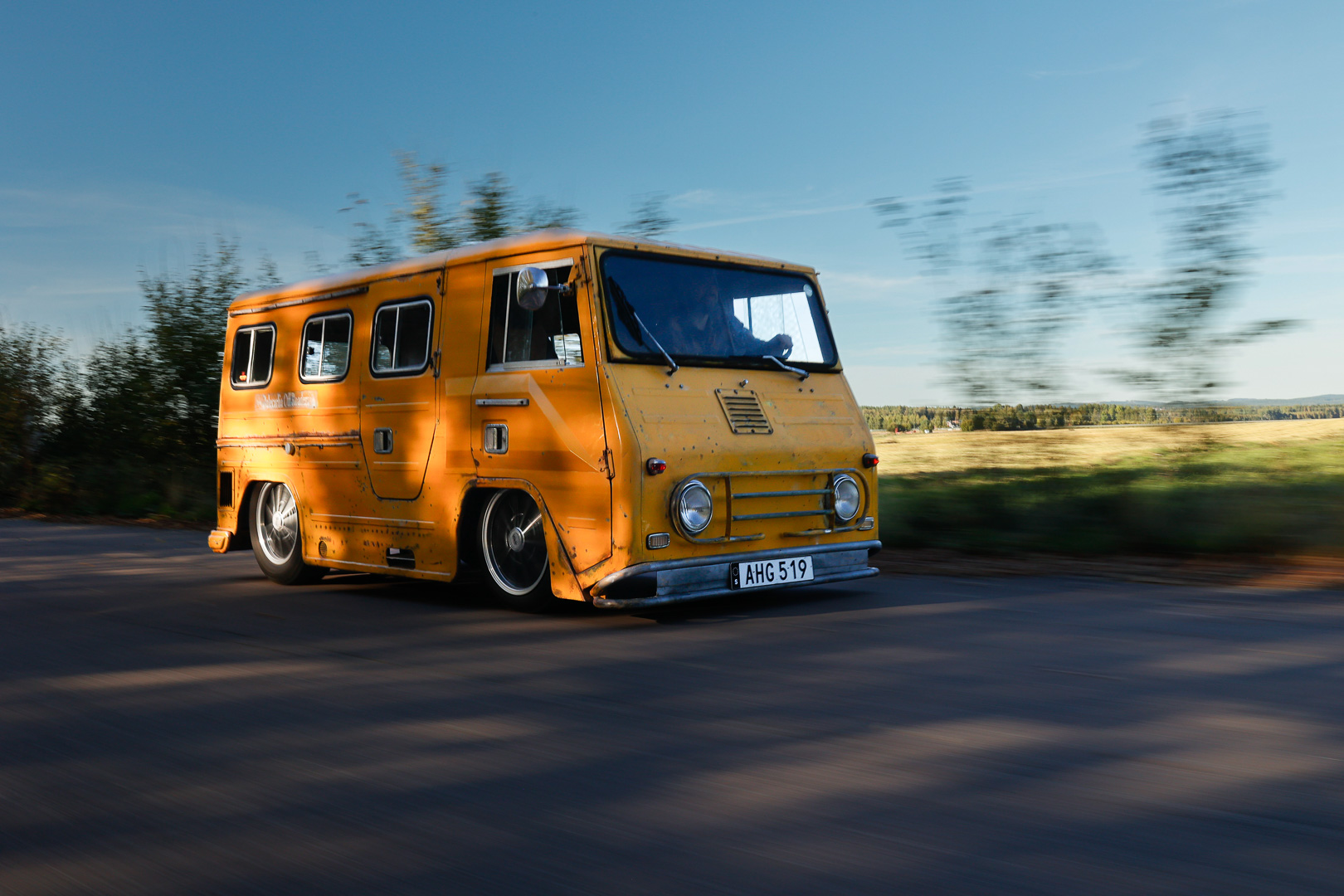
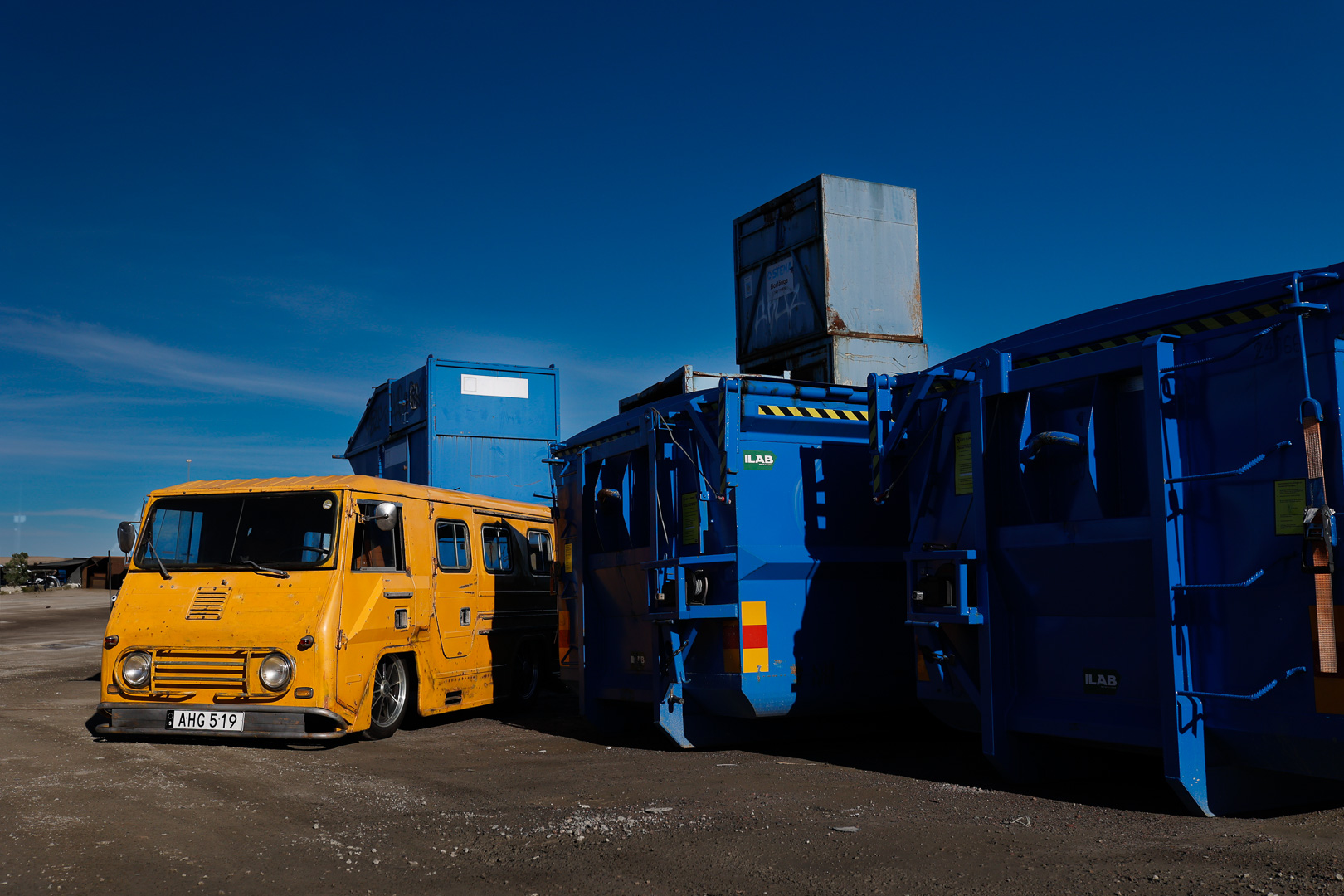
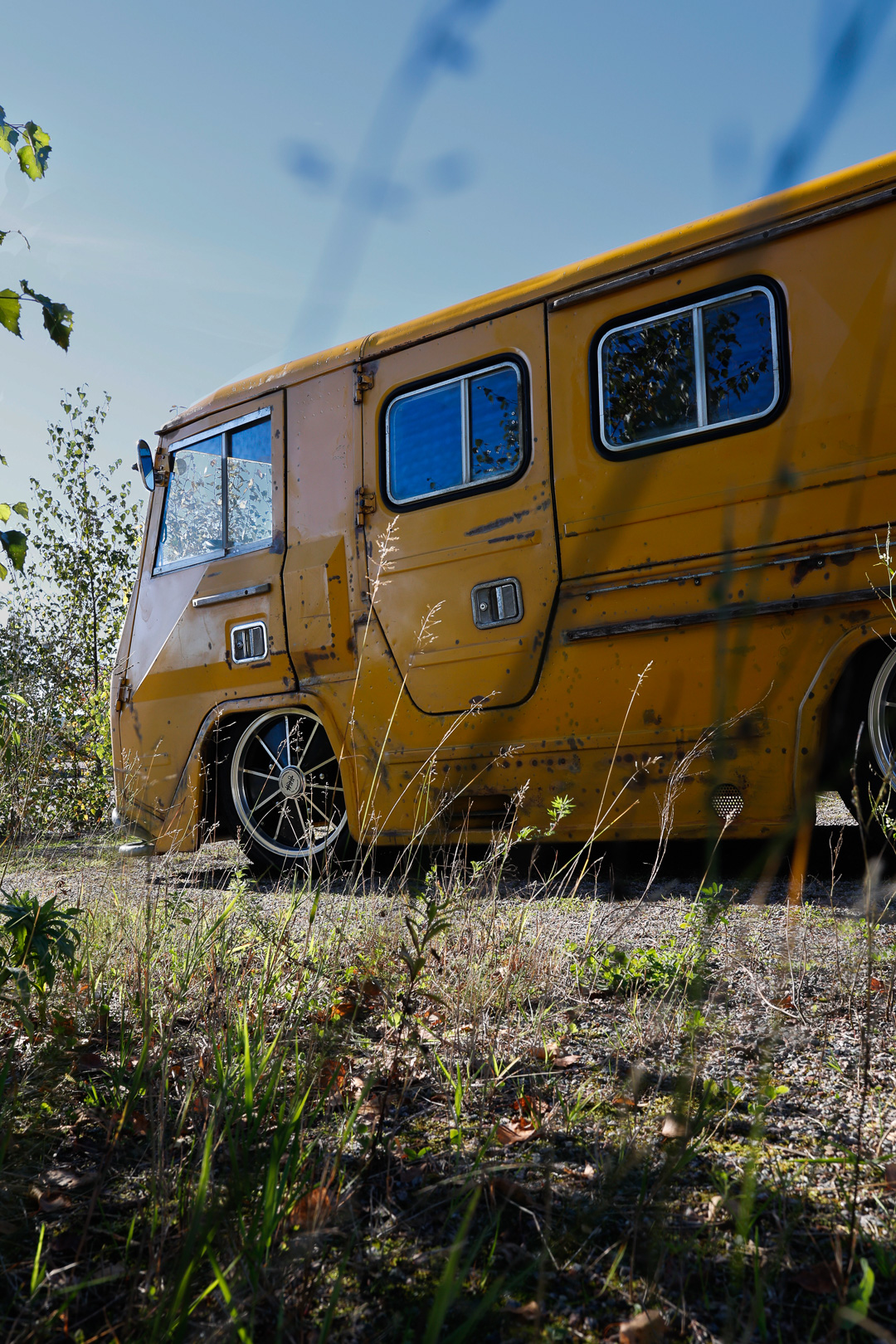
The Valp’s towering ground clearance has been flattened and slammed down to lawn-level height.
This yellow box would have made it exactly two meters on our muddy forest roads at Väddö Firing Range.
So cool.
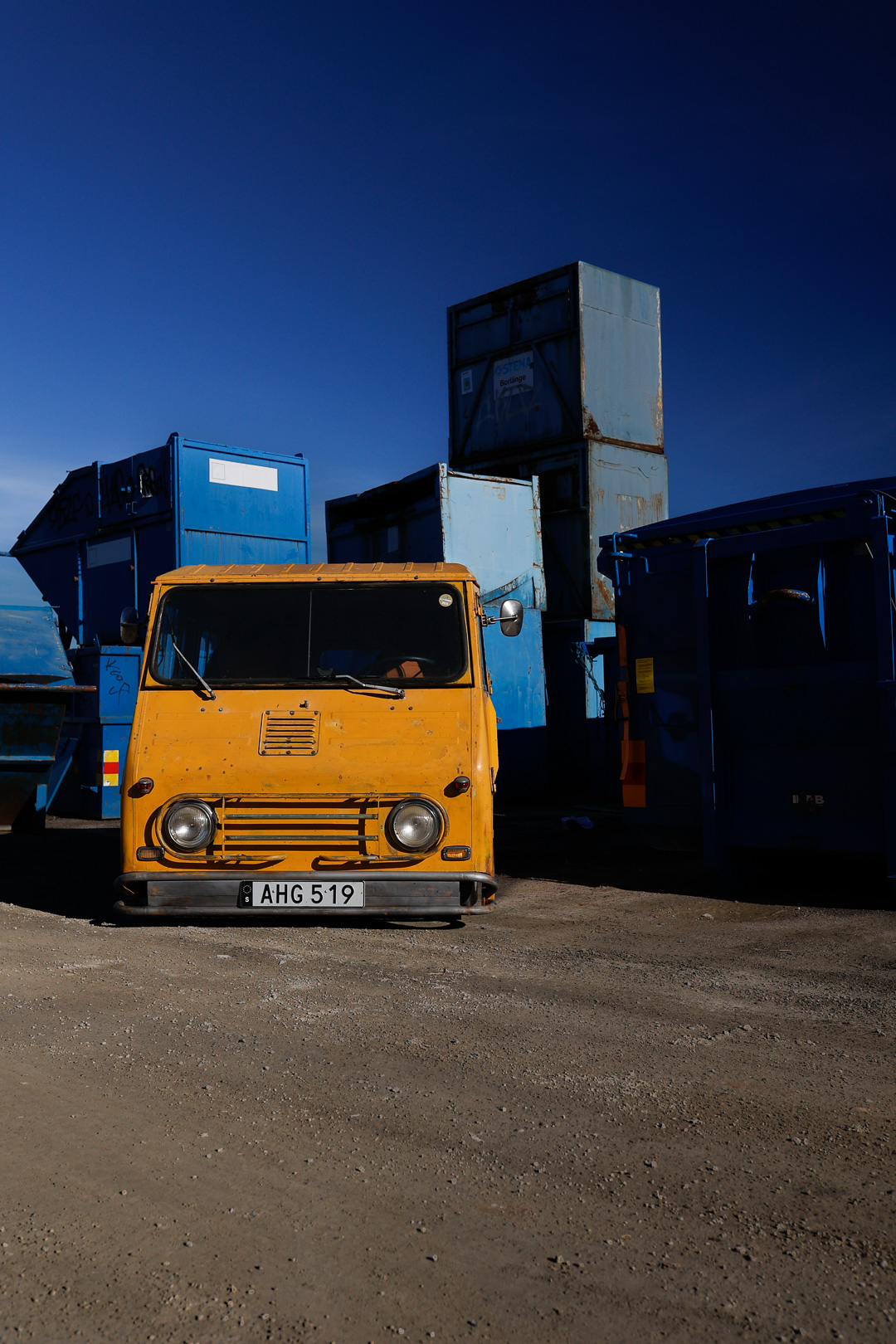
It’s hard to fully grasp just how good-looking and different this car actually is as we stand there talking.
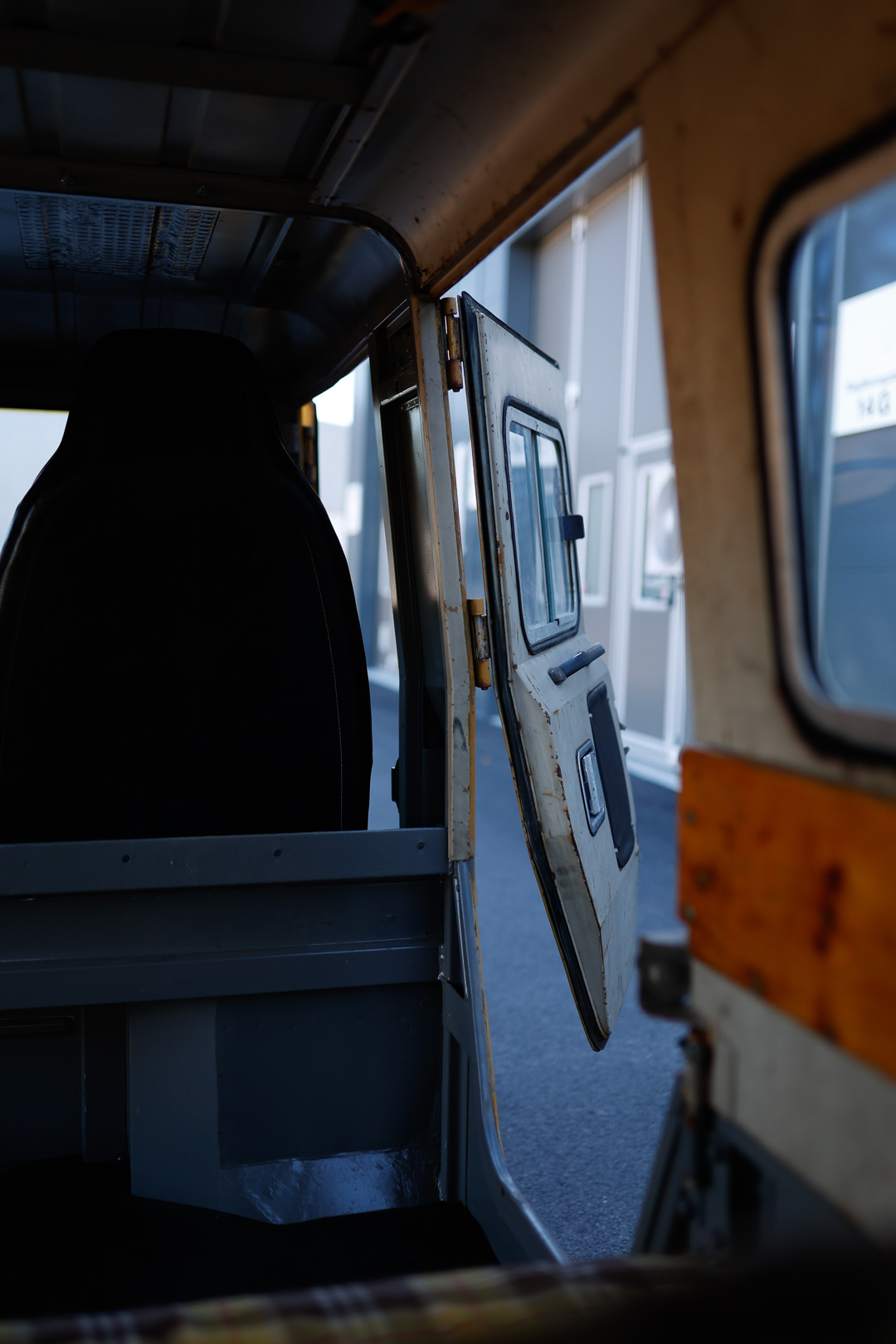
The doors are flung open, not gullwing-style but more like bread-hatch doors, standing wide open.
Your brain can see that it’s a Valp, but it feels like it’s AI-generated—in every possible way.
That becomes even clearer when Demian starts explaining what he’s done, because he’s worked on every single centimeter of this car—body, chassis, suspension, brakes, steering—you name it, he’s been there, building or modifying.
“I got a rusty 1967 Beetle chassis from my friend Artur, and since the Volvo has a wheelbase that’s 30 centimeters shorter, it was just a matter of starting to modify it,” Demian explains.
The fact that a vehicle as large as the original Valp actually has a shorter wheelbase than a Beetle is an illusion in itself.
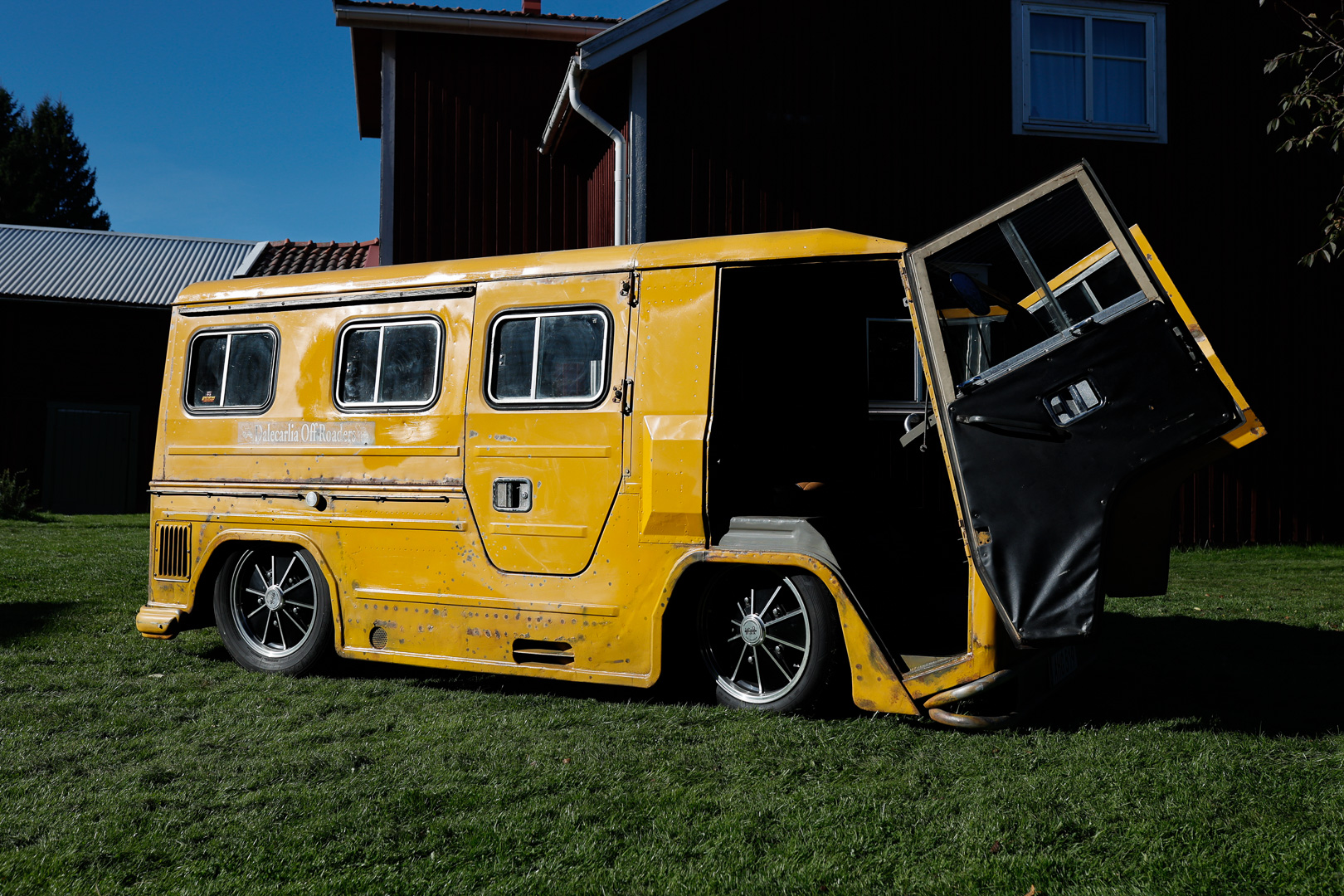
“Then I had to decide how much I should drop the body over the chassis. I wanted straight rear wheels, so the chassis is almost at its original height.
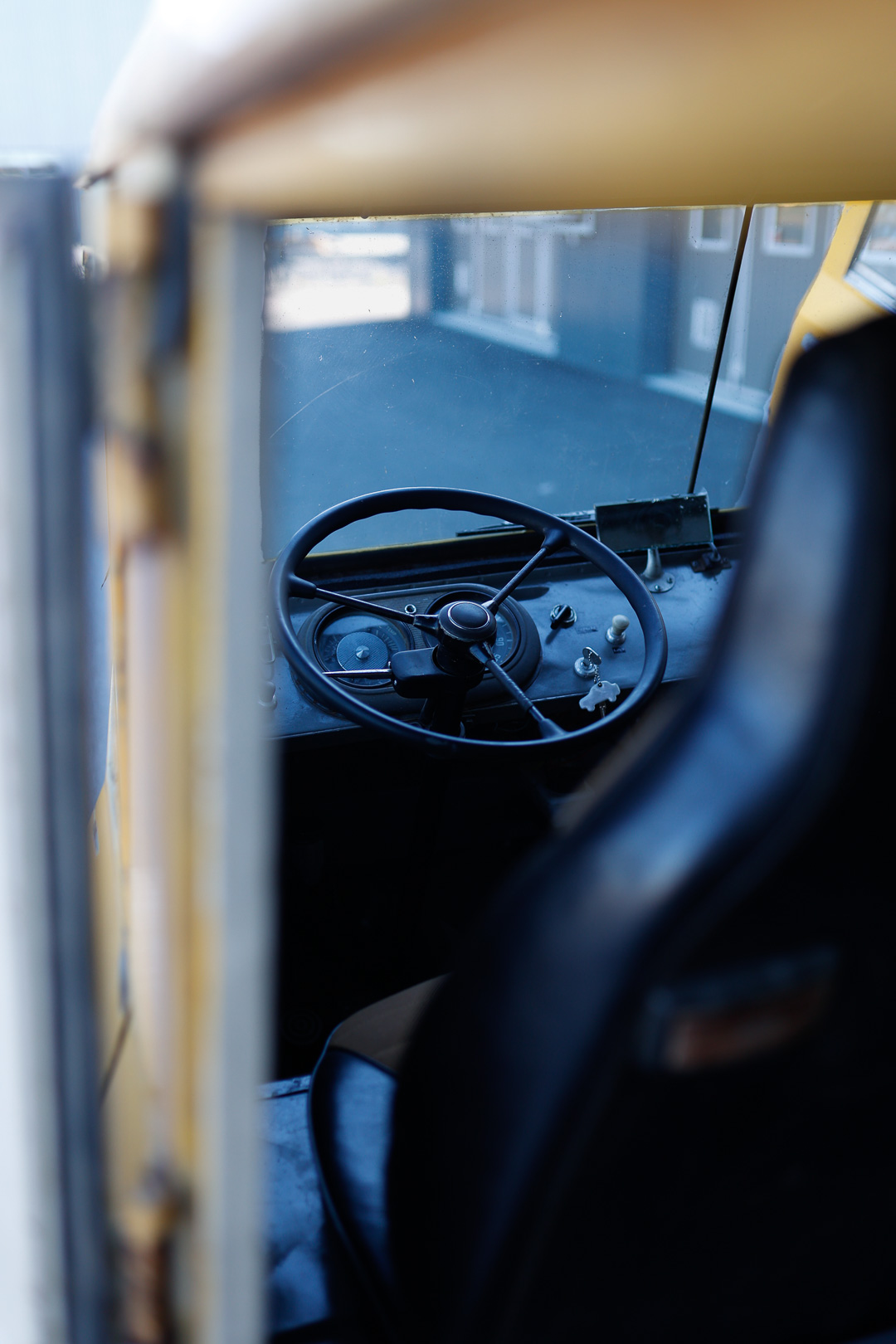
After that, I had to figure out how to move the steering wheel to the front of the front axle. I decided on a barndoor-style steering setup. My friend Franke helped me with that work, and it became a mix of Beetle and Bay Window parts.
It sounds simple, but I think I spent around 100 hours just figuring out the solution and building it.”
It turned out, however, that the Volvo body was too heavy for the Beetle’s torsion suspension, so Demian installed coilovers from the rear of a Golf Mk1 at the front, and in the rear he fitted gas-charged coilovers from an American snowmobile.
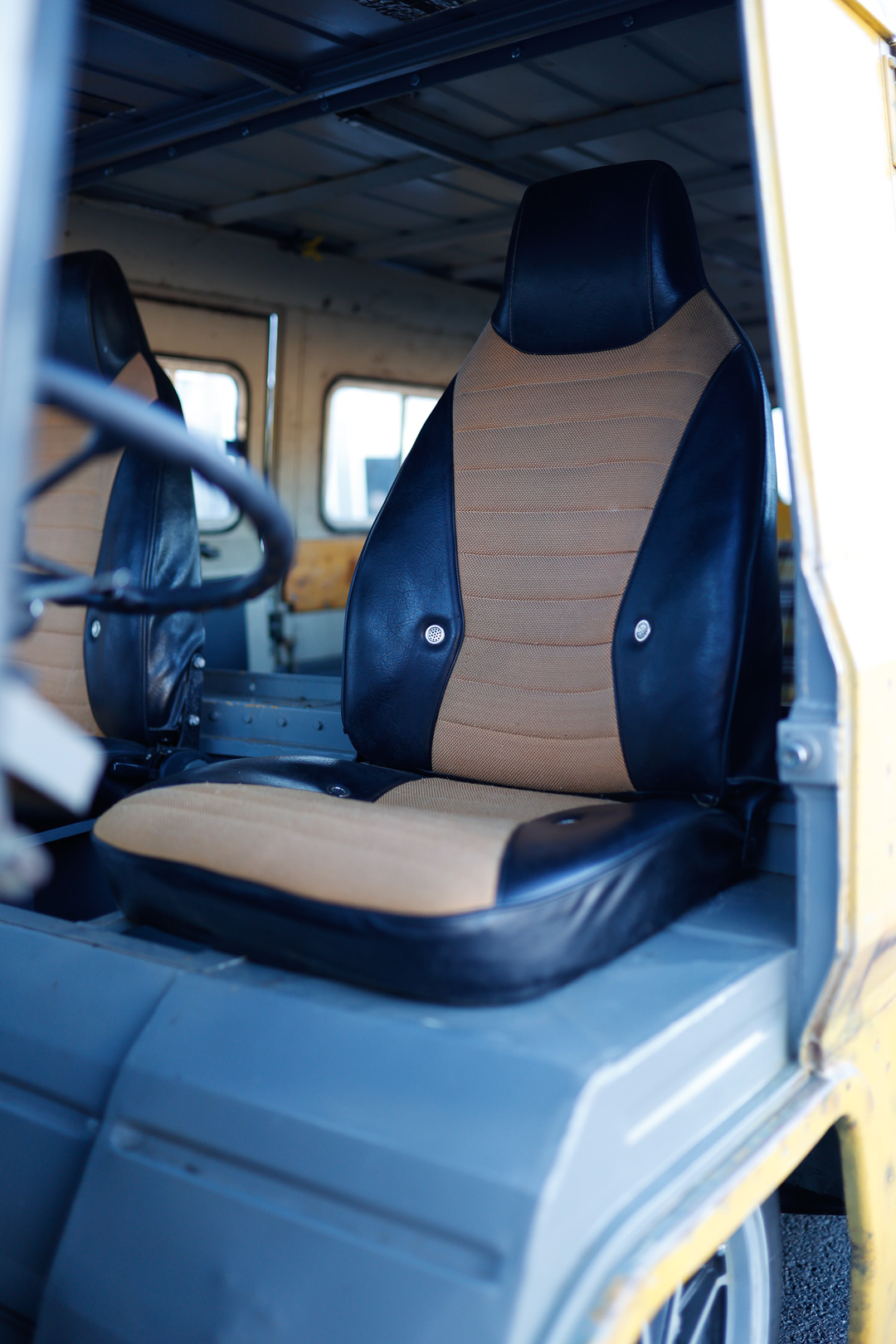
The fuel tank comes from a Type 3, and the front seats are taken from a Datsun 240Z. The rear seat comes from a VW T3 Double Cab.

But how did this whole journey begin?
Demian was on his way home from work in Gothenburg in 2016, a five-hour drive, when he ended up behind a Valp. That’s when the “what if” thoughts started spinning—and according to Demian himself, that’s where the journey toward this so-called idiotic build began.
“When I was a kid, a plumber in my village had a really cool car. I was just as fascinated by it as I was by the VW Splitbus and the Porsche 911. It was a Volvo Valp—or Laplander, as it’s called outside Sweden.
I looked for a Volvo Valp for a long time but never took the step to buy one, and the deeper I got into the VW air-cooled scene, the more the thought of owning one faded away.”
It’s also worth adding that Demian is well known within the VW world, where he has been involved for many years. If you mention his name at a VW meet, there’s a very high chance people will know exactly who he is.
A week later, Demian met his friend Johan and shared his “what if” thoughts about the Valp. A few weeks after that, Johan sent over a rough Photoshop sketch of a slammed Volvo Valp—more than enough to anchor the idea firmly in Demian’s mind.
That same evening, Demian started Googling Volvo Valp so intensely it felt like the internet in his house was about to overheat—until a good friend reached out and asked, “What are you up to?”
Within ten minutes, that friend had connected Demian with a seller, and just like that, he had his first Valp body for €150.
A scraping sound you never get used to
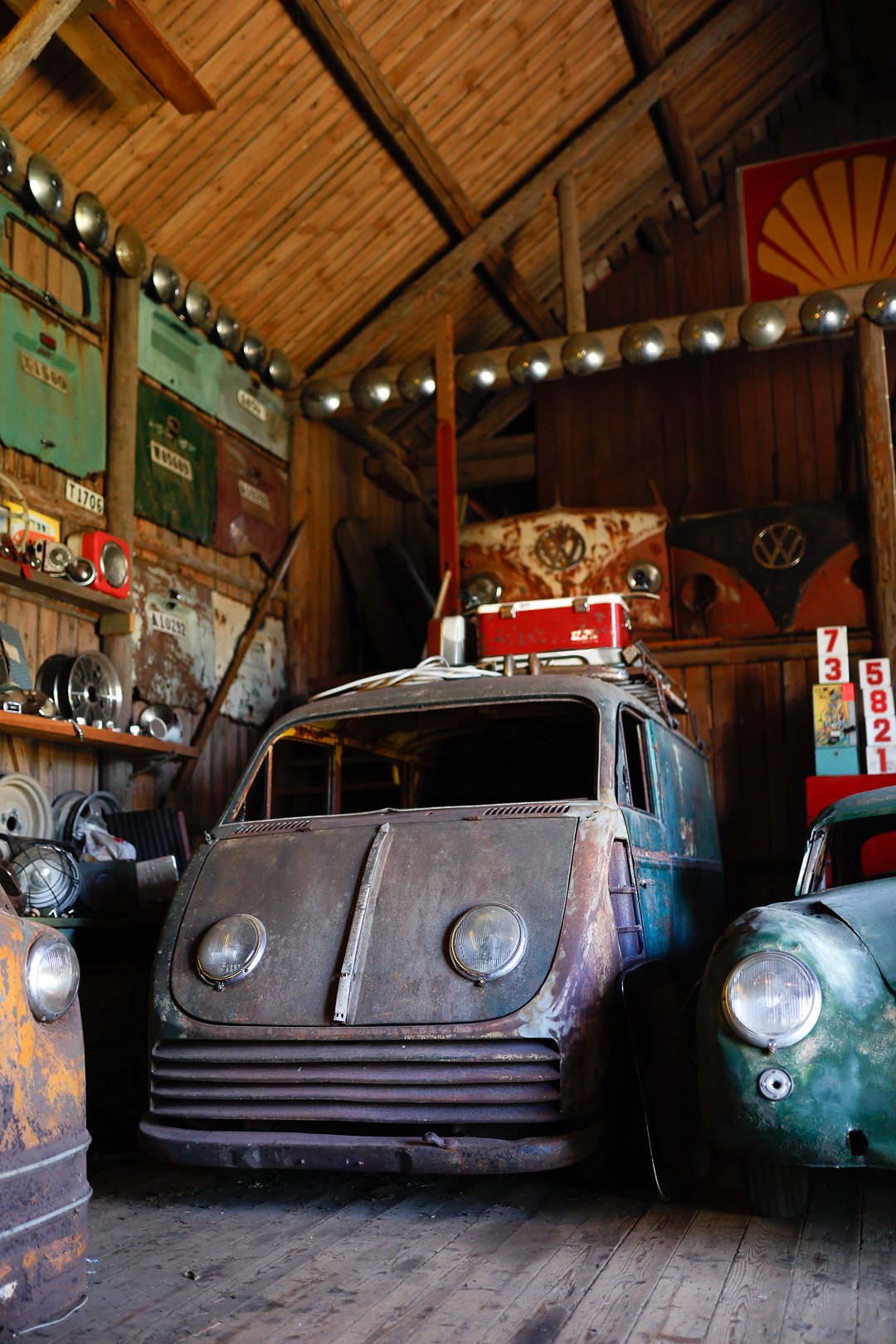
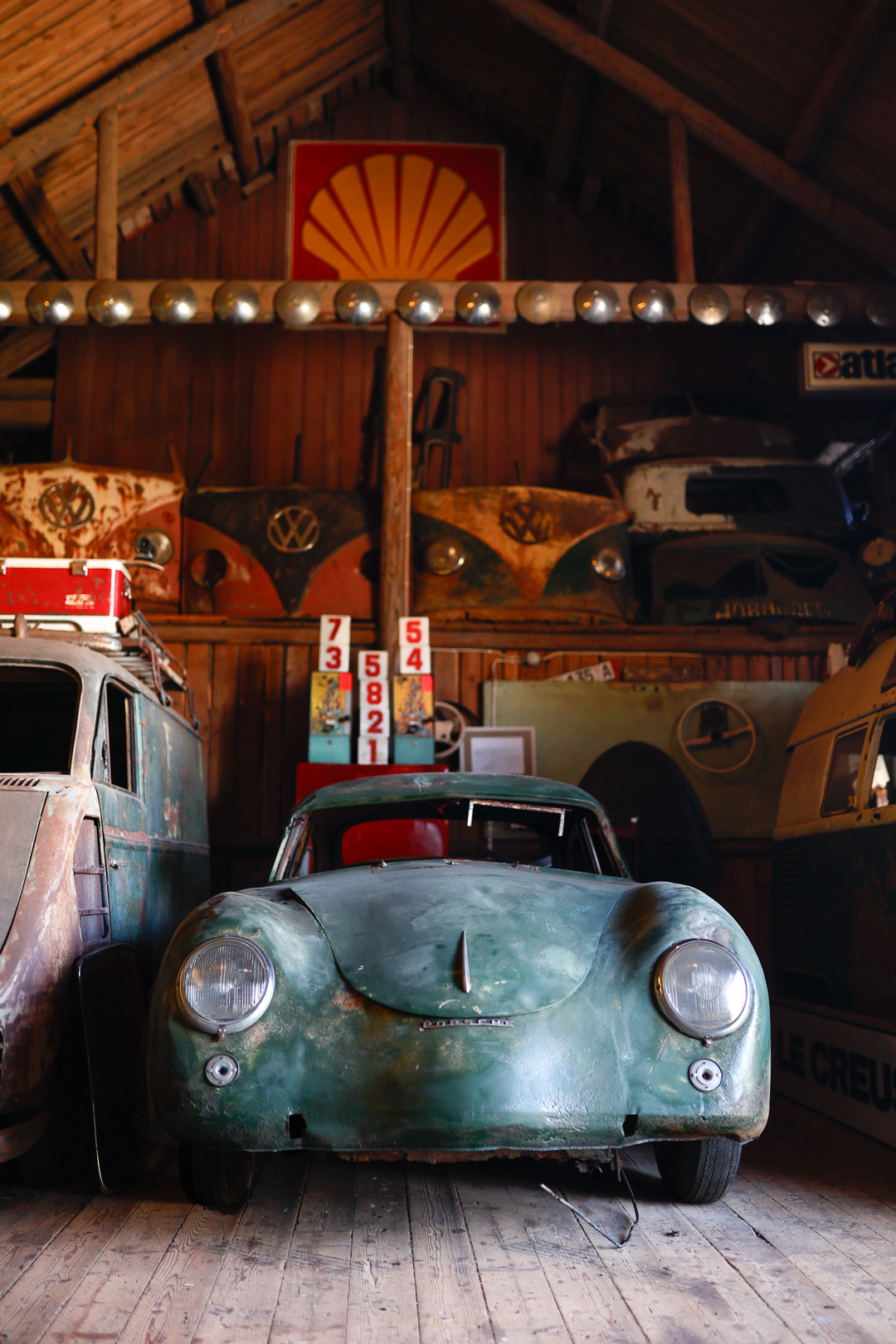
After walking around and carefully inspecting the car, as well as all the barns and garages on his property, we get into the Valp. I’m fascinated by the fact that he’s something of a VW project millionaire—there are cars everywhere you look, and every single one is the kind the VW community drools over.
The seat is a bit stiff, and the crumple zone in this car—just like in any VW bus—is basically a sheet of metal about a centimeter thick and a small dashboard. A large snus pouch would probably work as the best airbag in this car.
The engine fires up, and the classic VW sound fills the boxy cabin.
The sun is shining as we slowly roll across the lawn toward the gravel driveway leading out to the main road. After just 30 meters, the front end scrapes, and I’m convinced something is about to break—Demian doesn’t seem bothered at all.
Throughout the entire drive, there are bangs and scrapes here and there as we hit uneven surfaces, bumps, and obstacles. Every time, it sends a shock through my spine—because a car isn’t supposed to sound like that when you’re driving. But in a slammed VWolvo, it’s completely natural.
But did it go according to plan?
Once he got hold of the body in 2016, the idea was to run a two-week “Monster Garage” build, gather all his friends, create the coolest Valp Sweden had ever seen, and then haul it on a trailer to a Swedish Volkswagen show.
But it wasn’t as easy as Demian first thought. He quickly realized the project would probably take the entire winter to complete, especially since he had other builds going on at the same time.
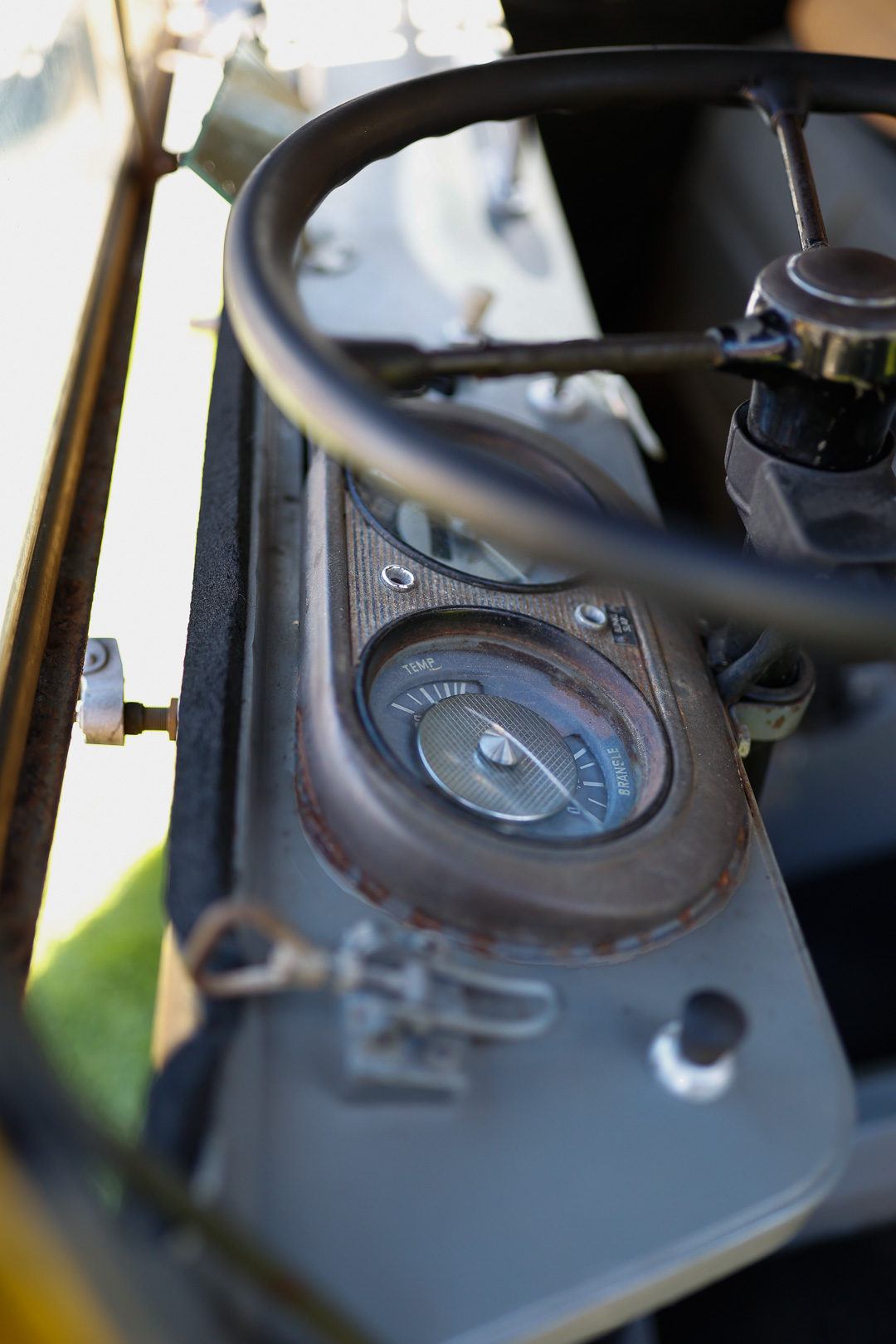
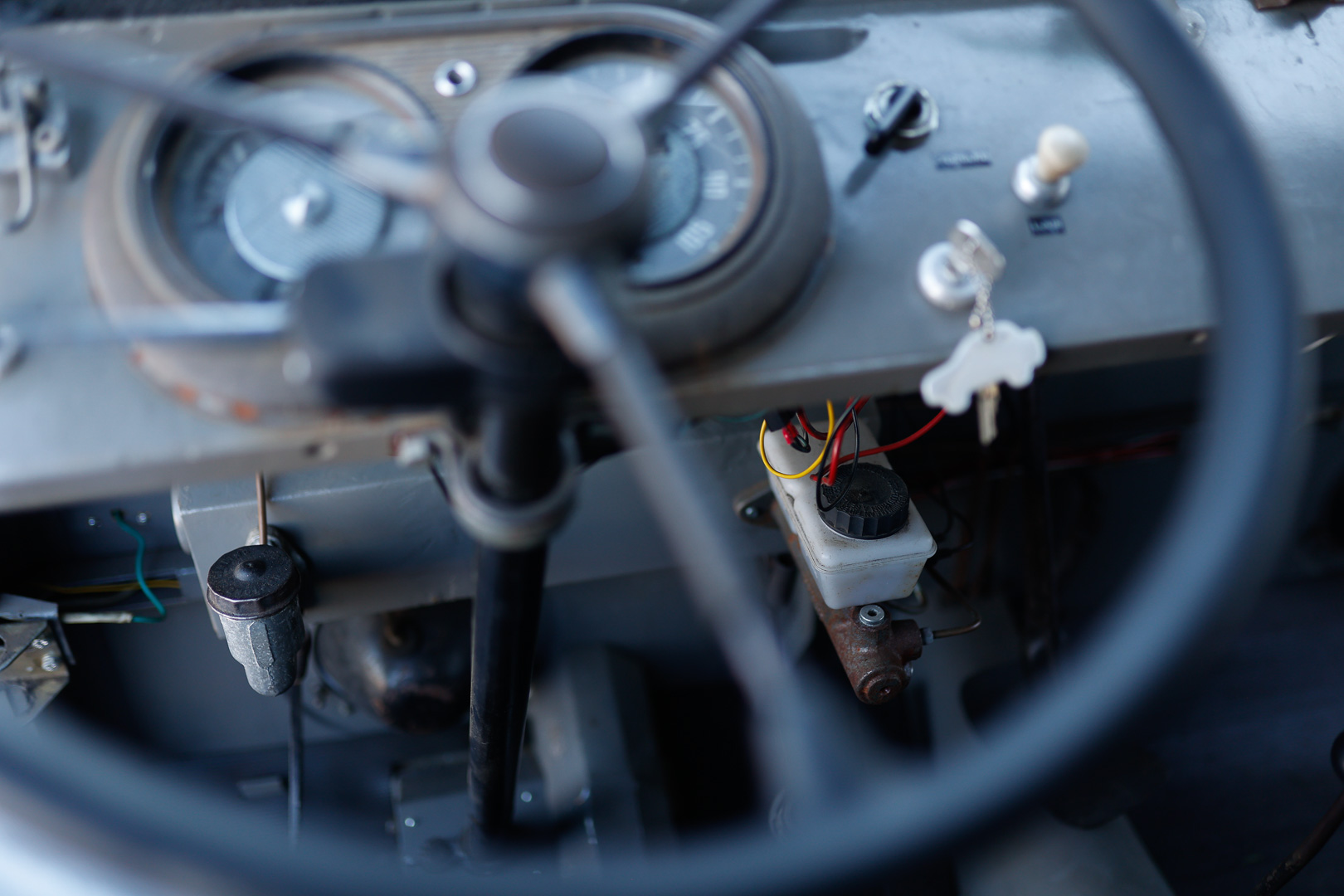
At first, Demian tried to keep as much of the Volvo’s interior as possible, but he soon realized that wasn’t feasible either. Not even the inner wheel arches were usable for this build. As mentioned, he rebuilt everything—the front floor, gas pedal, handbrake, steering, and gear stick.
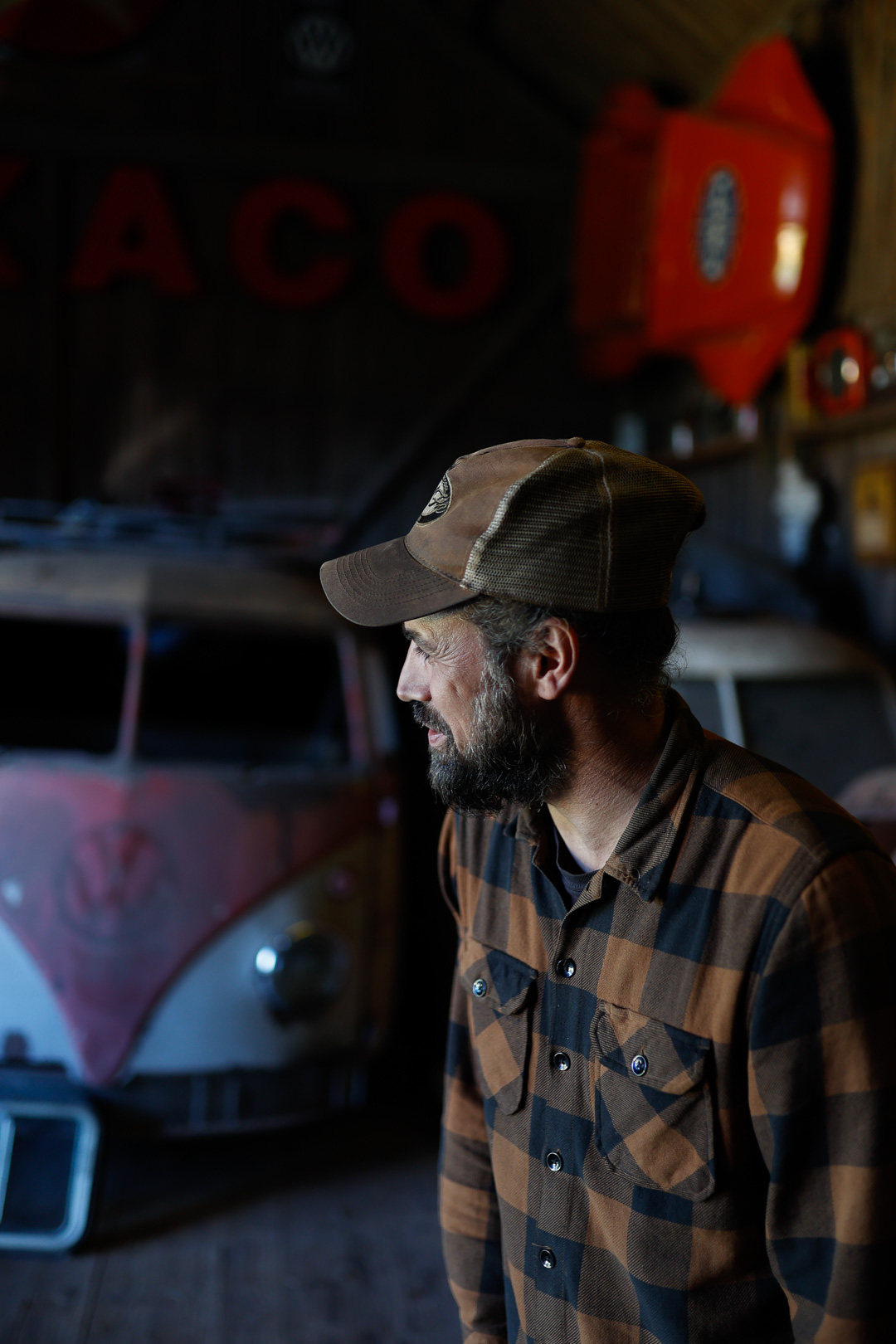
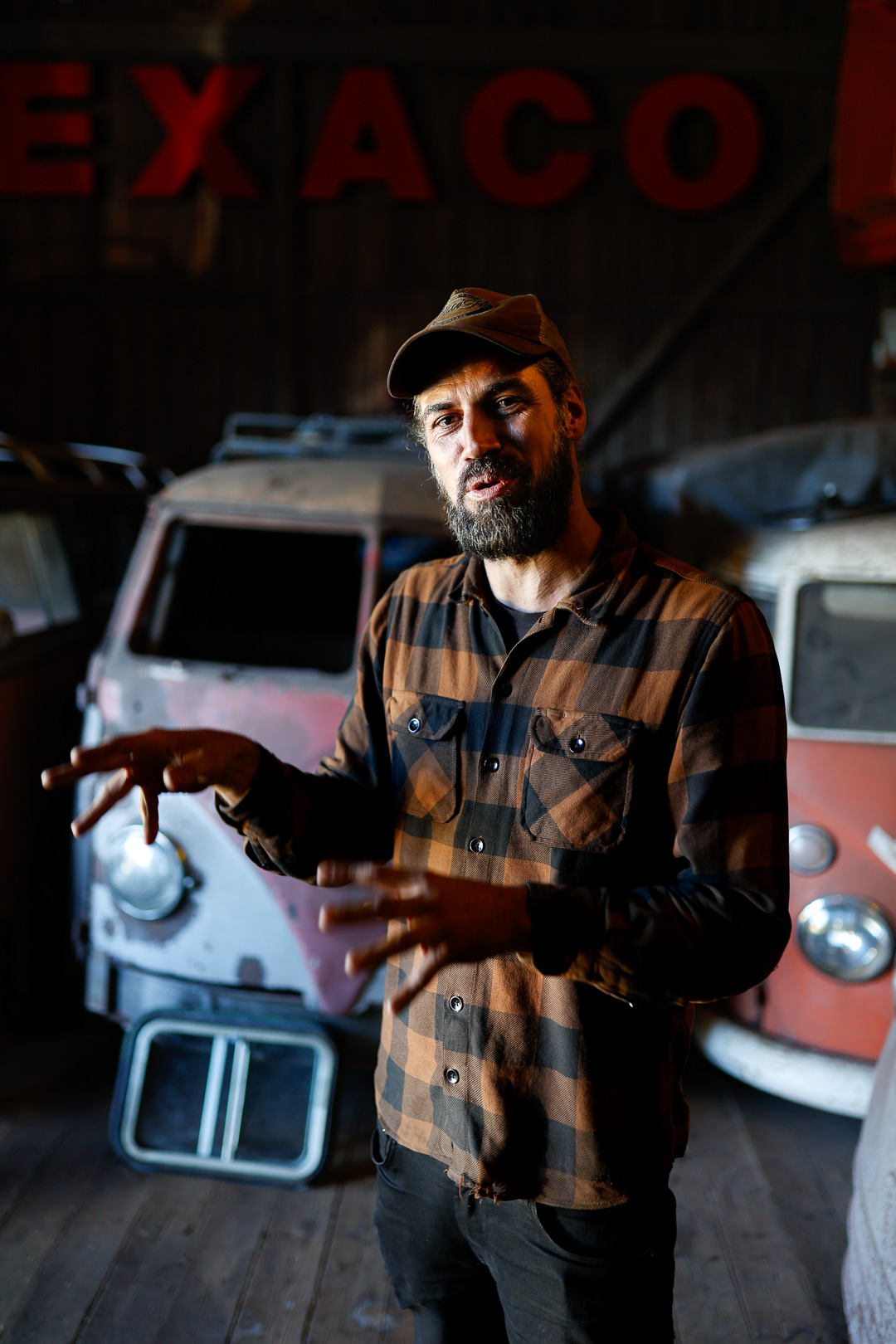
“The only thing I could keep from the Volvo was the hydraulic clutch and the brake pedal,” says Demian as we head down the road toward town to meet his friend Göran and an original Valp.
After two years of building, Demian realized that the Volvo body was in far too poor condition to match his seriously built chassis. It just wouldn’t hold up. The body he had was originally a cabriolet from the factory, but someone had bought a hardtop roof and welded it on without any proper measuring. There was a one-centimeter gap above the front doors, and the rear doors were homemade.
From the factory, the rear section of the Valp is bolted on, which makes it possible to build it as a single cab, double cab, or van—the only thing you need is one of the three different roof options.
During all the years he had been searching for parts, he had never seen a single Valp body for sale in Sweden. But then suddenly, and very conveniently, he found one—just 45 minutes from his home—sold.
“The chassis was already sold, but that didn’t matter since I only wanted the body,” Demian says, as if he had just won the lottery.
“The body I found was from the facelift version. I didn’t like the front, so I rebuilt it to match the earlier design. I also changed the dashboard and its instruments to the older style.”
At first, he didn’t like the more modern door handles on the newer body. They are the same as those used on American Freightliner trucks, but after a while he changed his mind and kept them, since he felt they actually looked pretty cool.
“I was very happy with the new body and continued building the car.”
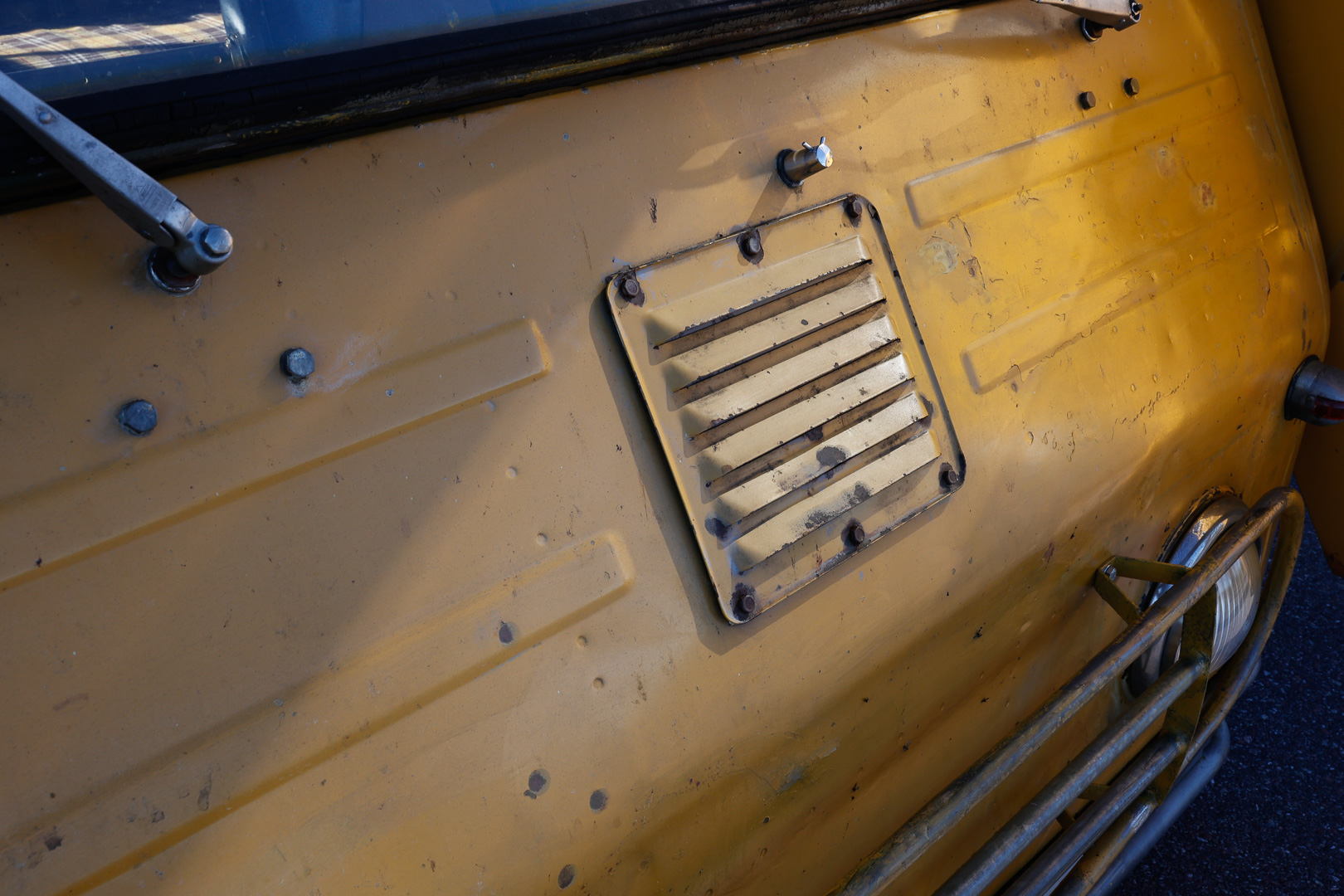
At the front, the Volvo has a bolted ventilation panel with air slots. Demian found two more of these on eBay and mounted them on the rear side panels to improve airflow to the engine.
Under the cargo doors were steps to climb into the cabin. Since the Volvo now sits just centimeters above the ground, they served no purpose, so he converted them into air intakes for the oil cooler and engine.
The original hinges for the rear hatch are mounted on the sides, so he moved them to the top edge and cut away the lower section of the hatch. He then took an engine lid from an early Bay Window bus and narrowed it to fit the Volvo.
At the same time, a pair of taillights from a 1958–1961 Volkswagen bus were installed.
Engine choice for a build like this?
“I didn’t know which engine I wanted to use in the Volvo. But when I built it, I had a 2.5-liter Type 4* engine with a Porsche fan, so I built the engine bay around it,” Demian explains as we wait for the original Valp.
That turned out to be a big mistake. He thought a stroker-built Type 4 engine with dual carburetors and a Porsche fan was the largest engine that would fit.
But when he later tried to install a Type 1 engine in the back, it didn’t fit. The fan shroud was too tall, so he bought a lower version from a Brasilia.
But then the dual Weber carburetors hit instead—they were too tall, and the air filter wouldn’t fit. The engine bay was simply too narrow.
So this Volvo has to run a Type 4 engine with a Porsche fan—or…
* A Type 4 engine is the last air cooled engine used in some VW cars and buses, It is called a “pancake engine” because it is flat and wide, not tall.
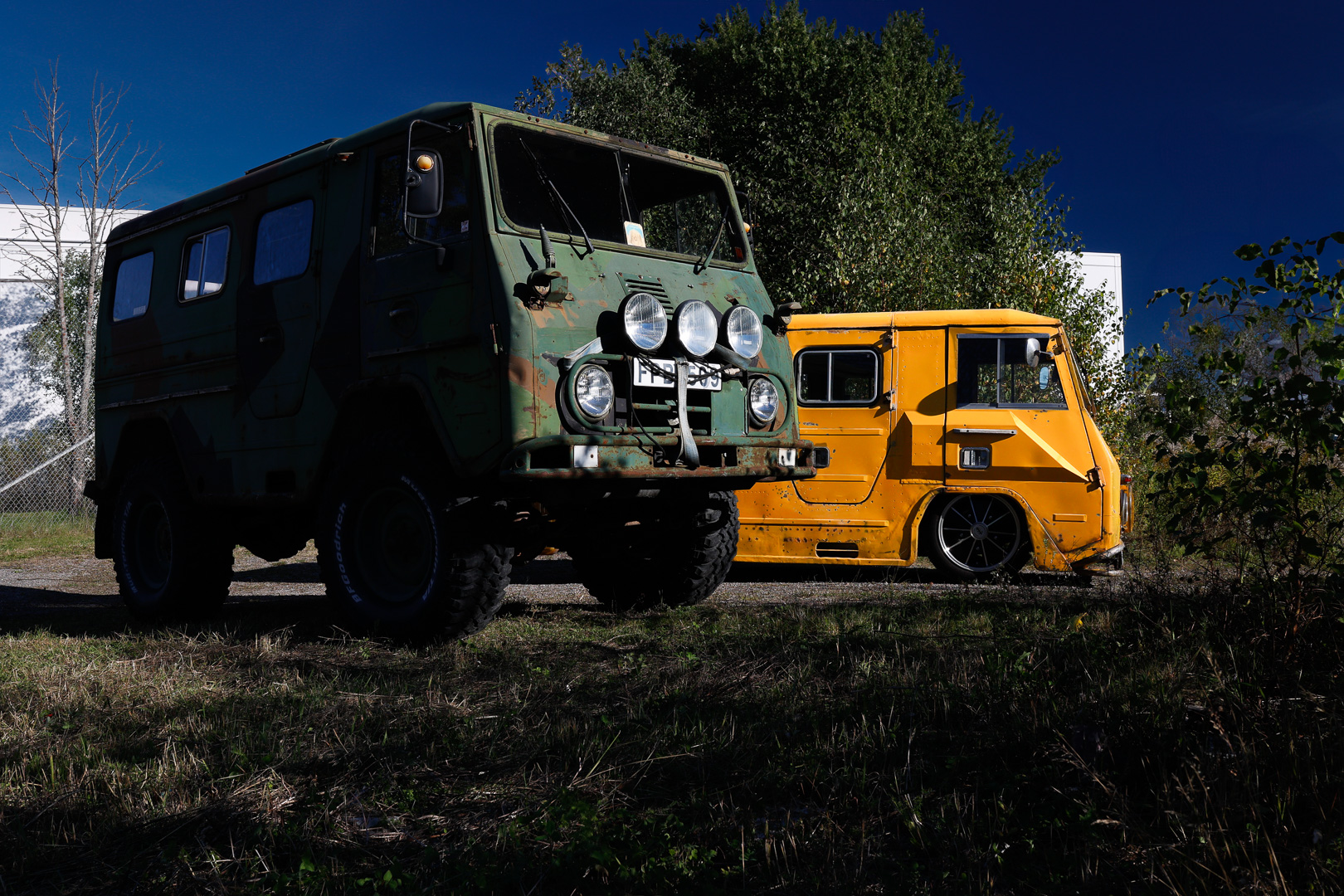
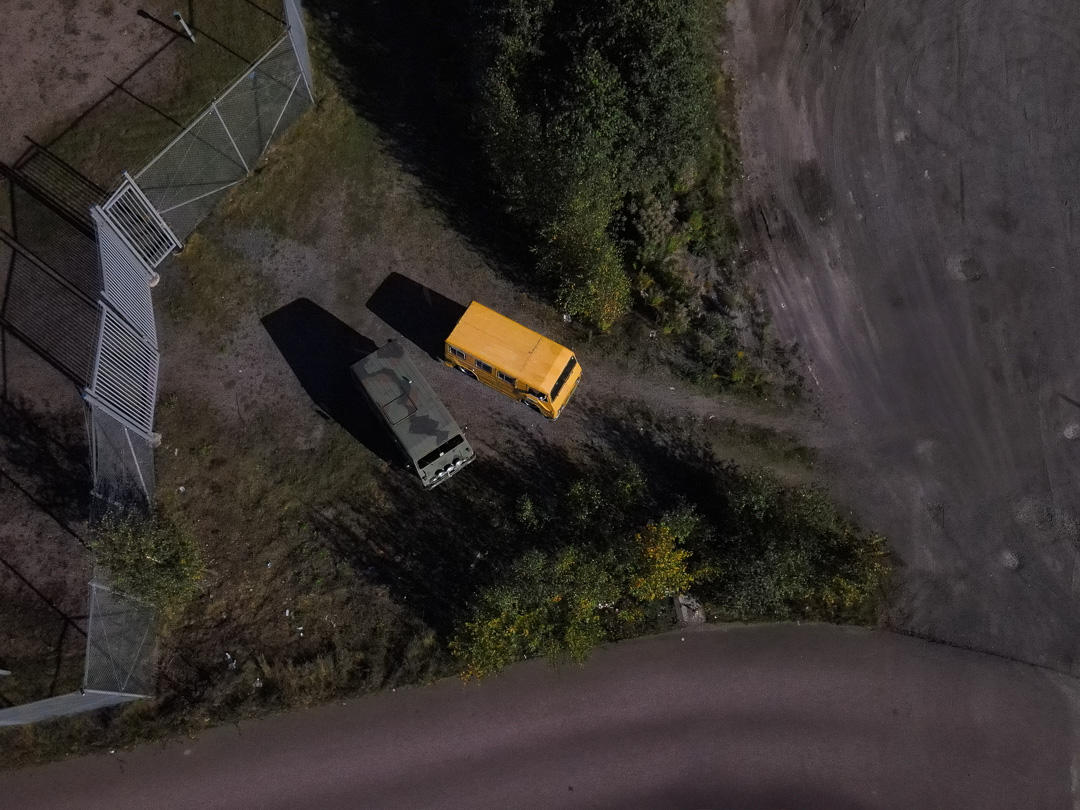
Demians yellow Puppy next to Johan Gustafssons original Puppy
…to get it approved for inspection, he installed a tired, oil-leaking 1300cc Type 1 engine with a single carburetor and no air filter—it fit.
Which might not have been the original vision for how the Volvo would turn out—but for the moment, it passed inspection, and that was what mattered most.
Wheels and things
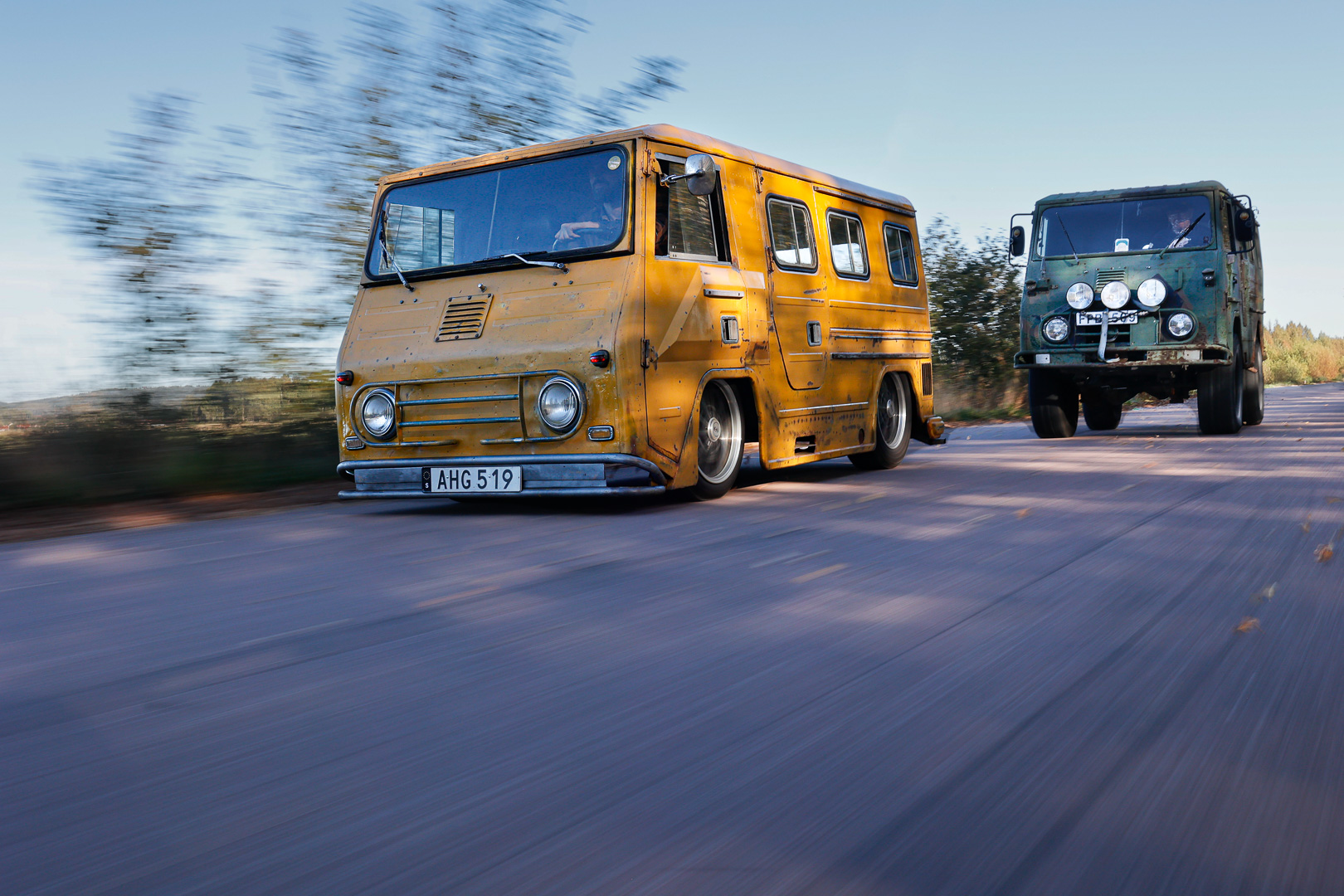
When the original Valp finally rolls in, the realization of what Demian has created becomes strikingly clear. There’s nearly a 50 cm difference in height between the cars, and the contrast in ground clearance becomes incredibly obvious when I ask Demian to park his car up on a small hill nearby.
The yellow metal box carefully sniffs its way up the slope along the narrow gravel road, almost as if it’s struggling not to scrape the ground while he twists and turns it into position. Meanwhile, the original Valp plows straight through three bushes and a small tree to get into place—without the slightest hint of being anywhere near the ground beneath it. The chunky tires almost make it look like it’s floating.
“I like odd wide-five wheels, but on the Volvo I wanted a more classic Volkswagen look, so I chose BRMs. I’m using an adapter from 4-bolt disc brakes to a 205x5 bolt pattern.”
Demian started his wheel journey a couple of years ago with 15-inch wheels. But the Volvo has enormous wheel arches, so the 15-inch wheels looked like tiny peas in a big bowl.
In the end, he chose 17-inch BRM wheels, with dimensions of 175/55 R17 in the front and 215/60 R17 in the rear.
At first.
Once the car had passed inspection in 2024 and Demian could legally drive it, he realized it wasn’t at all what he wanted—the engine was leaking oil, and the whole look of the Volvo felt wrong.
So much work—and it still resulted in a car he didn’t like. The worst part was the massive wheel arches.
“I mounted even bigger tires, 225/65 R17 in the rear and 175/65 R17 in the front, but the arches were still way too big.”
So Demian went back to the garage, pulled out the angle grinder and the welder.
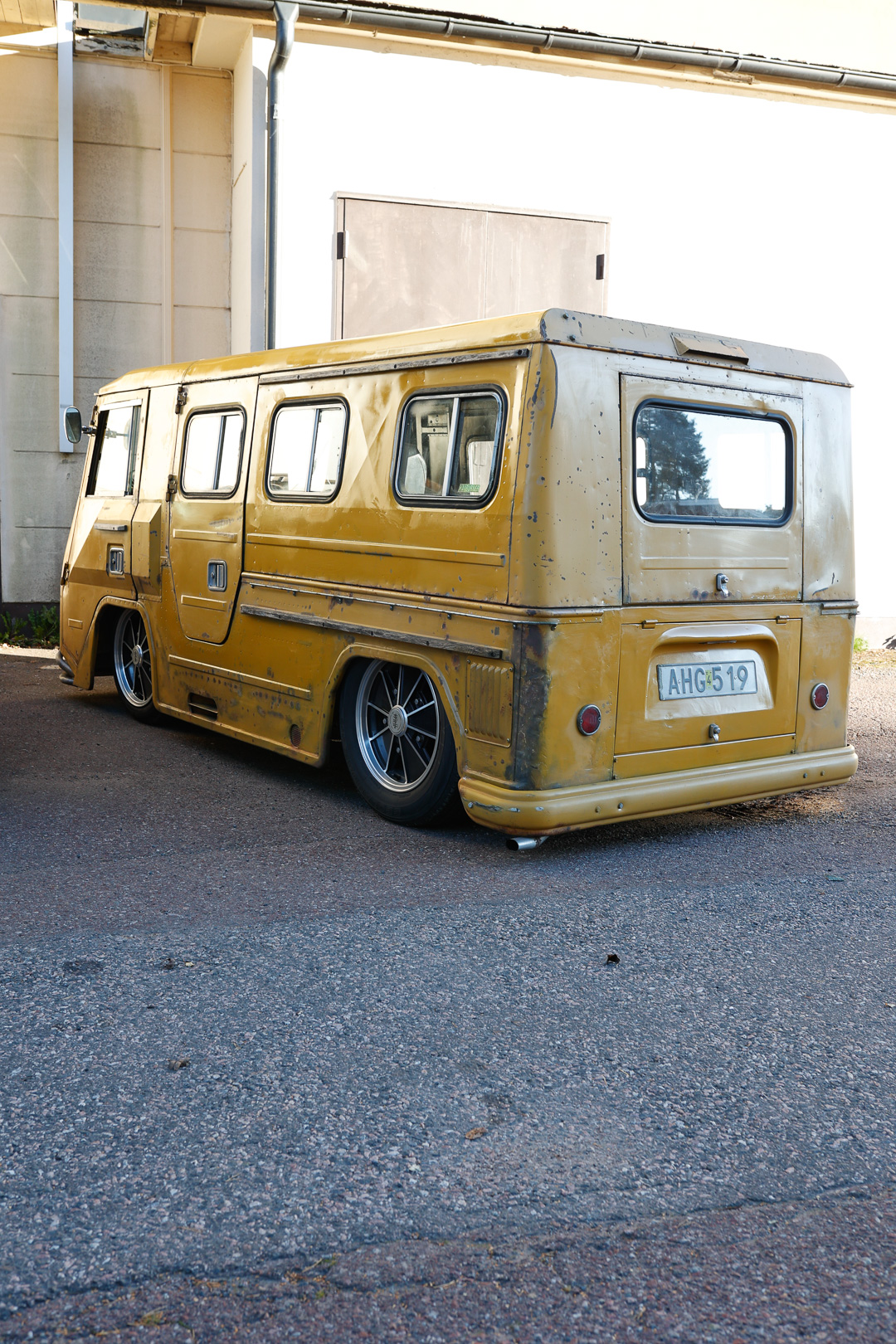
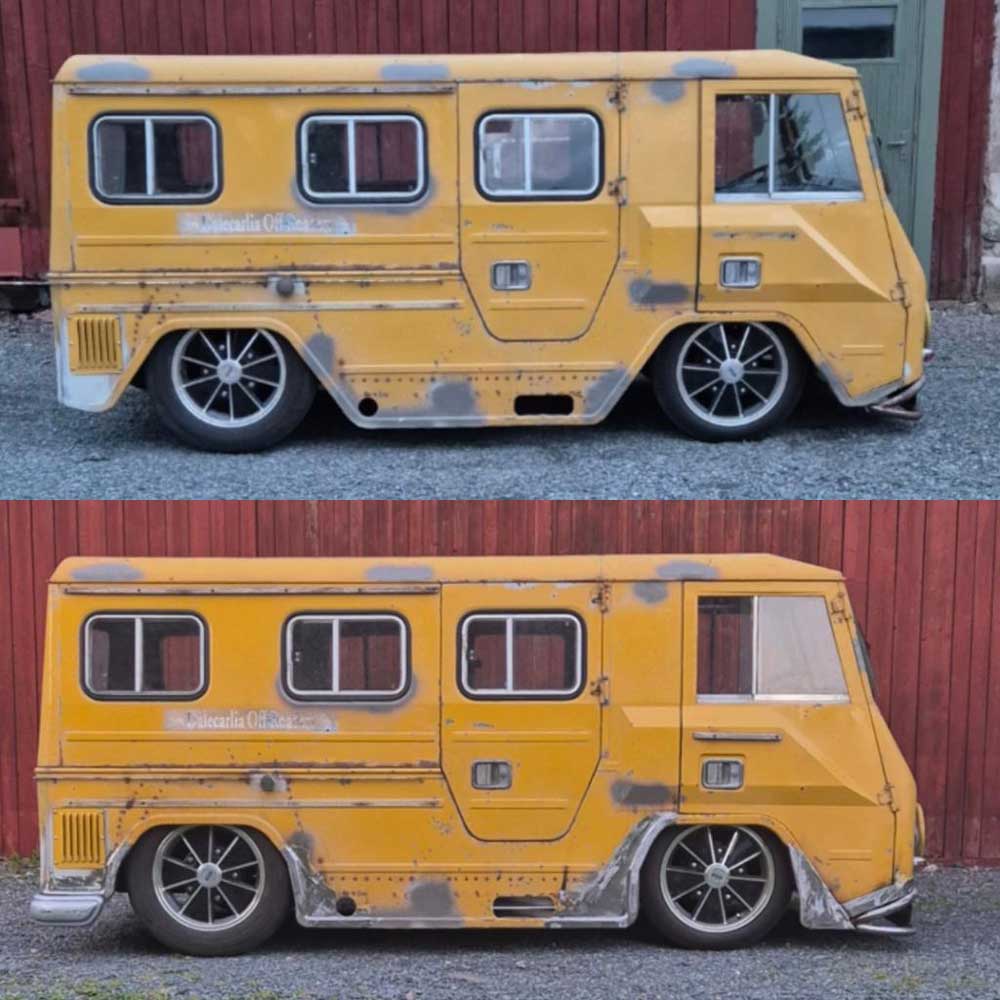
“I decided to build smaller wheel arches—but in a style that would still look original.”
And just like everything else on this car, he managed to pull it off in a way that doesn’t look wrong—it looks exactly like it’s meant to be that way.
At the same time as reshaping the arches, he also fitted a rear bumper from a 1950s VW bus.
Back to the original goal
Suddenly, August 2025 and Le Bug Show in Belgium were just around the corner. Demian and his friends Göran and Leif set their sights on making it to the show at the Spa racetrack in the Belgian forests.
But at that point, they had only one week to swap the engine and, most importantly, paint and blend the car’s finish.
The tricky part was that Demian still had to work his 11-hour shifts that very week—so time was tight.
“I had a good 1600 engine in my Barndoor* , so I took that to install in the Volvo, while also having to fabricate all the sheet metal for engine cooling.”
“Before the trip to Belgium, my friends Göran and Leif were going with me in the Volvo. They offered to help blend the paint, which I’m very grateful for.
*A barndoor VW is an old VW bus made in the early 1950s. It has a very big engine door at the back that looks like barn doors — that’s why people call it “barndoor.”
There were only two days left when Leif and Göran started the paintwork. But I wasn’t worried—Leif is Sweden’s own master of blending patina and knows exactly what he’s doing.”
So, on the Sunday before the show, the three men set off on a 2,800-kilometer journey through Europe in an untested, home-built VWolvo.
“I was incredibly nervous about driving this homemade build that far. I didn’t know if it would hold together. Was the cooling sufficient? Was the engine too weak?”
Three days later, as the little yellow Volvo box with its perfectly built VW chassis glides along the waterways through the majestic forests of the Moselle Valley, Demian begins to relax and feel that this might actually work.
Nine years and 2,000 hours of work later, they rolled into Spa as winners among the VW buses.
An incredible journey by a true automotive artist—whose work still leaves me standing there in awe, filled with joy, fascination, and admiration.
Hats off!

Related Articles


Related Articles


All rights reserved.
Fascinating Cars is a trademark of:
Edenberg Design AB
(559212-2617)
Näckrosvägen 19
Solna
Sweden
All content, images, and materials on this site are protected by copyright law.
© 2026 Fascinating Cars.

Travel with Fascinating Cars - get you inbox candy.


GET AROUND ON FASCINATING CARS:
ARTICLES
SHOP
ABOUT
CONTACT
All rights reserved.
Fascinating Cars is a trademark of:
Edenberg Design AB (559212 2617)
Näckrosvägen 19
Solna
Sweden
All content, images, and materials on this site are protected by copyright law.
© 2026 Fascinating Cars.