
Tōgeya - 1:1 JDM diorama
Heaven for JDM and Initial D fans
- by Peter Edenberg 2026-04-01
The beams of light weave their way around the densely packed trees. The engine revs remain steady and high.
The tires scream at times through the corners as the car slides down the slope—behind it, bushes, rocks, and guardrails glow red as the brake is slammed to the floor for just a split second - only to then see the nose of the car take the first hairpin while the rear follows at an angle behind—the wheels turn in the opposite direction of the curve and the car feeds its way forward, meter by meter, all with a subtle smoke swirling in the air where the car has passed.
The pop-up headlights show the way on the smooth asphalt, and the car makes a quick transition as hairpin number two arrives—the tires scream and the white lines at the edge of the road are marked black by the rubber of the rear tires while the guardrail is nearly touched by the rear bumper.
From above, it looks as if someone is playing with the car, making it slide from side to side like a knob of butter in a frying pan—completely without friction, the car makes its way down the upcoming hairpins—the stars of the night still shine across the sky and the moon shines alongside the few streetlights that guide the way at the road at Japanese mountain Akina.
The clip is taken from the film Initial D—a classic in the JDM world—where we are introduced to Takumi Fujiwara, the son of a tofu maker.
The owner is often too drunk to deliver his tofu to the other side of Mount Akina in the middle of the night, so he sends his son—13 years old at his first run—to deliver the products in a Toyota AE86.
Over the years, Takumi becomes faster and faster and more and more confident in delivering across the mountains, while the car spends more time sideways on the road than pointing straight ahead.
During the days, Takumi works part-time at the Esso gas station, alongside his friend Itsuki Takeuchi and his supervisor Koichiro Iketani, to earn his salary.
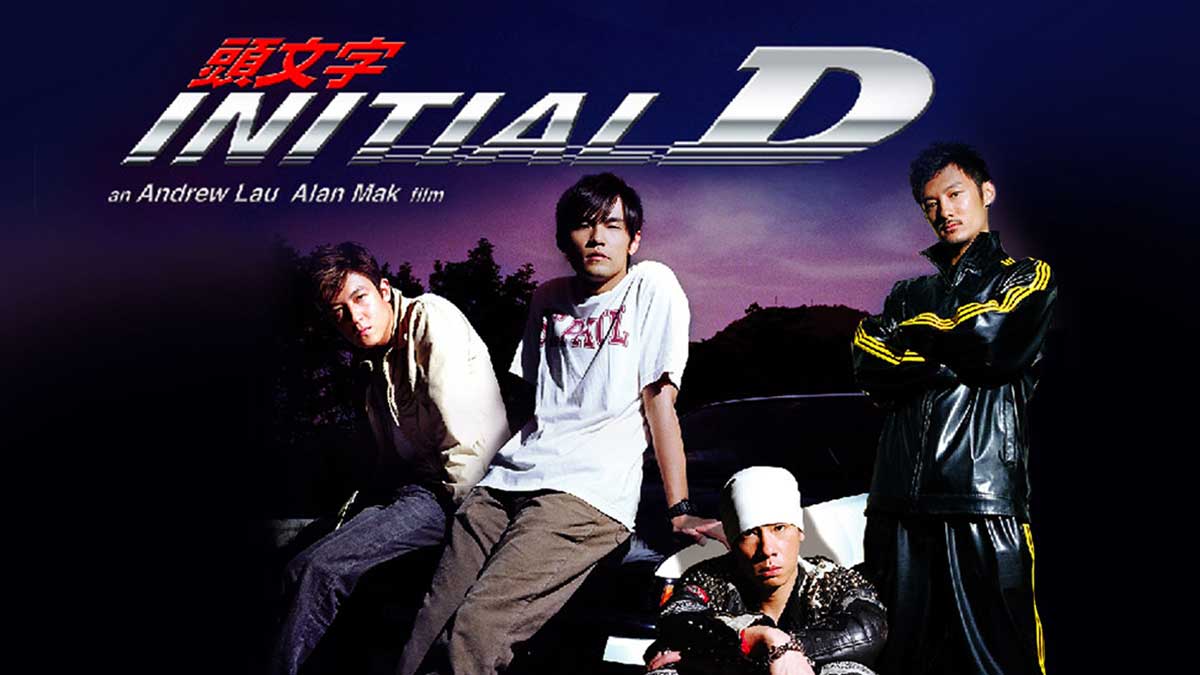
Originally, the film was made as an anime, but in 2005 it was also produced in a “live-action” version with Jay Chou playing Takumi.
The gas station in this film plays a central role, where people meet, cars are worked on, and plans and futures are shaped.
Located along a highway—just like a gas station
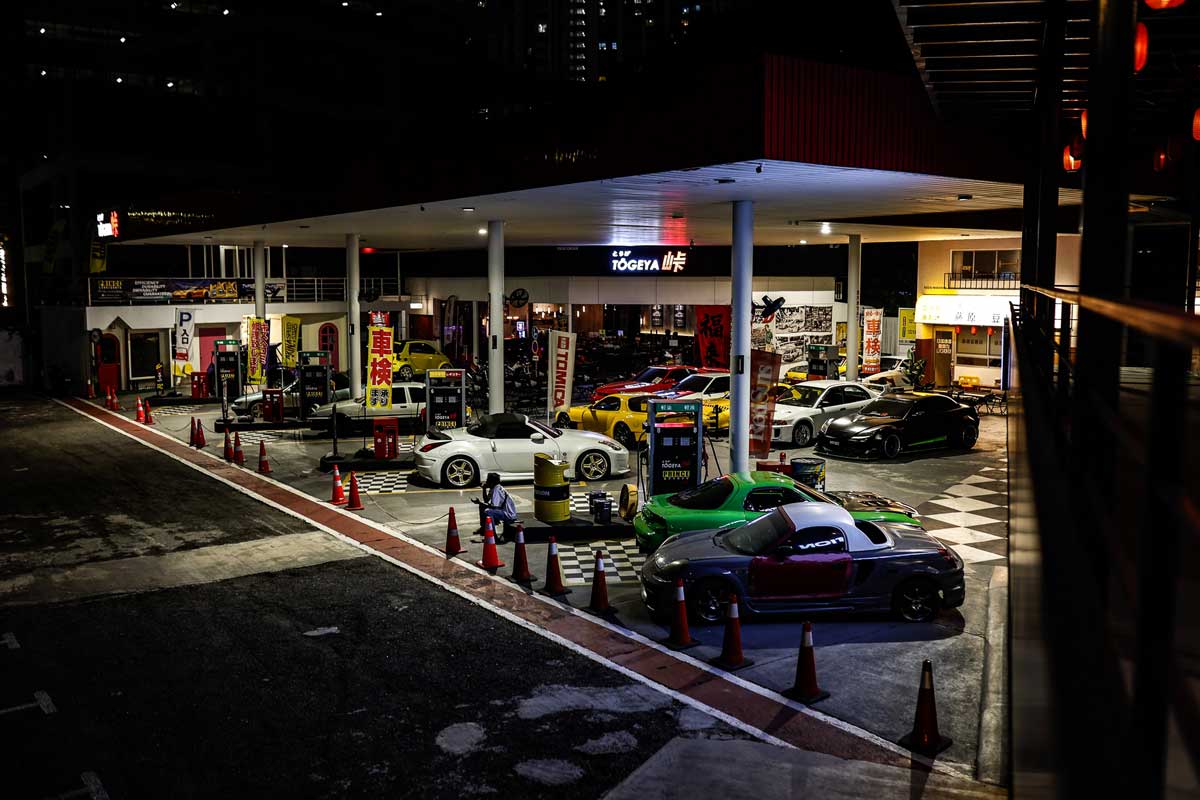
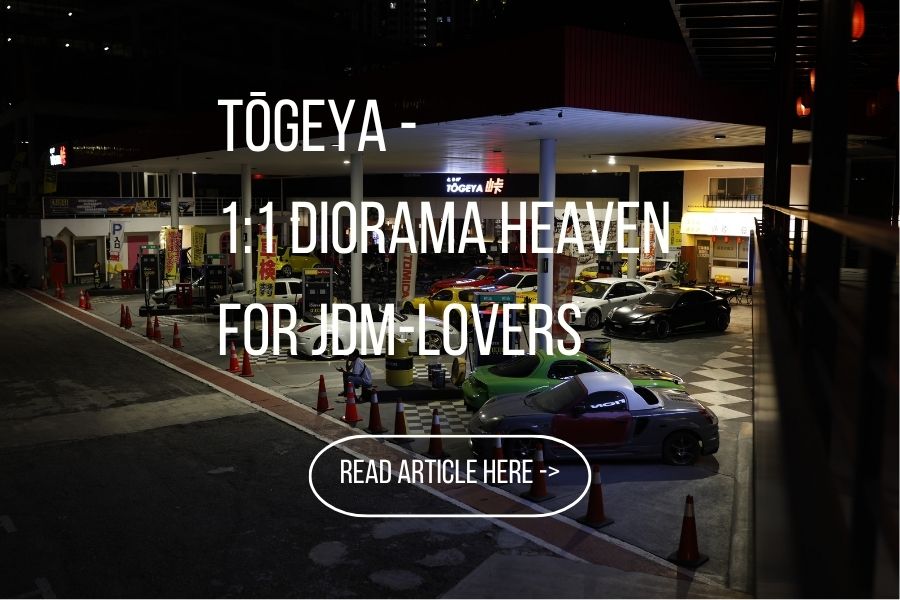
Looking at the map in the taxi, I can see that we should turn off in just a hundred meters. The driver slows down, and suddenly, behind a fence, a stylish, clean, and miniature car landscape reveals itself in front of me while the Malaysian sun is about to set.
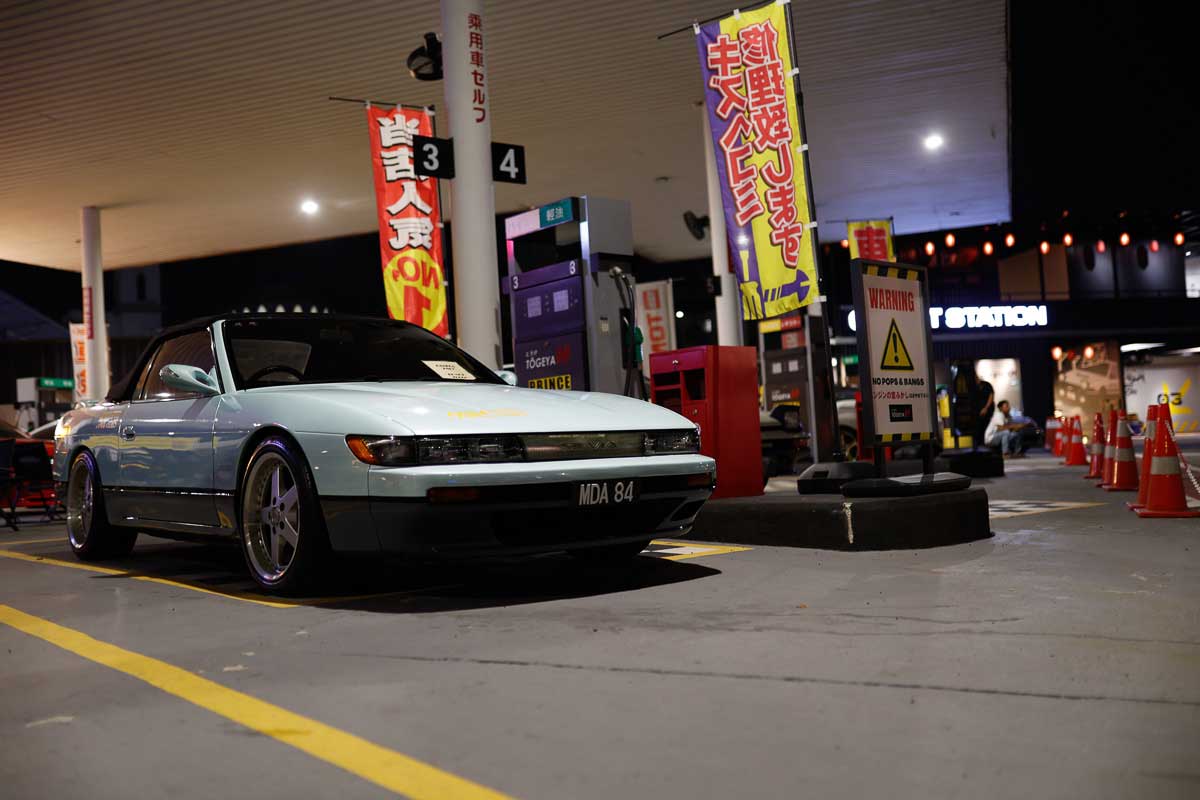
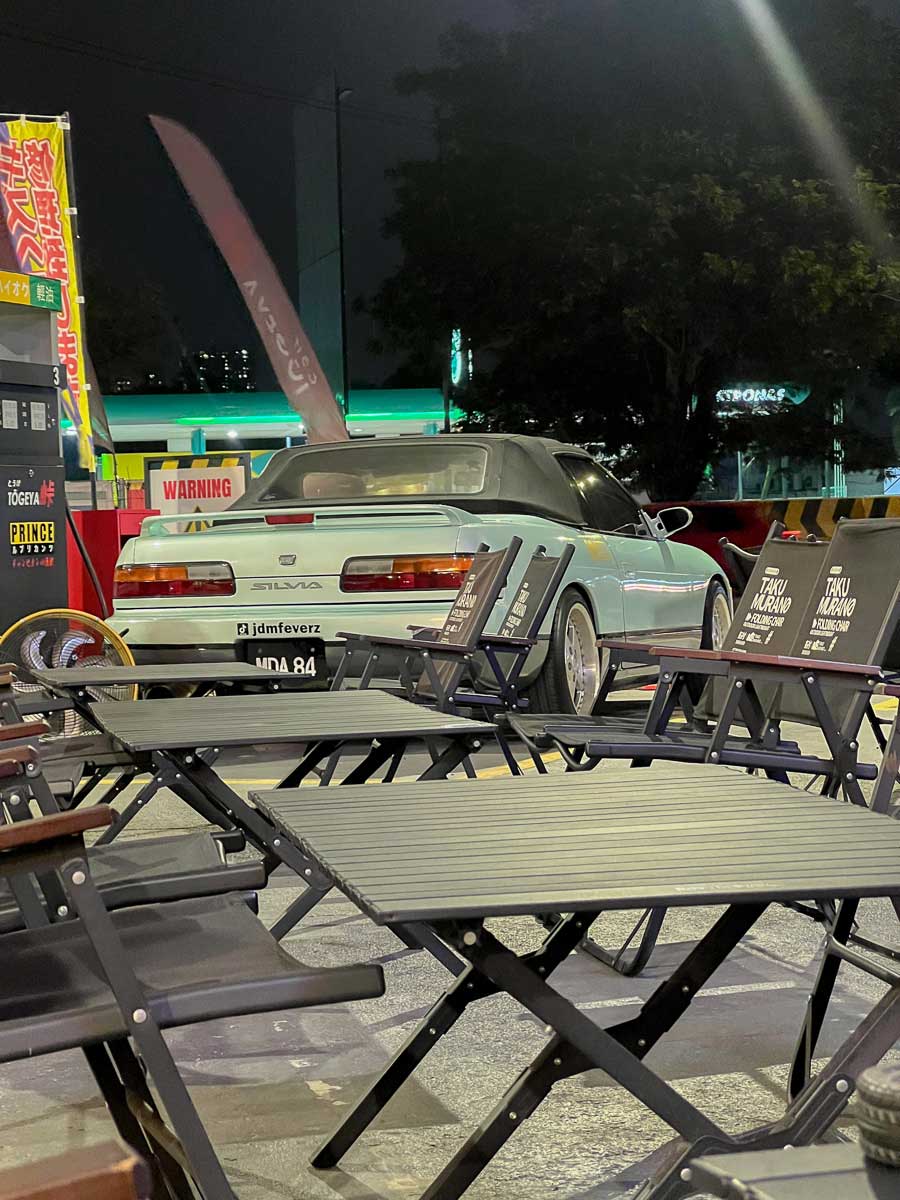
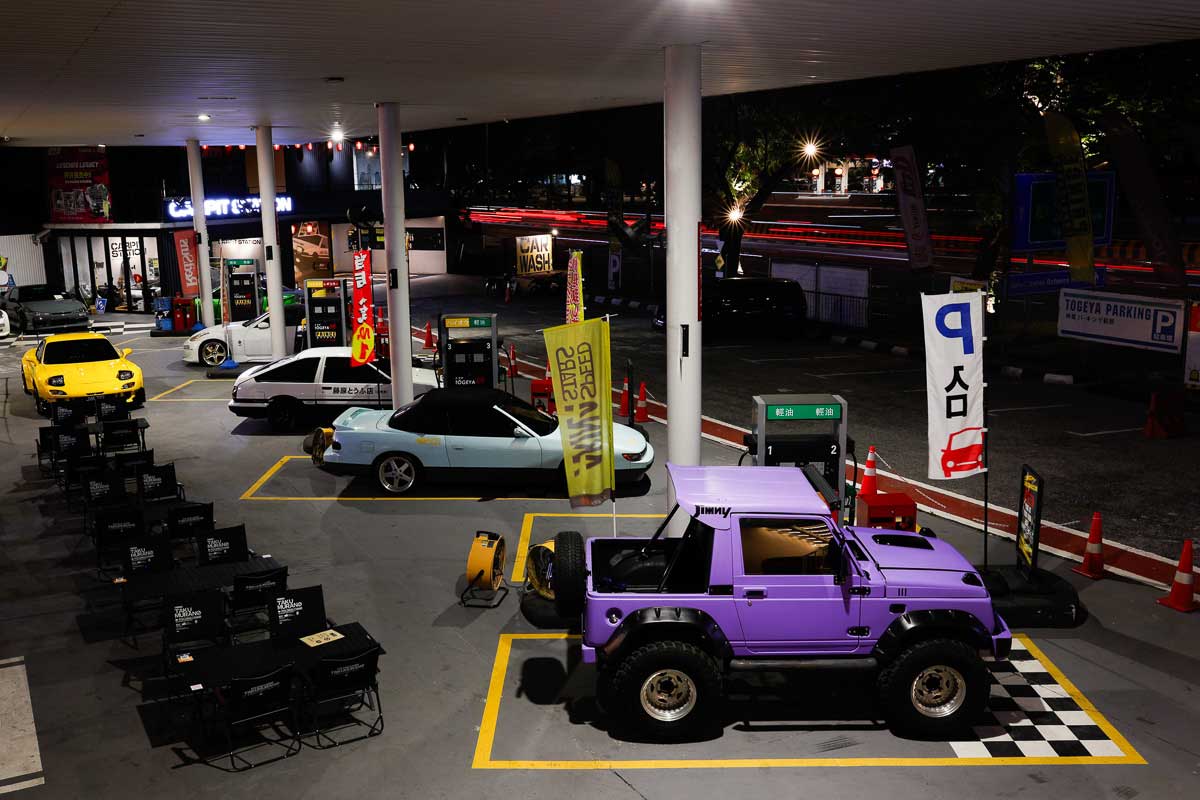
At pump number 3, which I later learn is 100% fake, stands an ice-blue Nissan Silvia Cab (S13), which immediately makes me smile, as Takumi’s friend Itsuki completely destroyed a similar one in the film when he tried to make his way down the winding roads of Mount Akina.
In the scenes, the car looks more like a billiard ball bouncing between guardrails and the ditch, and in the end, all that remains is crumpled metal and a smoking engine.
But here at the station it stands, freshly washed, on its five-spoke wheels at pump 3, as if the owner has just stepped inside to pay for fuel or buy something.
The Tōgeya station is not an exact replica of the gas station in Initial D, but it is heavily influenced by the film and as said before, it is not a gas station.
Because this is not a station where you refuel and move on—this is a station that is more like an installation for car enthusiasts, mainly JDM enthusiasts.
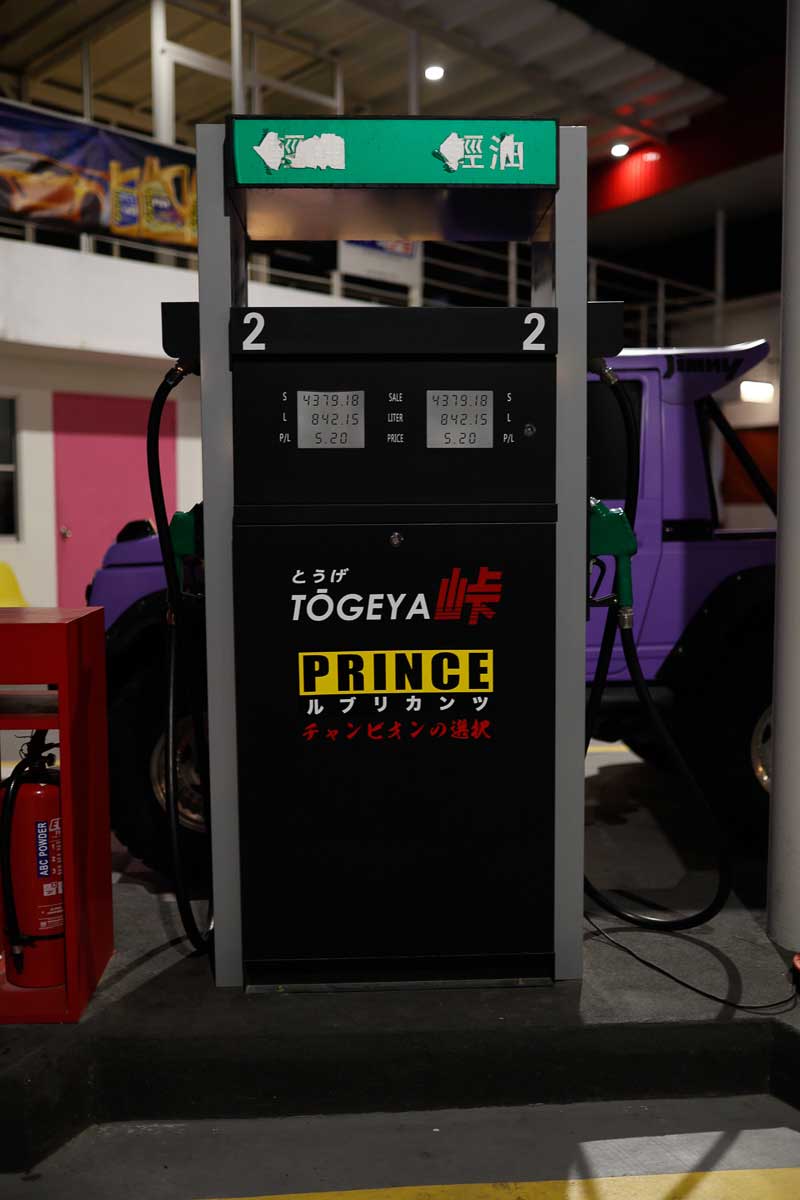
What does the name mean? Tōge means “mountain pass” or “winding mountain road,” and Ya means “shop” or “house” in Japanese. So Tōgeya is “a place that celebrates mountain road culture.” For the simple reason: the love for driving up into the mountains.
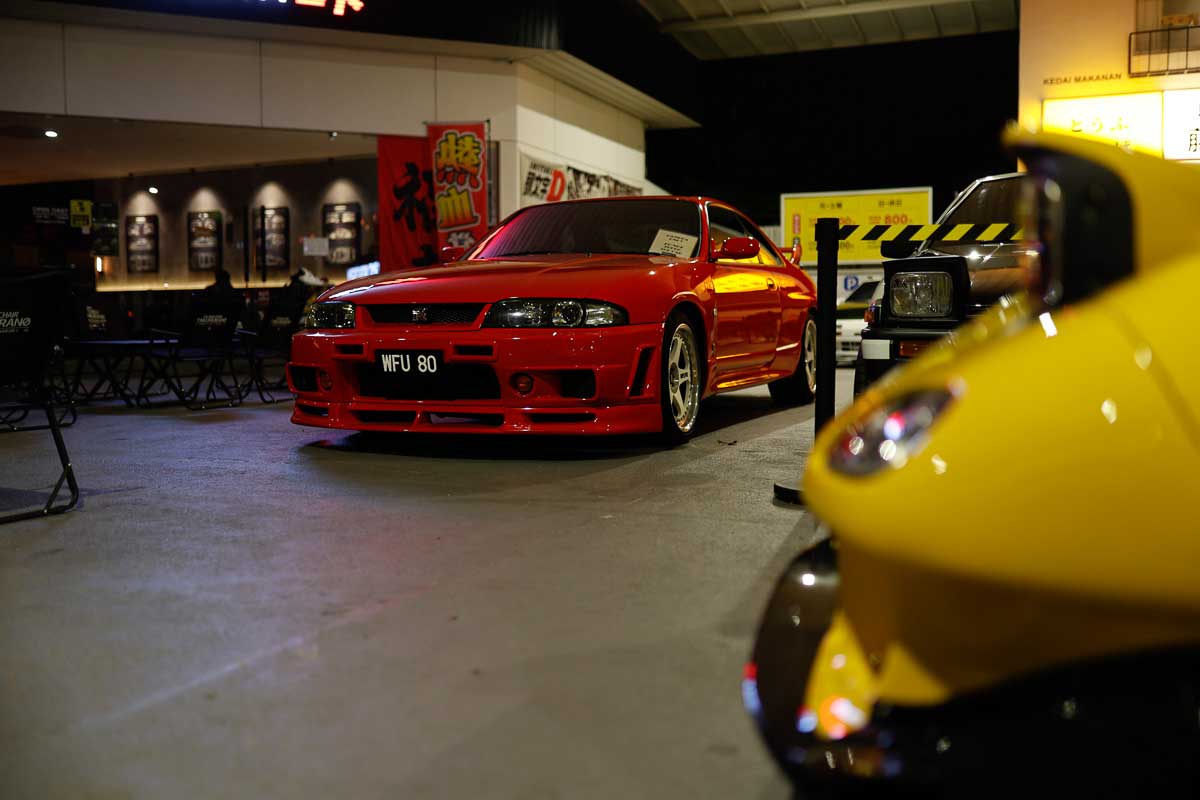
Tried to access the land for over a year
While I am there, I run into Kent, the boss of the station, a lovely, little bit modest man.
“Previously, it was an abandoned gas station that just stood there, empty and run-down. It hadn’t been open for 10 years.”
“I needed and wanted a place where I could park all my cars, as well as hang out with my friends who share the same interest as me,” Kent explains.
The dreams of this had been there for a long time, and every time he drove past this old gas station on the highway outside, the feelings grew stronger and stronger. He tried to get in touch with the owner, but it was hopeless—until one day, when he was driving by, he saw a man locking the gates. Kent turned stopped immediately, walked up to him, and explained what he would like to do with this property.
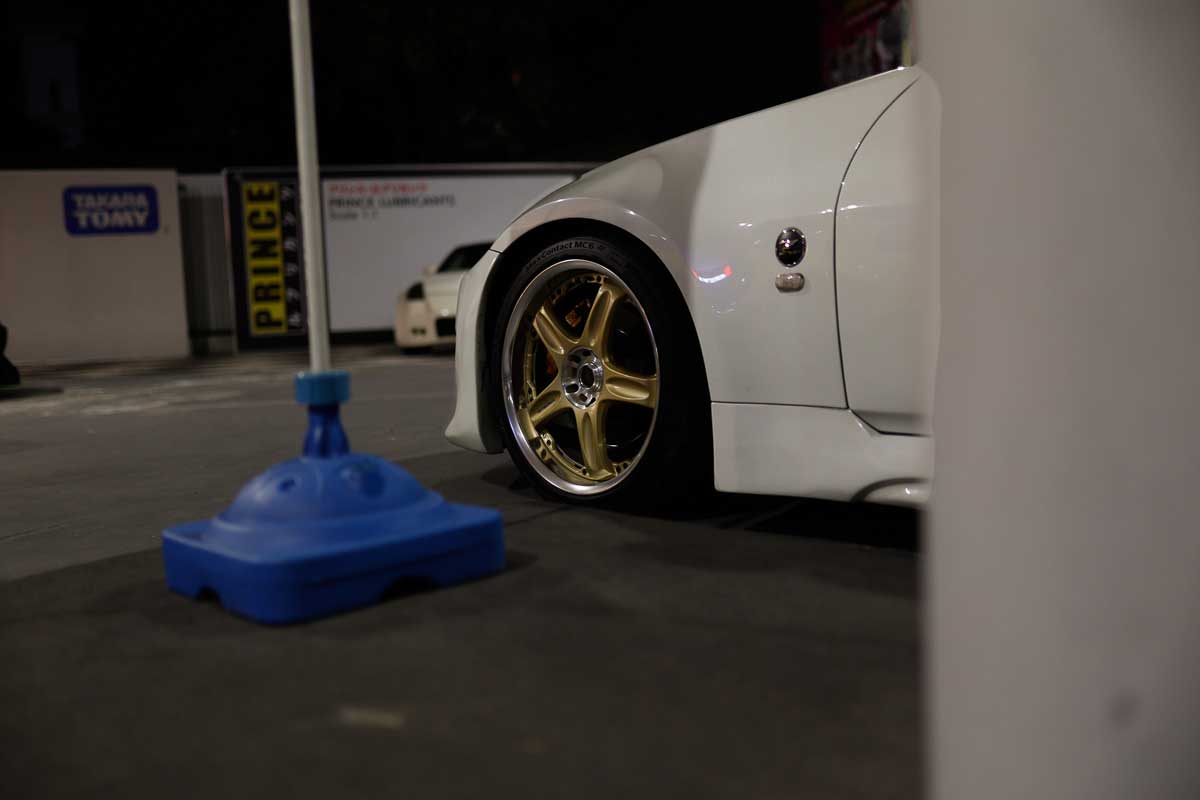
The owner initially said no outright—but after six months of calls, persuasion, and negotiation, the deal was done. Kent had now the keys to an abandoned gas station in Kuala Lumpur, where there was neither water nor electricity.
Kent had a clear vision of what he wanted to create, and the renovation only took a couple of months—and then it became this—a 1:1 diorama of a gas station for JDM enthusiasts, with Initial D as its foundation and inspiration.
“I’ve always been a big fan of the Initial D film, the Hong Kong version,” Kent says, emphasizing that it is specifically the Hong Kong version.
However, you can see many elements from the Initial D manga version throughout the gas station as well.
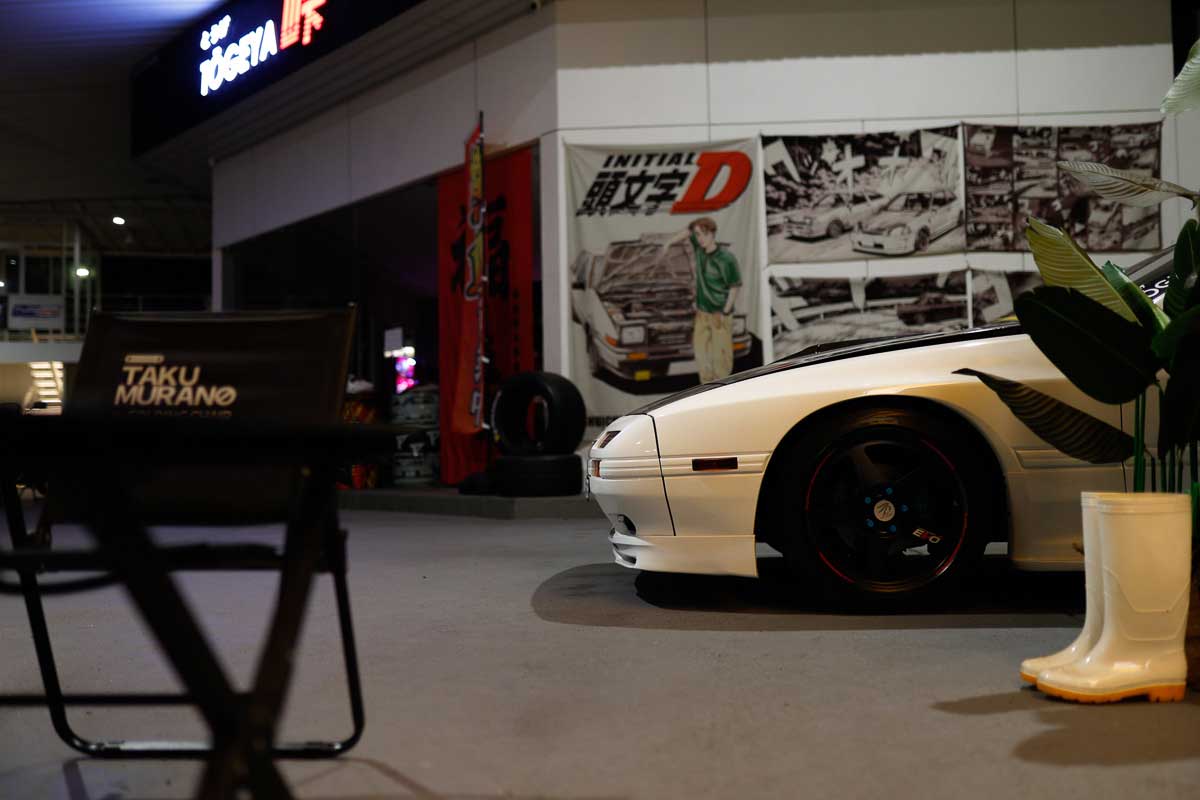
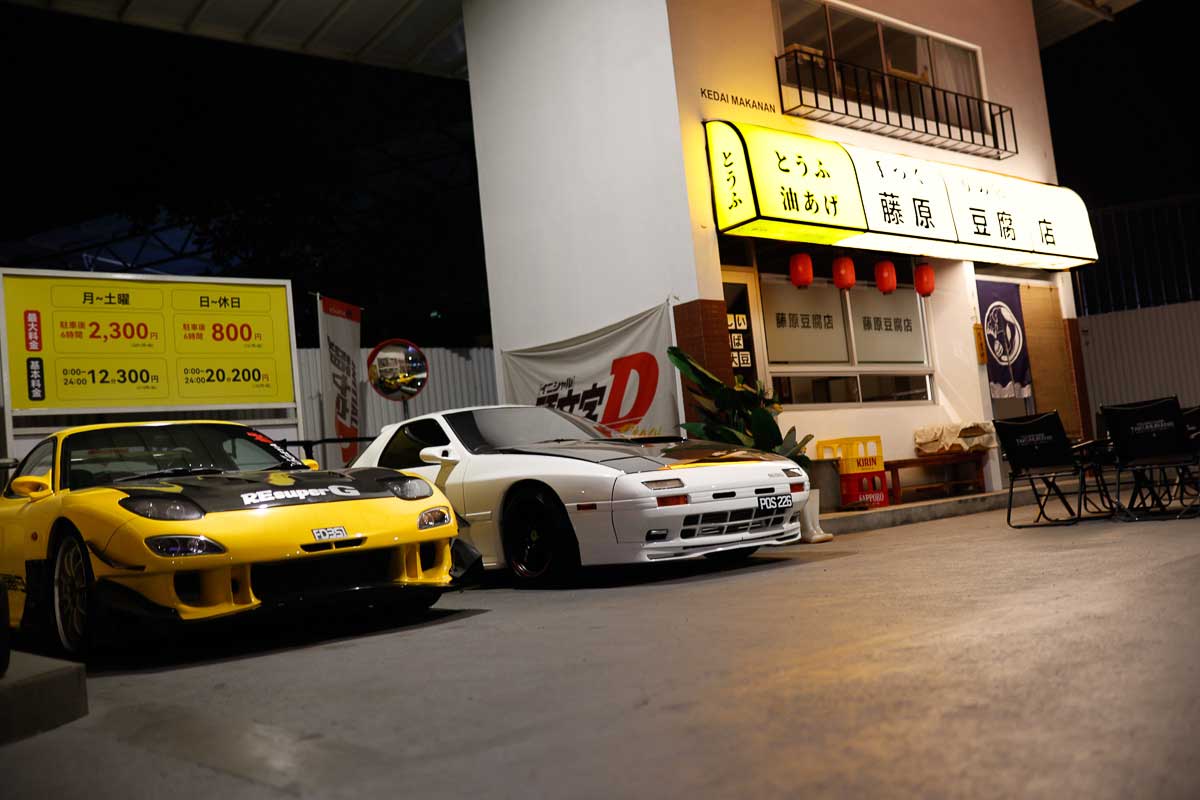
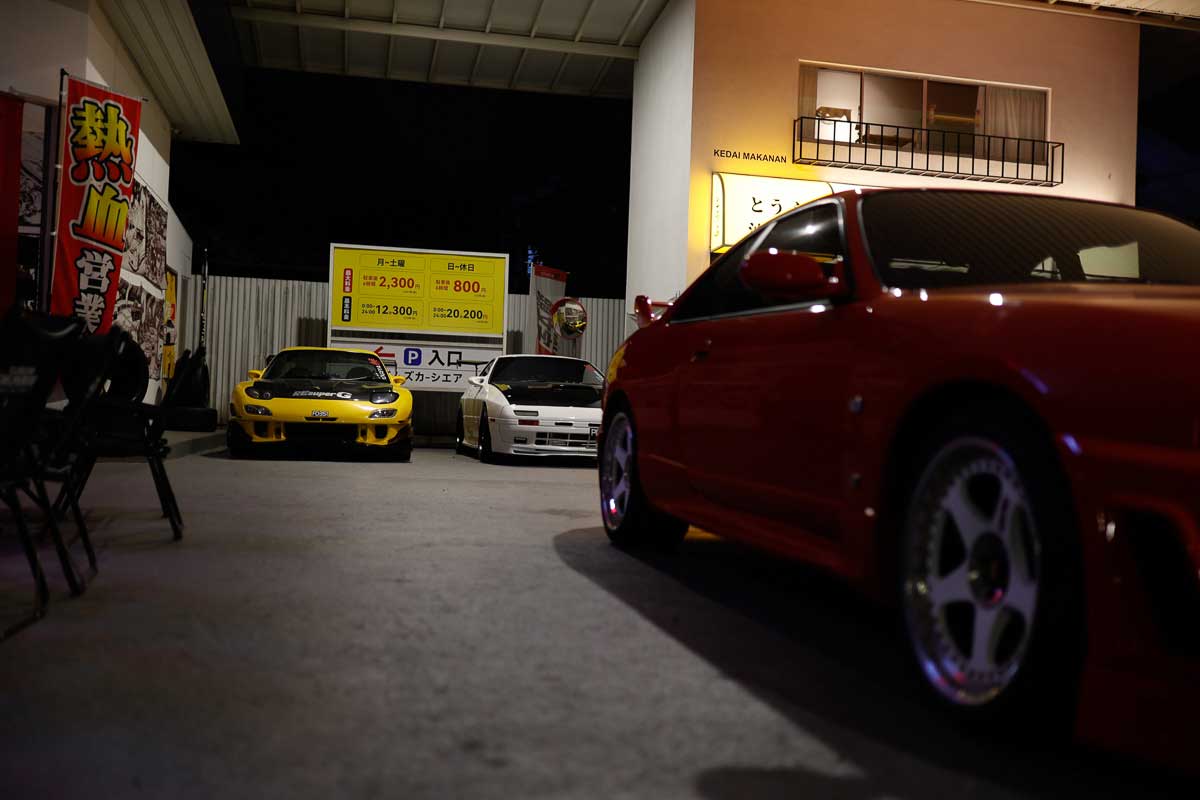
Along the wall stands the Tofu master’s house
In the middle of the forecourt stands the classic panda AE86, with the characters 藤原とうふ店 (自家用) = Fujiwara Tofu Shop (Private Vehicle) on the right door.
The car’s headlights are popped up, making it look as if it wants to go out and play, like a small puppy with its two companions standing beside it—a red Nissan Silvia (S14) and a yellow Mazda RX-7 FD.
Later, Kent opens the hood of the AE86 and start it up to get the engine warmed up.
“It’s a friend’s car that I’ve helped fit with a new cylinder head. The whole engine has been gone through and has the same tuning as the Initial D car,” Kent says with a smile.
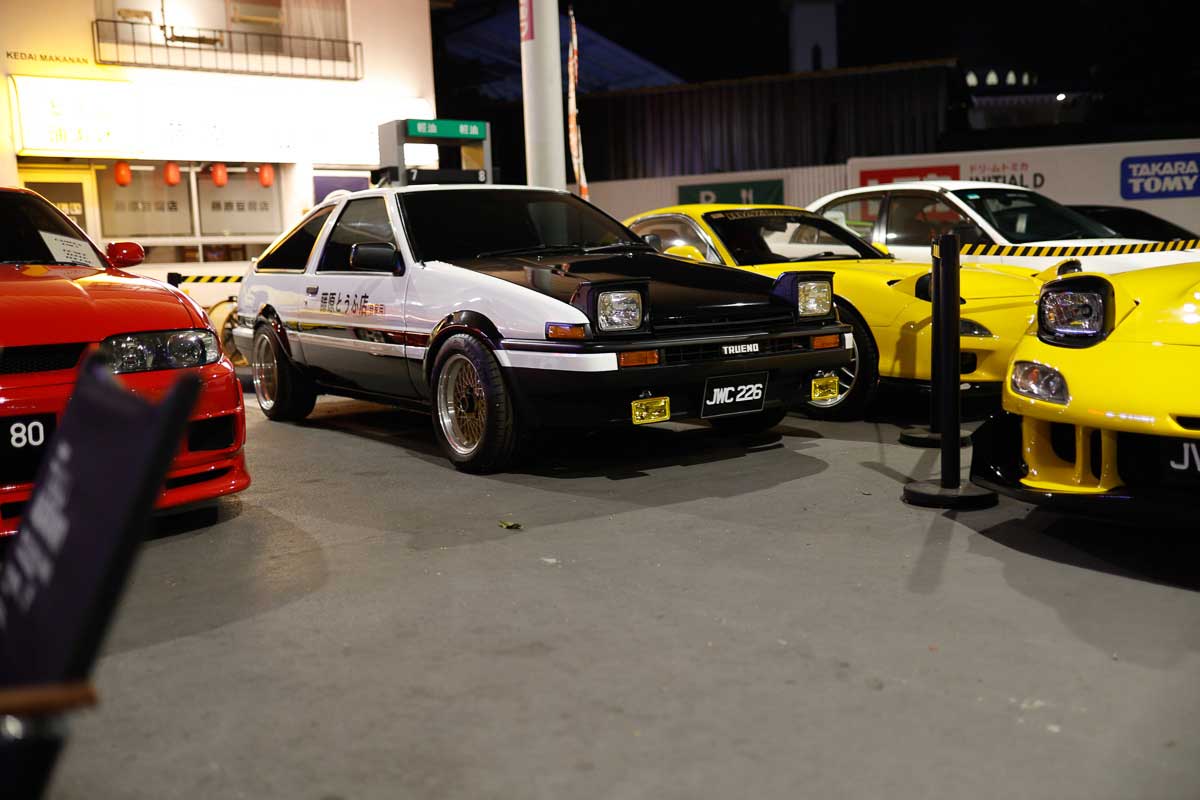
Behind the cars, there are more traces of Initial D, as the classic yellow-and-white, rock-solid plastic awning stretches along the wall. It is the facade of the Tofu master’s shop in the film, where it says Fujiwara Tofu Shop.
Below the lit awning stand the Tofu master’s white rubber boots and wooden clogs—as well as the wooden crates the tofu is delivered in and on the right hand you can even see that the curtain is the same as the movie.
The gaspump next to it , also a fake pump without gas, is a replica of a gas pump at the Esso gas station in the movie.
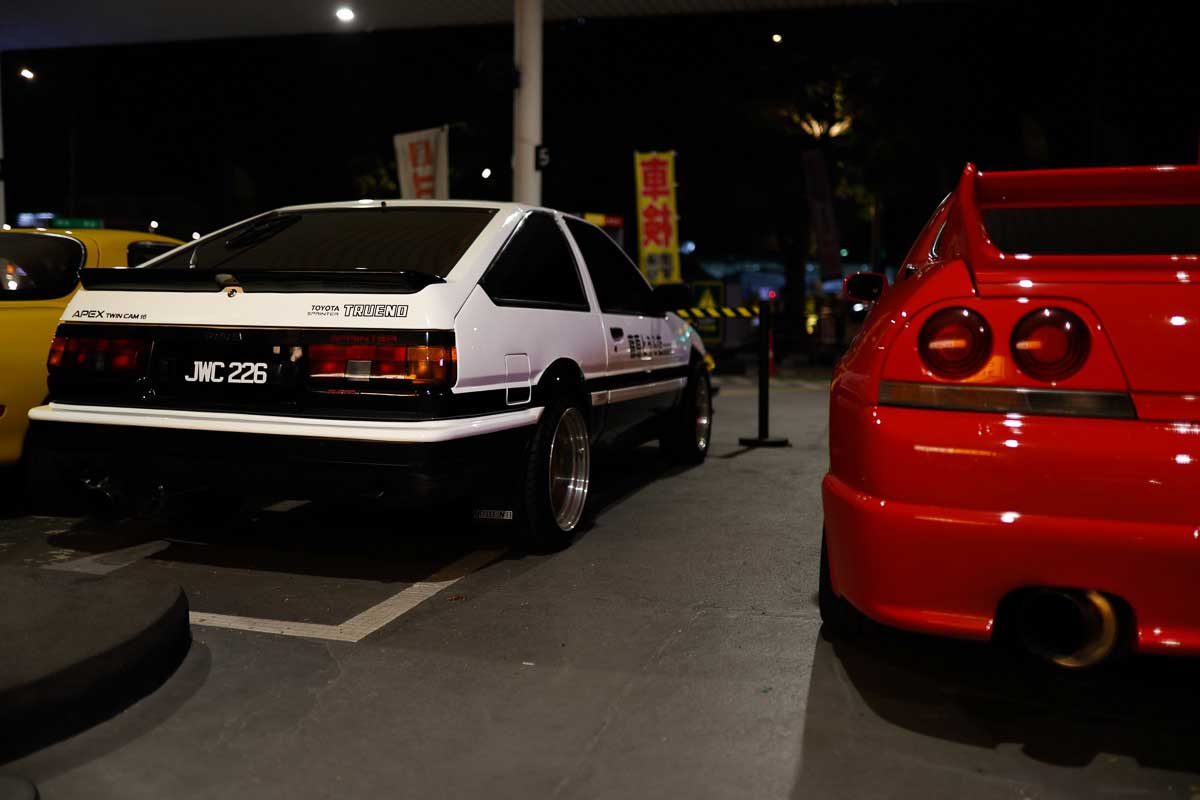
Beautifully thought through
The Tofu master’s shop used to be a pump station for the pumps that once stood there, but now it has been cleared out and is ready to be rented.
Future dreams from Kent are that tofu will one day be produced there, to truly complete the whole setting—as well as having a Japanese grocery shop and an Oden station (a Japanese broth stew with various ingredients) on the premises.
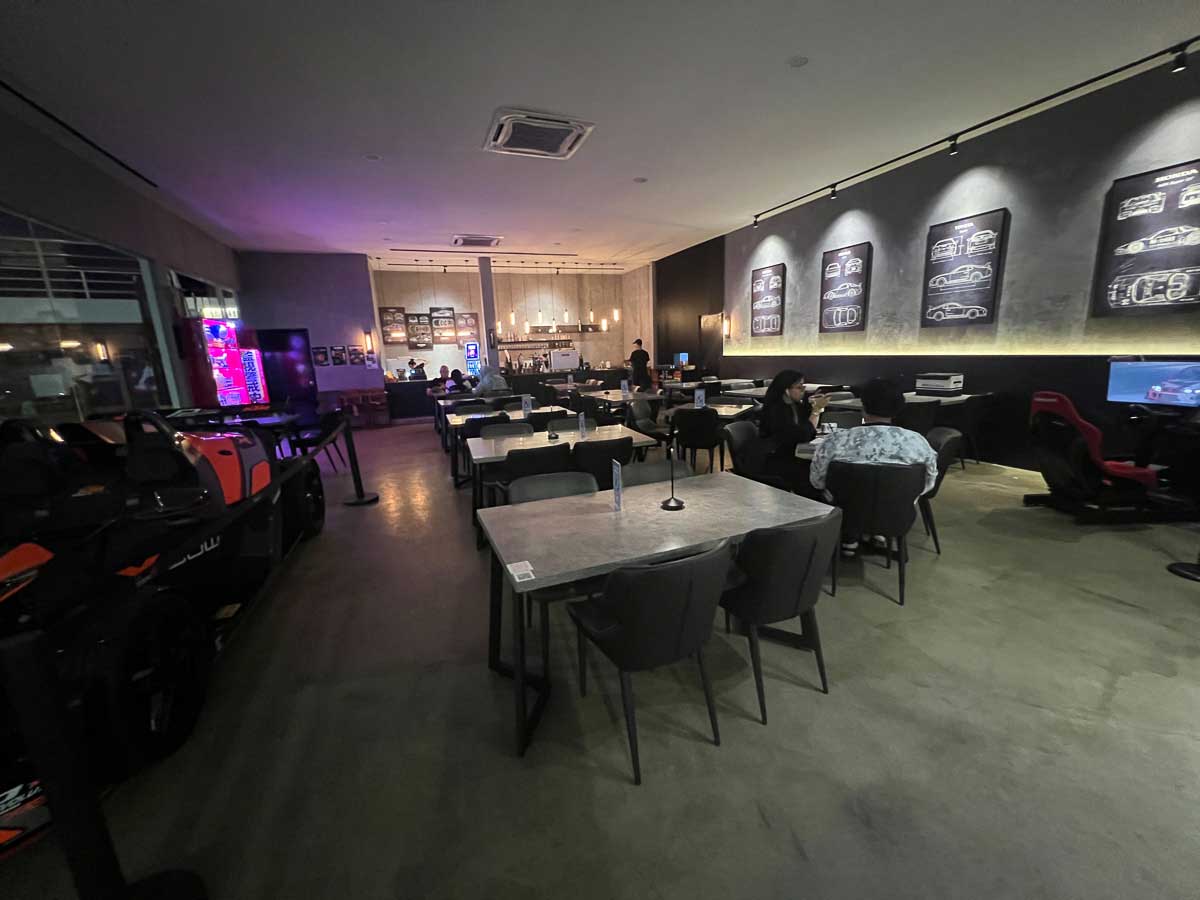
The restaurant delivers
In the old shop premises, a restaurant and a showroom have now been built instead.
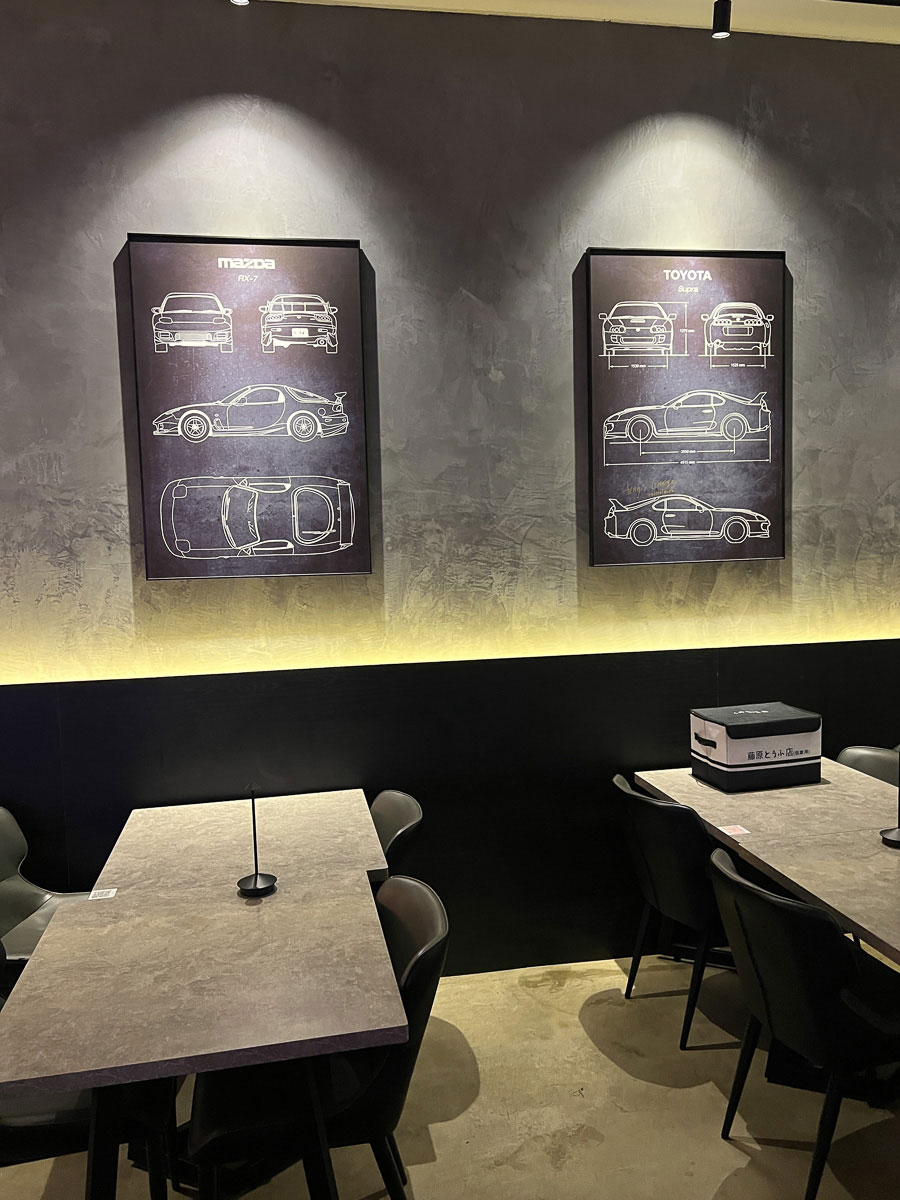
It is somewhat stripped down, but decorated in a clean and tasteful way. Tables and chairs are in black, while the grey walls are home to some really stylish JDM-inspired artwork.
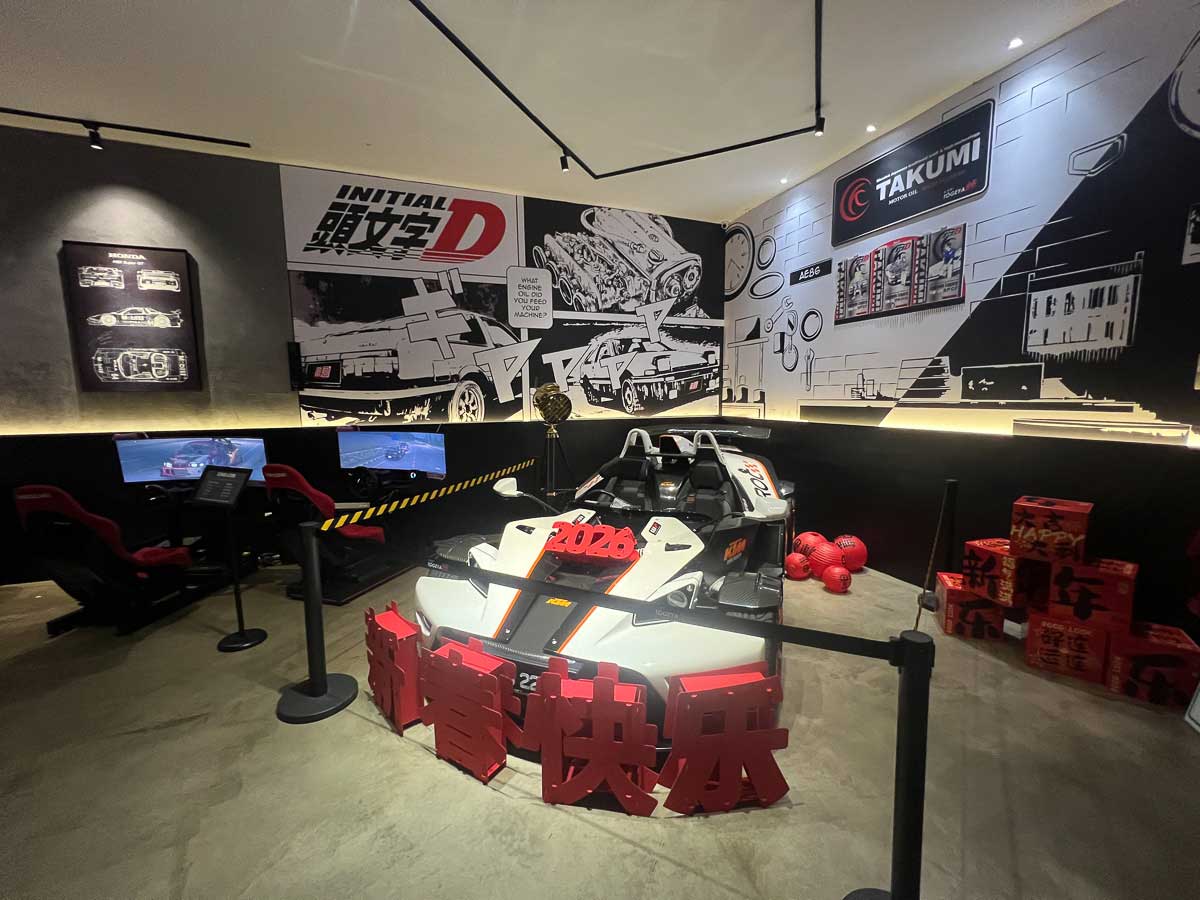
In one corner, a KTM X-Bow Superlight is on display.
“It’s a display / advertising pillar that we change every month,” Kent explains.
Next to the KTM stand two classic car simulators, available for use.
On the menu, Japanese influences are combined with Western favorites, with everything adapted to be halal.
At a quick glance, you can pair Cheesy Bolognese Fries—crispy fries topped with rich chicken bolognese and melted cheese—with a lighter Seafood Aglio Olio with garlic, shrimp, and mussels, or a classic Japanese Curry Chicken Katsu with crispy chicken, smooth curry, rice, and a soft-boiled egg.
The selection is further expanded with grilled skewers like yakitori and fish dishes such as grilled saba.
The drinks menu and dessert menu don’t hold back either, and you can go all in on everything from classic coffee drinks to more creative options like a strawberry oat latte and refreshing specialty drinks with citrus and melon, as well as ordering Bingsu—the Korean version of finely shaved ice with delicious toppings like Magno Clutch and Berry Rush.
The whole setup feels like a modern Asian Route 66 diner, where you have a menu longer than your grandmother’s stockings and everything on it sounds good, tempting, and full of color.
All while you can sit right on the gas station court yard and simply enjoy the Japanese car shapes surrounding you.
The Carpit
After finishing my coffee while standing by one of the well-thought-out Initial D–branded oil drums—Takumi Motor Oil—displayed in the courtyard, I walk over to the Carpit. The building furthest out on the edge, where you can have your car taken care of and washed for only $10—and get it cleaner than when it was new.
In the wash bay, the floor has no drainage grates or anything similar—it’s simply a plastic floor with holes in it, so you don’t have to stand splashing around in what you’ve just rinsed off your car.
Next to the Carpit, there are 1:1 signboards set up where you can park your car and get a great backdrop when photographing it.
Everything is thoughtfully designed, with inspiration and humor from Initial D.
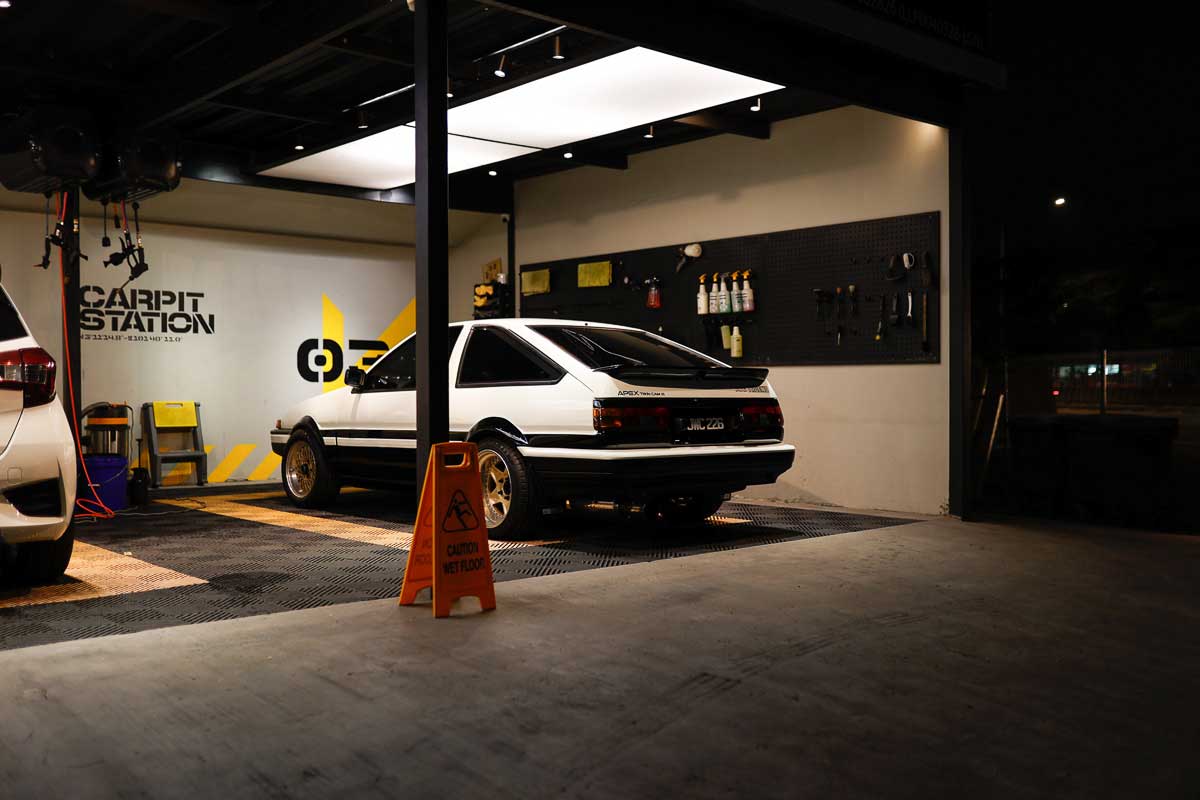
On the upper floor, there are more office spaces, and at the far edge of the square building is the Carpit Station.
It’s like a small glass mechanical bubble with a white Mazda RX-7 FC inside it, with its engine placed next to it.
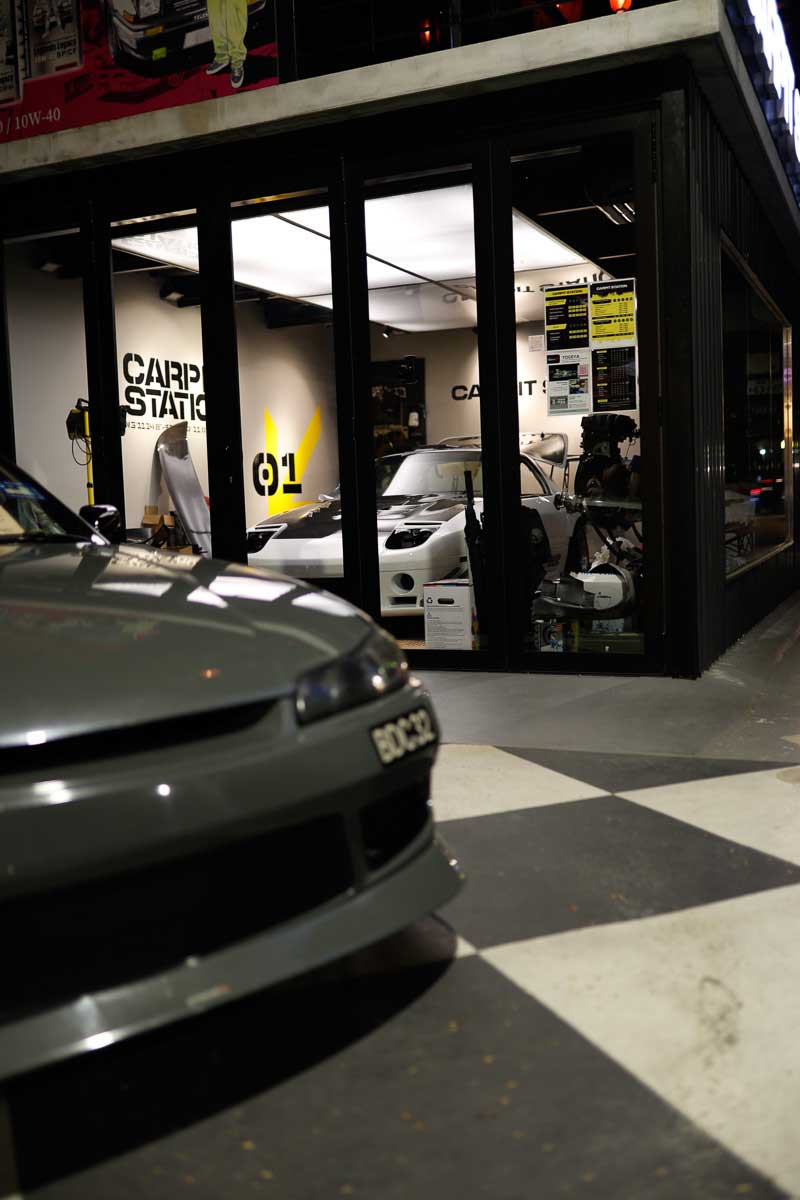
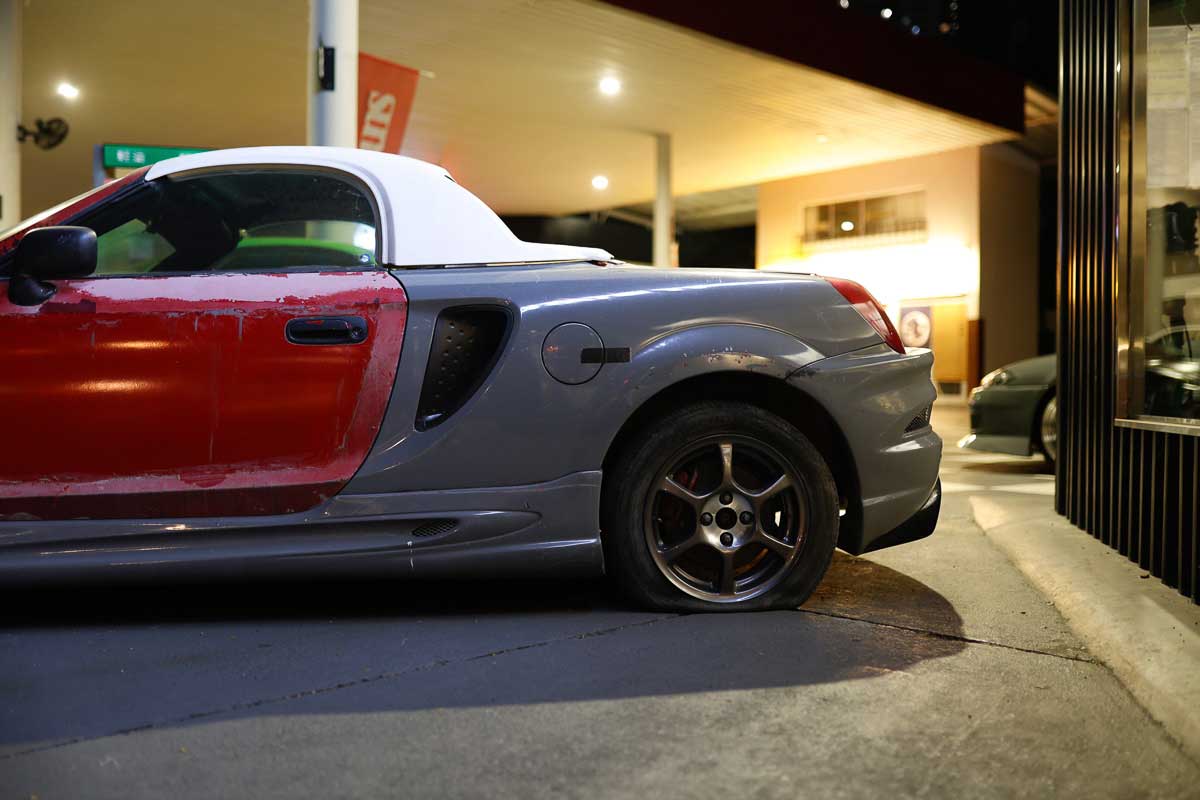
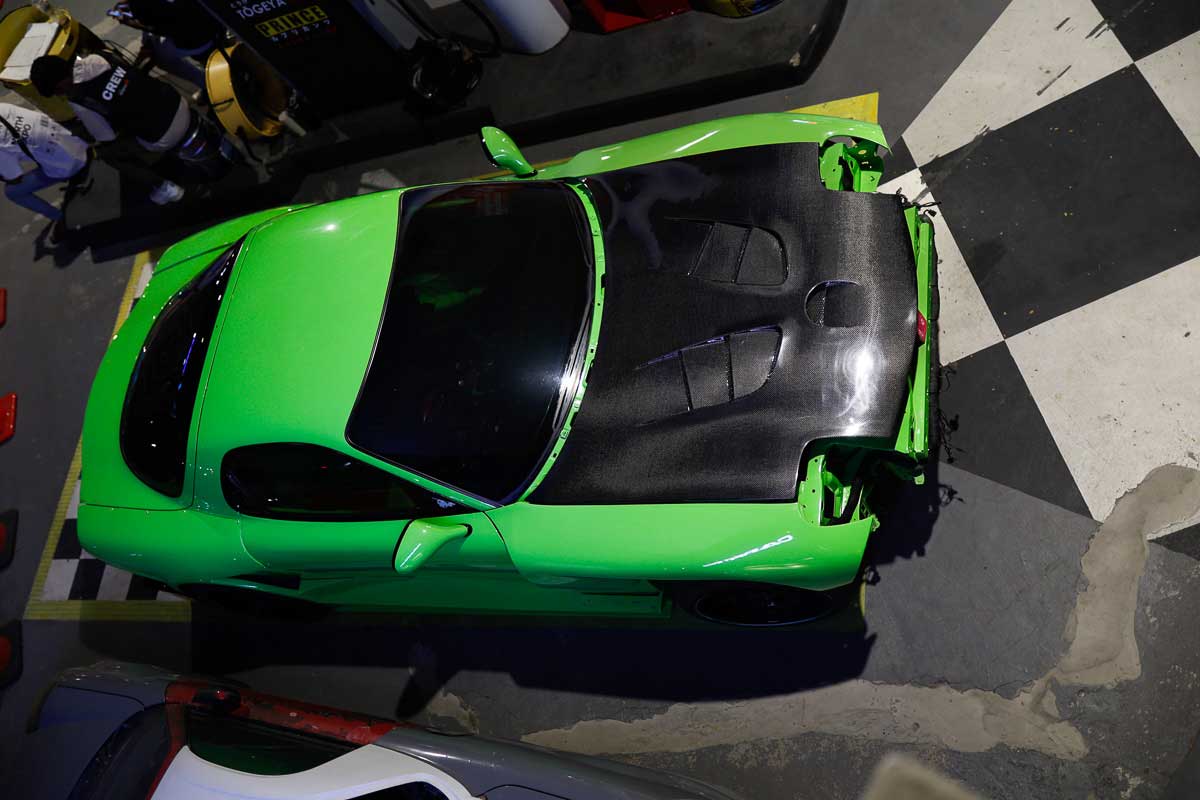
Outside stands a cyan Mazda RX-7 FD with its front taken apart and a beaten-up Toyota MR2 Spyder with an empty left rear tire.
“The RX-7´s are about to get an engine upgrade and the MR2 is meant to be a track car for racing on the circuit.” says Kent with a smile.
“But you have to find the time as well,” he adds, gesturing with his arms.
Do not miss Tōgeya
He apologizes slightly before slamming the hood shut on the now warm AE86, saying that there are so few cars on site, and explains that there is a big drifting event north of Kuala Lumpur the same weekend where many of the cars are.
I turn around and count at least 20 cars on display at the moment—a completely normal Thursday at Tōgeya in Kuala Lumpur - that is better than good for me.
The light grey concrete floor covering the forecourt is spotless, and the ribbed sheet metal along the edge of the roof shines with its dark grey color in the evening light.
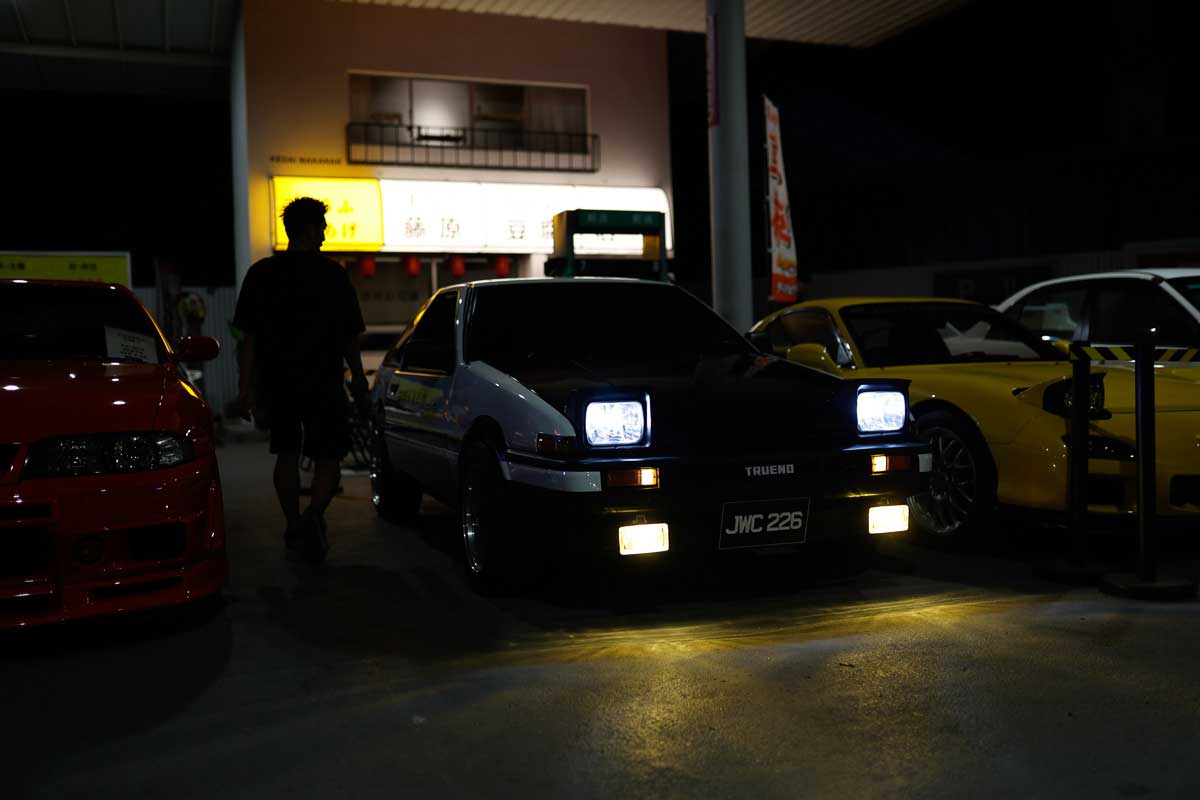
Kent with his friends Toyota AE 86
Outside, cars rush past on the highway—but in my mind there is peace, as this living, breathing diorama makes me smile from within.
Kent have truly followed his vision and dream and built something everyone should see—and perhaps even dream of creating themselves one day.
If you ever get the chance to pass by Tōgeya—take it—you’ll leave feeling nothing but happy and warm inside.
Related Articles

Related Articles

All rights reserved.
Fascinating Cars is a trademark of:
Edenberg Design AB
(559212-2617)
Näckrosvägen 19
Solna
Sweden
All content, images, and materials on this site are protected by copyright law.
© 2026 Fascinating Cars.

Travel with Fascinating Cars - get you inbox candy.


GET AROUND ON FASCINATING CARS:
ARTICLES
SHOP
ABOUT
CONTACT
All rights reserved.
Fascinating Cars is a trademark of:
Edenberg Design AB (559212 2617)
Näckrosvägen 19
Solna
Sweden
All content, images, and materials on this site are protected by copyright law.
© 2026 Fascinating Cars.