
Monza - legendary track
The tempel of speed in the park
- by Peter Edenberg 2025-09-25
Monza - legendary track
The tempel of speed in the park
- by Peter Edenberg 2025-09-25
So I stand there – sweaty after four kilometers of running.
Looking at the sign “Enzo Ferrari via” and smiling broadly – around me is a small square, a church tower, and a pedestrian street. The sun is slowly leaving the day’s sky, and it is almost empty of people. It is Wednesday.
Now it is just down the hill and through the grey pillars that hold the iron gate. The brown sign says PARCO di MONZA and behind there lies one of the world’s most legendary racetrack –
Autodrome Nazionale Monza
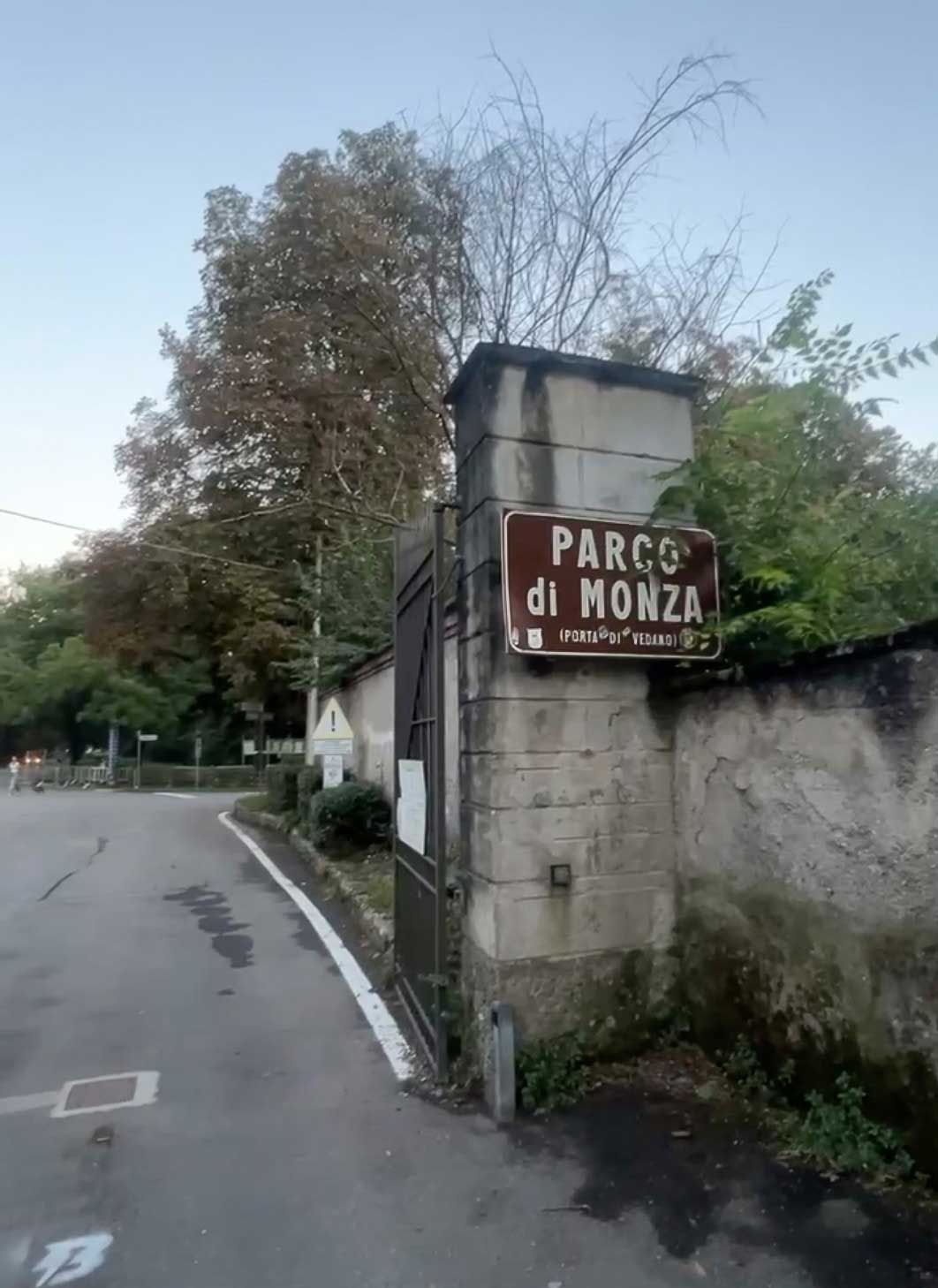
History has been made here since 1922 – for better and for worse. The track was built in just 110 days and opened its doors on September 3rd. It was a project by the Milan Automobile Club to support the Italian car industry and also create a proper GP track.
Housed in one of the world’s largest enclosed parks, Parco di Monza – this 5.8-kilometer track lies embedded among tall oak and chestnut trees, wide grass fields, and a mist of myth.
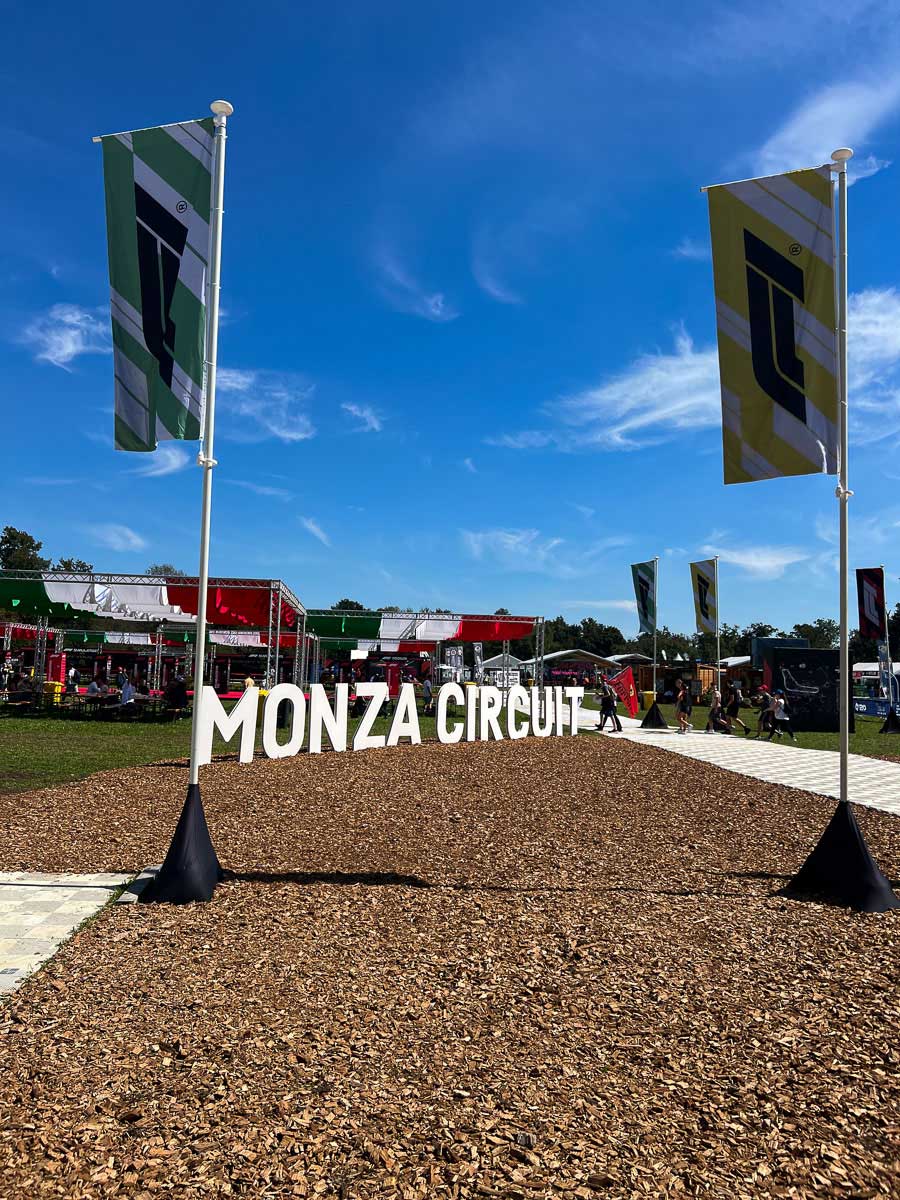
Jogging down the hill, I am met by the main entrance for all cars. Large light signs and advertising monitors bursting through branches and leaves show that something big is about to happen.
On the monitor above the entrance, it says that American Express is here for the Italian GP.
I stop to catch my breath while traffic moves in and out of the area. It feels calm, and all the officials look as if they do not quite know what is to come.
Smiling to myself, I try to get into the Banking-area, which according to legend should be open to the public, but I get a firm no from several officials.
Happily, I run back through the sleepy suburbs of Vedane al Lambro and Lissone to rest before tomorrow’s showdown.
Thursday – the Track Walk
Every day I walked the three kilometers to the track and the three kilometers back from the track.
On Thursday it was the first time walking this path, and every step felt like experiencing something new – the streets were still empty, but small signs with arrows and messages already showed that something was about to happen.
Down at Vedane al Lambro’s small square stands the skeleton of a soon-to-be-built stand, and Monster’s trucks had parked right in the way of everyone wanting to head down to the park.
The sun is scorching, and I feel sweat running down my back.
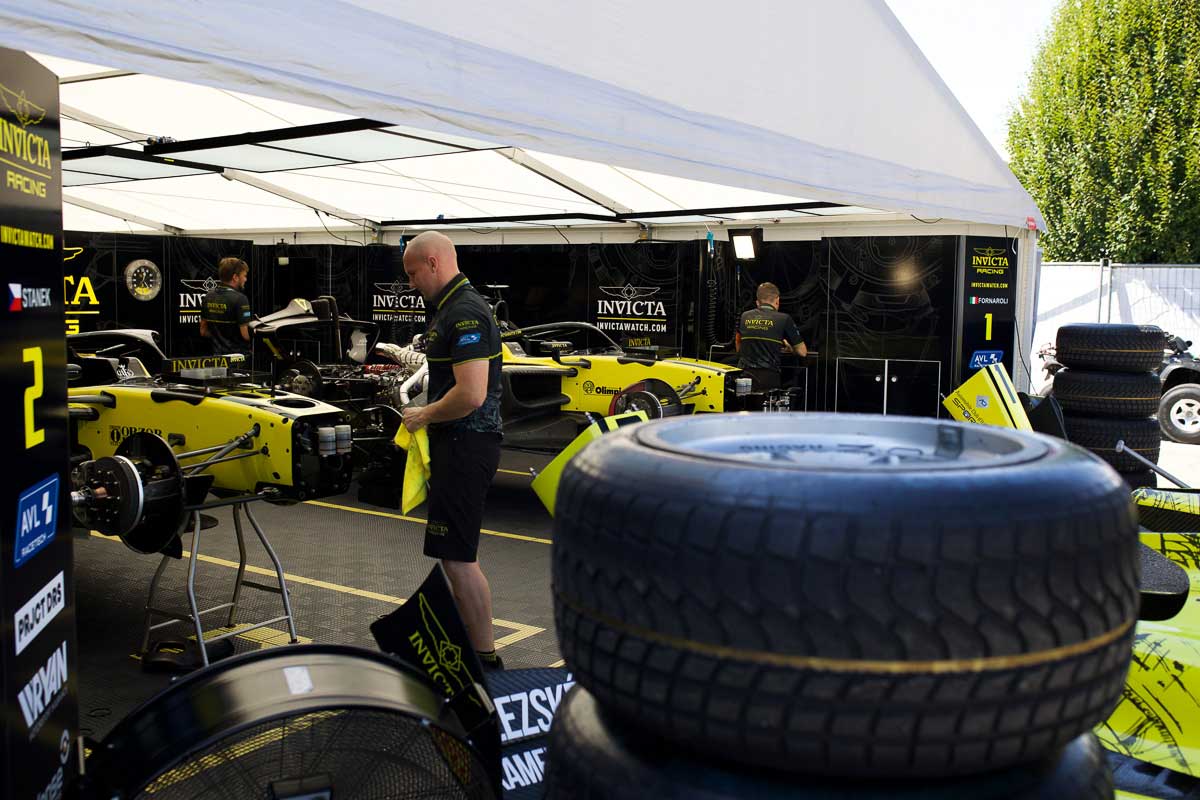
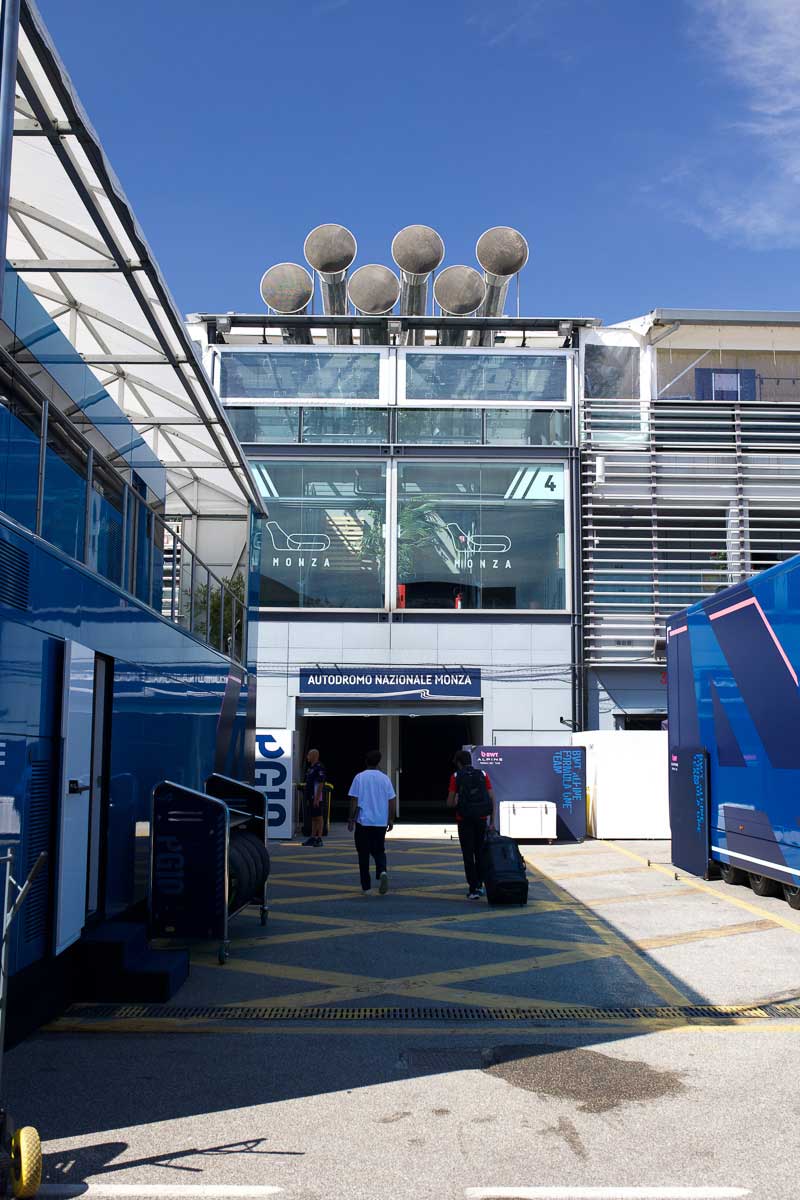
I meet up with my contact to gain access to the F2 paddock. It is full of movement everywhere. Everyone is carrying something, and it feels like no one is standing still.
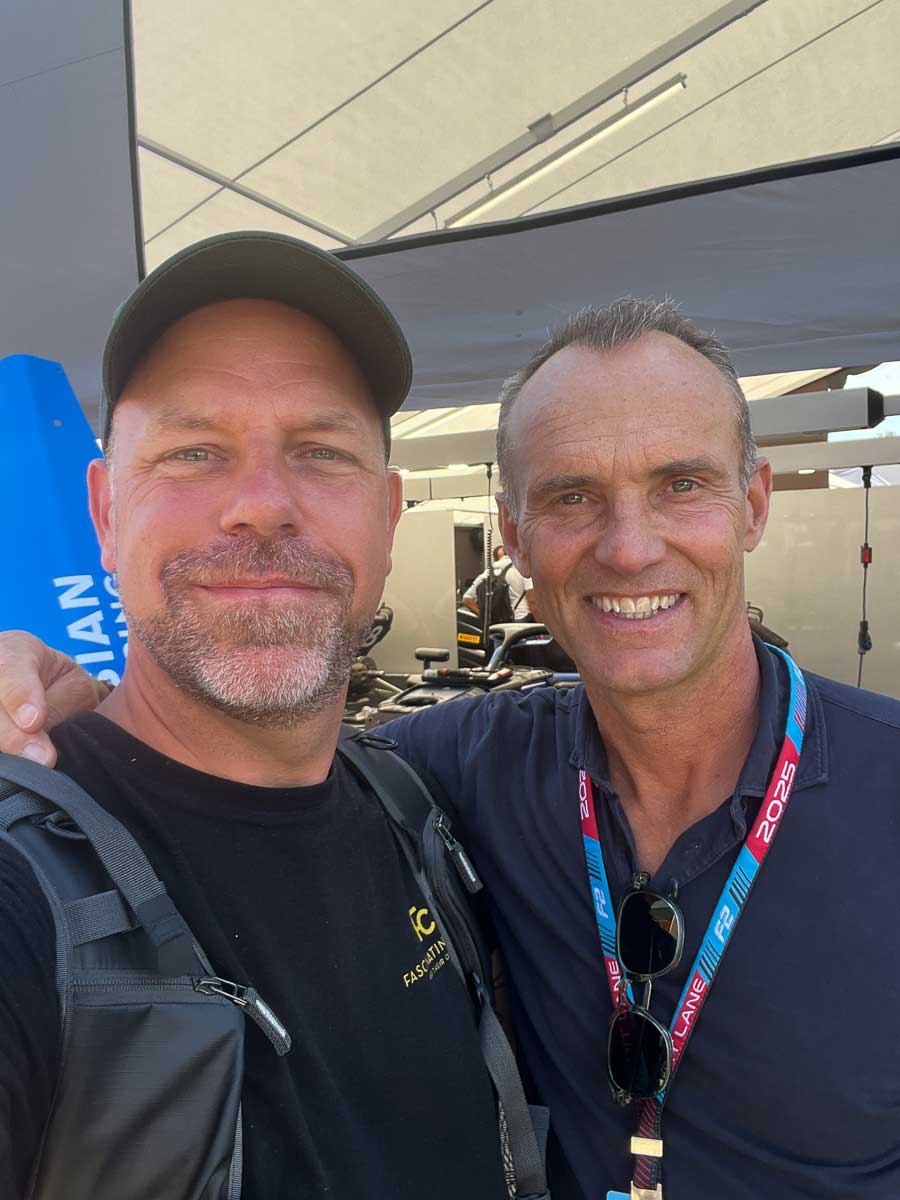
Many of the F2 cars stand dismantled without noses, tires, or engine covers in their respective team tents.
I get the feeling of being at Sweden’s little Mantorp Park on a cold autumn day before 24-hour racing when I see how feverishly everyone works on their cars – but I am quickly thrown back to the fact that I am standing in the Temple of Speed in Italy, and this class costs money, and everyone who drives here has their sights set on one day racing in the royal class – F1.
The Pole Position
I ask a McLaren mechanic, and he shows me where to zigzag through all the buildings and tents in the paddock to reach the track – for now, I have two hours to do The Track Walk – as many do on Thursday before the racing begins.
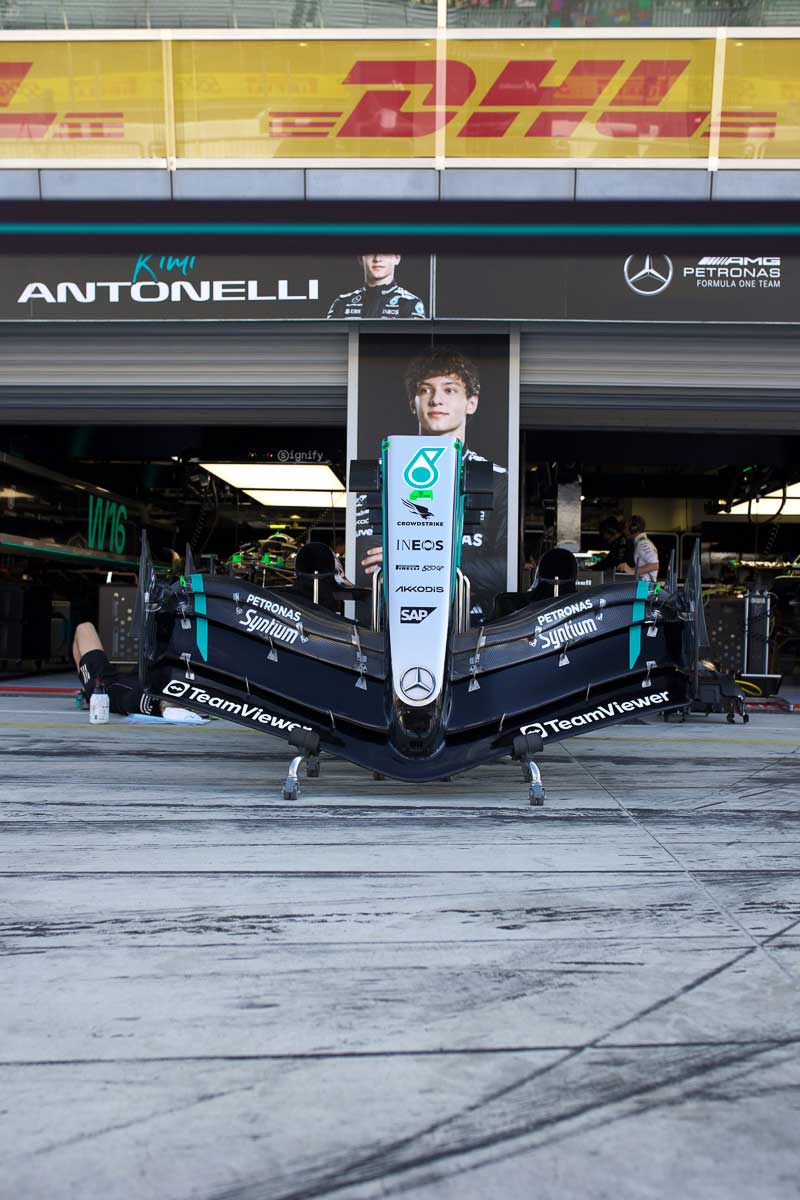
I zigzag my way toward the track and pass the F1 paddock, which has large gates, so only those with authorization are allowed in. I peek curiously inside to see if I recognize anyone I should know, but I do not recognize anyone.
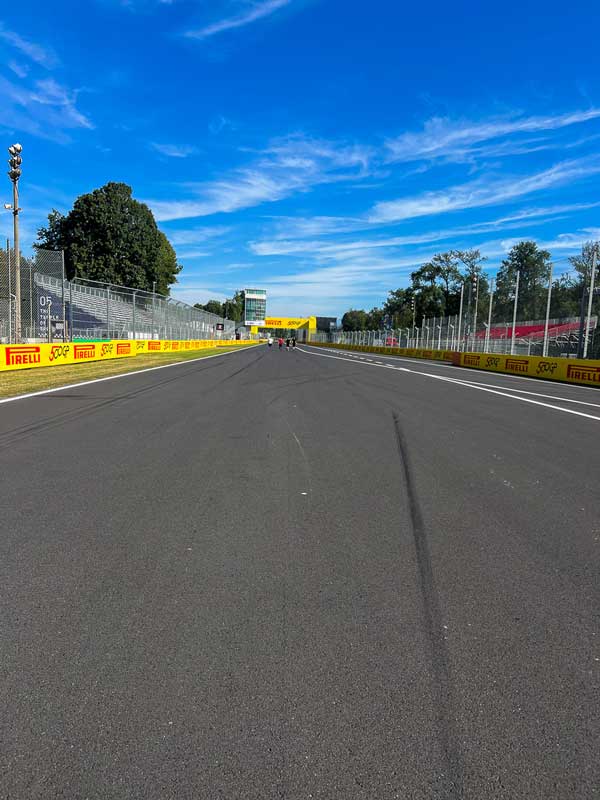
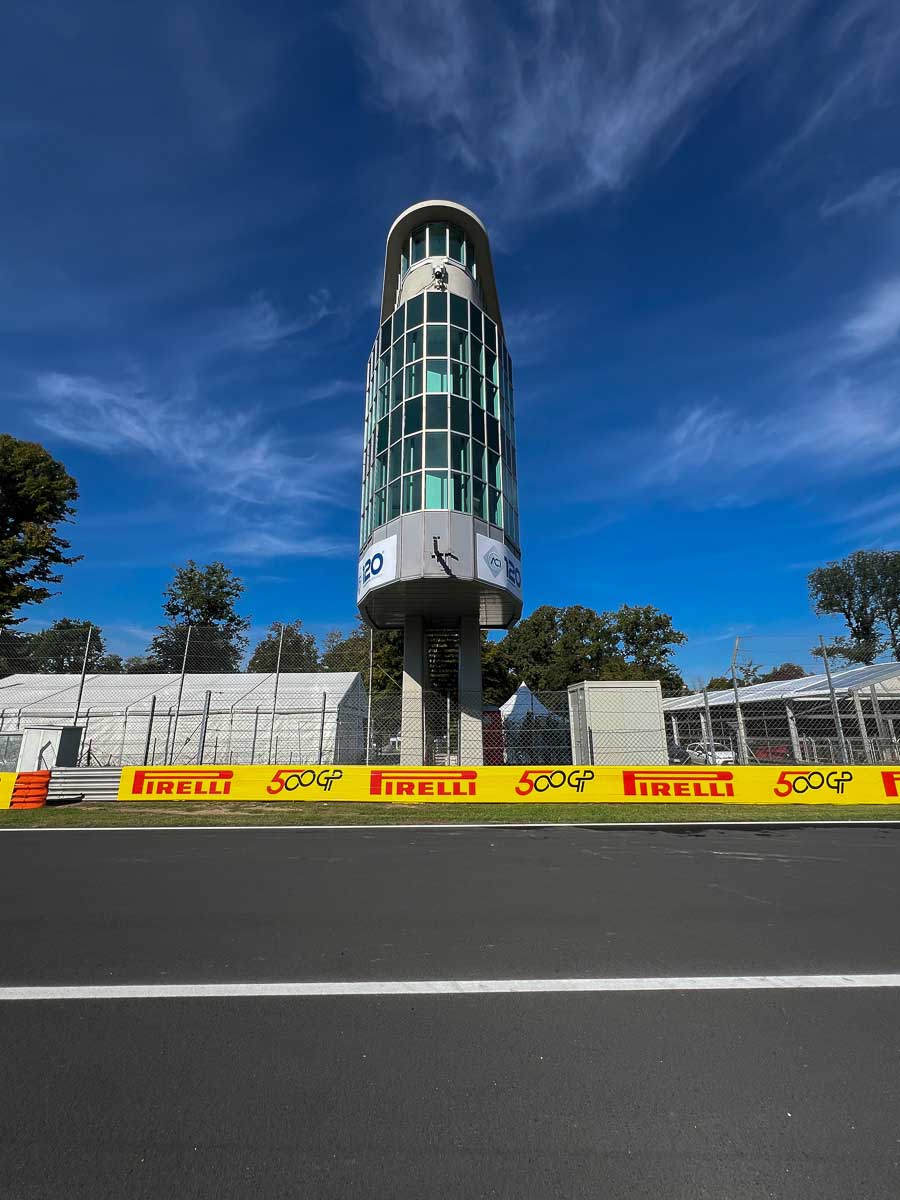
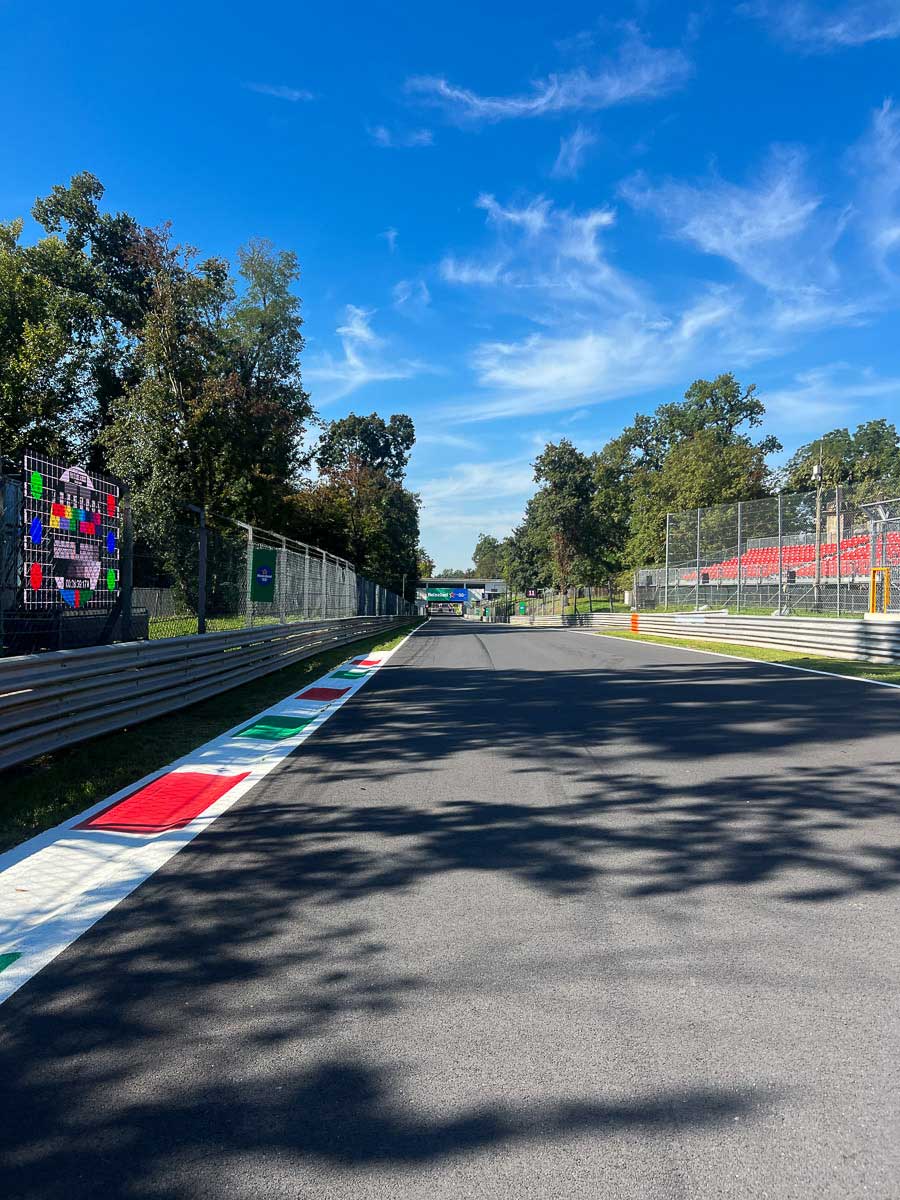
I keep walking and after a minute I step out onto the track’s start/finish straight, seeing it disappear in both directions. Standing near the middle of the straight, I see the first chicane, Retifilo, almost 600 meters ahead of me. I turn around and see the starting lights above me, just as they are being tested. Slowly, one red light after another lights up – then black.
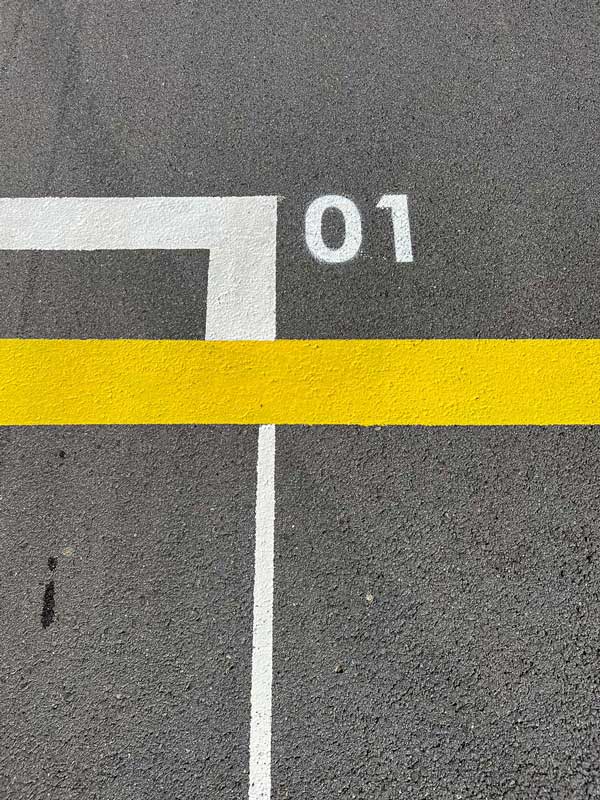
I smile and imagine the start of all the races that have been run here over the years. How the cars drag raced down toward the chicane to find the best spot on the track to overtake – or not be overtaken. On the ground beneath the lights, I see the yellow-white stripe with the number one next to it. Here the Pole Position driver will stand on Sunday, in front of the packed grandstands.
Always remember Ronnie
Beyond the start line, I see the exit of Parabolica, where everyone accelerates to gain maximum speed on this 1.2-kilometer stretch.
I begin walking down toward the spot where Ronnie Peterson crashed nearly 47 years ago. I think about what would have happened to Swedish racing if the start of that race had been done correctly. Then Sweden would probably have had a world champion in F1 and a whole new generation of drivers coming up after him.
But history is what it is, and tragedy became a fact when Riccardo Patrese came flying from behind while everyone else was almost standing still.
The Halo saves lives in Formula racing
Every meter feels like walking on linen. There is not a single bump, hole, or unevenness that could make your feet slip, stumble, or misstep. Every decimeter is divinely asphalted, which I would later see when the racing began. I get the feeling that the formula cars hardly need to make an effort when driving on this track. The cars run so smoothly on the surface that it almost looks as if they are a stick slowly drifting down a calm stream.
The straight ends and the chicane takes over. Here many cars have disappeared from the race after colliding, or losing the brakes, as Arvid Lundblad would later do in Saturday’s race – or like when Marcus Ericsson rolled his Alfa Romeo Sauber in 2018, when his DRS flap failed to close.
That caused the car to make a sharp left turn, almost 90 degrees, under braking, straight into the steel barrier – and Marcus then saw the chicane upside down as the car flipped two left rolls and one right roll. He climbed out of the car after a couple of minutes, and when he took off his helmet, soil fell down over his shoulders. The Halo was thoroughly scraped and probably saved his life.
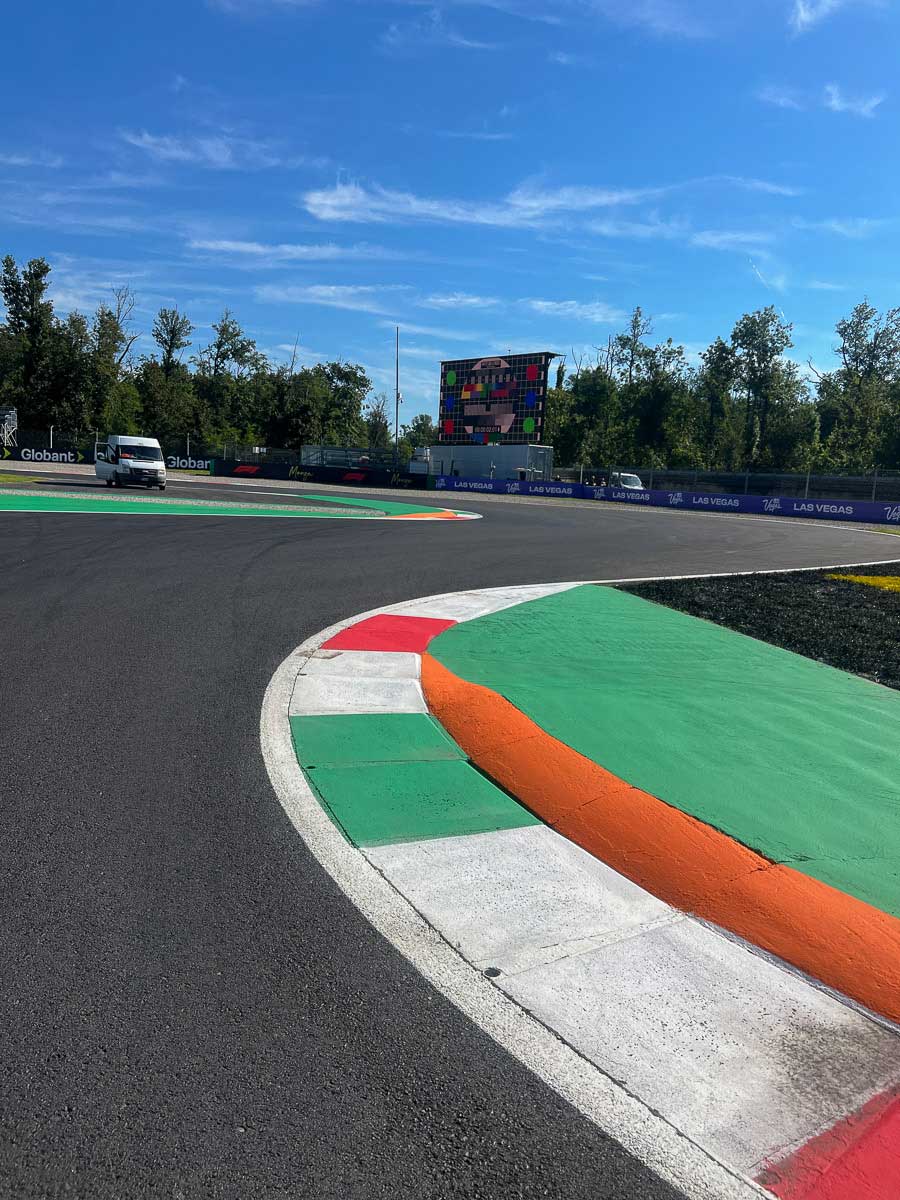
The curbs are painted in the colors of the Italian flag, and a man is raking the gravel around them. He smiles and says hello.
It was also here that the Halo came into use for Hamilton, when Verstappen went too wide, hit the sausage curb, and then climbed up onto Hamilton’s Mercedes – all while the most intense World Championship fight was going on between them in 2021.
Chicanes came to stop speed in the 70’s
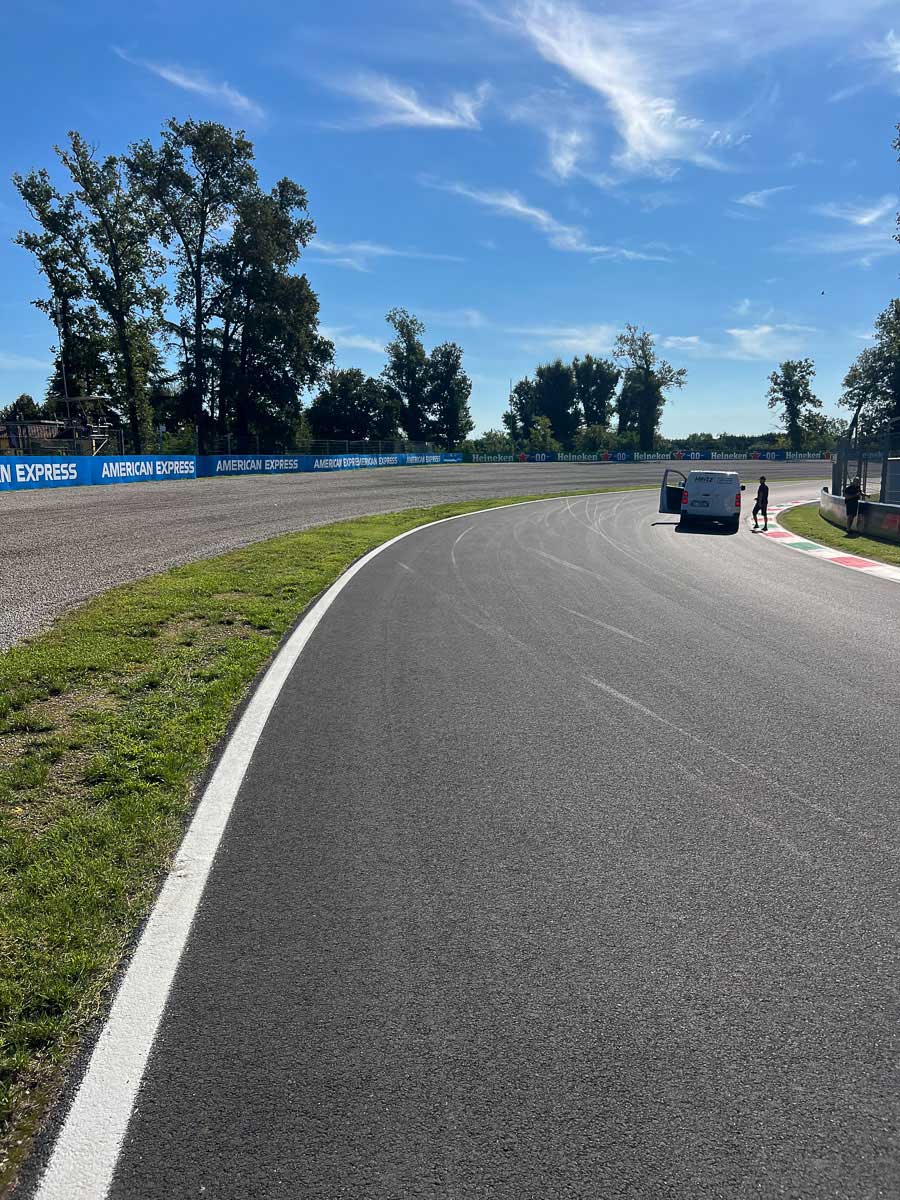
Along the way, many are working to finish preparing the track, and in Curva Grande, the longest corner at Monza where the drivers go full throttle, three men stand on a scaffold at the end of the gravel runoff, above the tire barrier. They are working on replacing one of the flag monitors but seem to be having some trouble, as one of them swears in Italian so loudly it echoes across the entire corner.
I smile to myself and find it strange that I almost understand every word he says, even though I do not speak Italian.
I stop to drink some water at the end of the corner and look down toward Variante della Roggia – a chicane added in 1976 to slow the pace heading toward the well-known first Lesmo corner.
In the early 70s, it was decided that speeds had to be reduced on F1 circuits around the GP circus, as many fatal high-speed crashes had made the cup overflow and the glamorous image became more associated with death races. Chicanes were introduced on tracks around the world to slow the cars down and create a safer environment for the drivers – including at Monza.
The valley down to Ascari
Lesmo takes its name from the nearby municipality of Lesmo, located a stone’s throw northeast of the track. Lesmo 1 is corner six and Lesmo 2 is corner seven on the circuit.
Both are fairly sharp right-handers that you need to carry good speed through, because afterward you will be eaten alive by competitors if you miss the apex in these turns.
The straight down toward Ascari is unforgiving if you lost speed in the Lesmos. Then you easily become a sitting target on the DRS straight for the car or cars behind that managed the corners better.
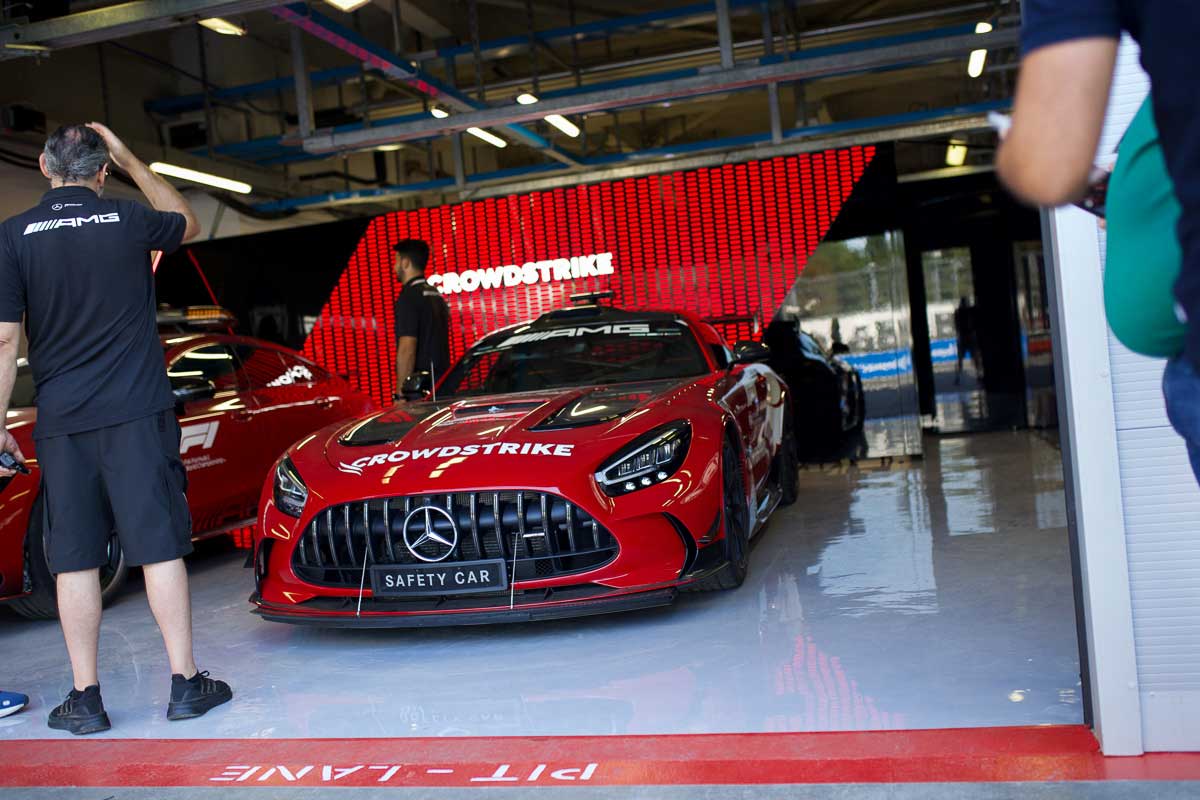
The heat is tangible, around 30 degrees, and I get a striking sense of how it must feel to sit in a Formula car in this heat – while trying to focus on either overtaking, finding the right line, or not being overtaken, all while slowly losing up to 3 kg of fluids during a normal GP race.
A blue cleaning tractor slowly passes me, crossing the DRS line painted on the asphalt, heading down toward the light left-hander, Serraglio.
Behind the tractor and all the empty red seats at the bottom before the corner, I see what was once the entrance to Parco di Monza – or actually Monza the town – Porta del Serraglio.
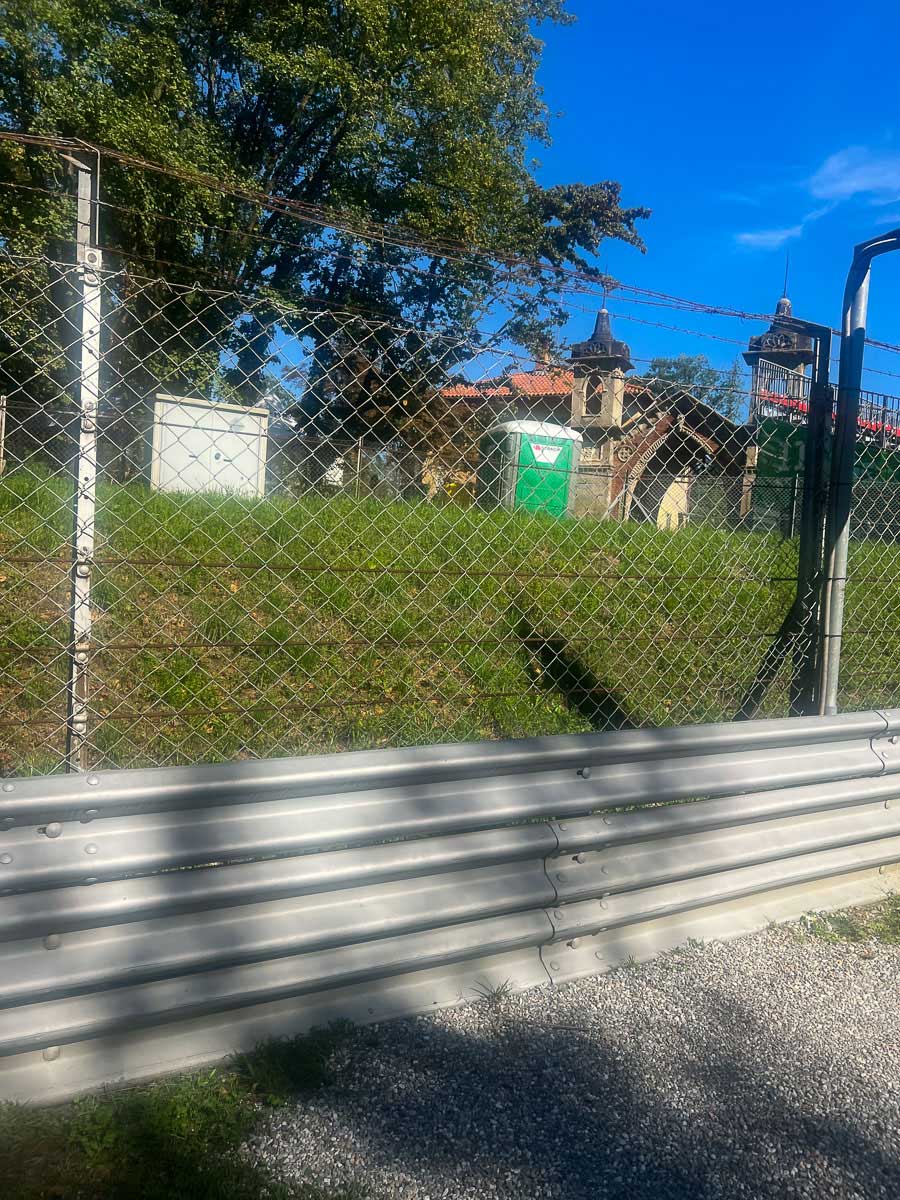
The building is an arch with two church-like towers beside it. The house next to the portal served more than 170 years ago as the guard’s farmhouse, an unusual kind of benefit compared to what you might receive today.
This building feels completely out of place where it stands, 30 meters from the track’s fence with a green, almost glowing porta-potty beside it.
It is here the track almost begins to crawl over you, down toward Ascari. It feels like I am walking in a valley that slowly leans down toward the Banking viaduct. The Heineken sign glows far away, and I cannot see the end of the straight from where I stand at the exit of the Serraglio corner. The only thought in my head is: here it is just full throttle all the way.
The Infamous Monza Banking
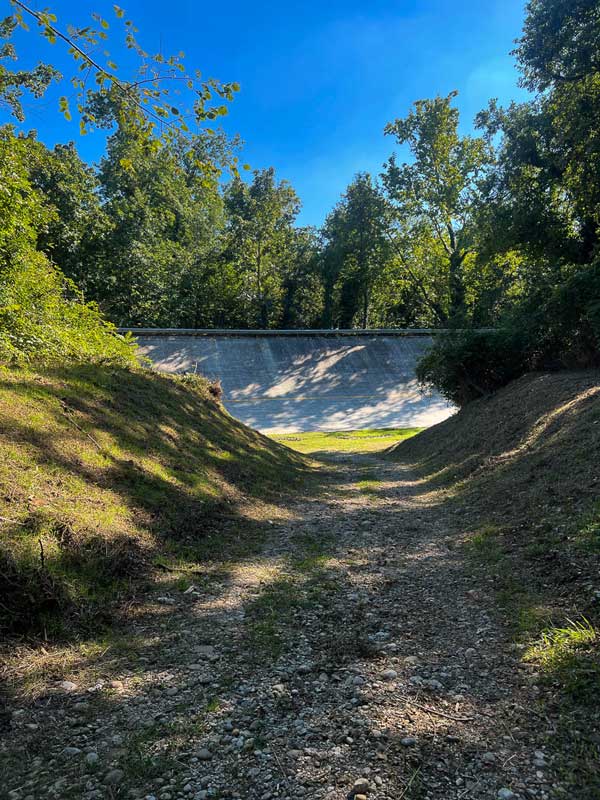
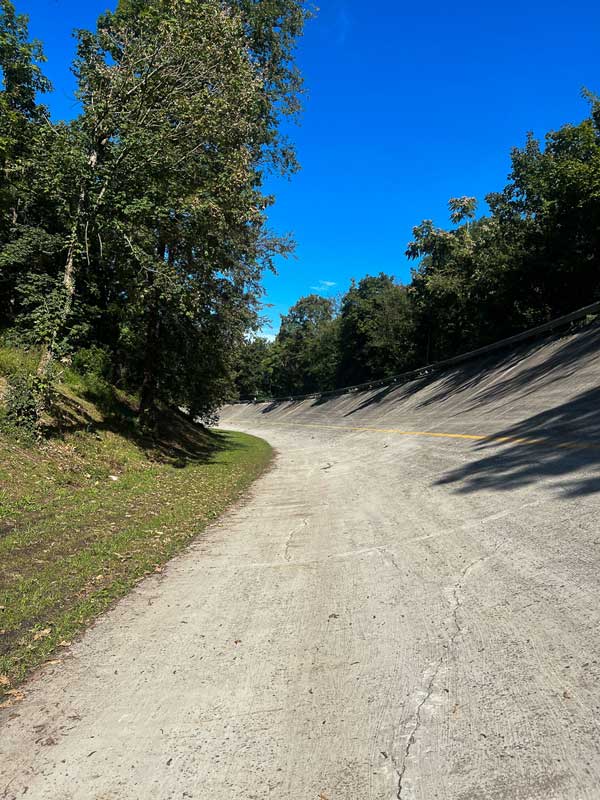
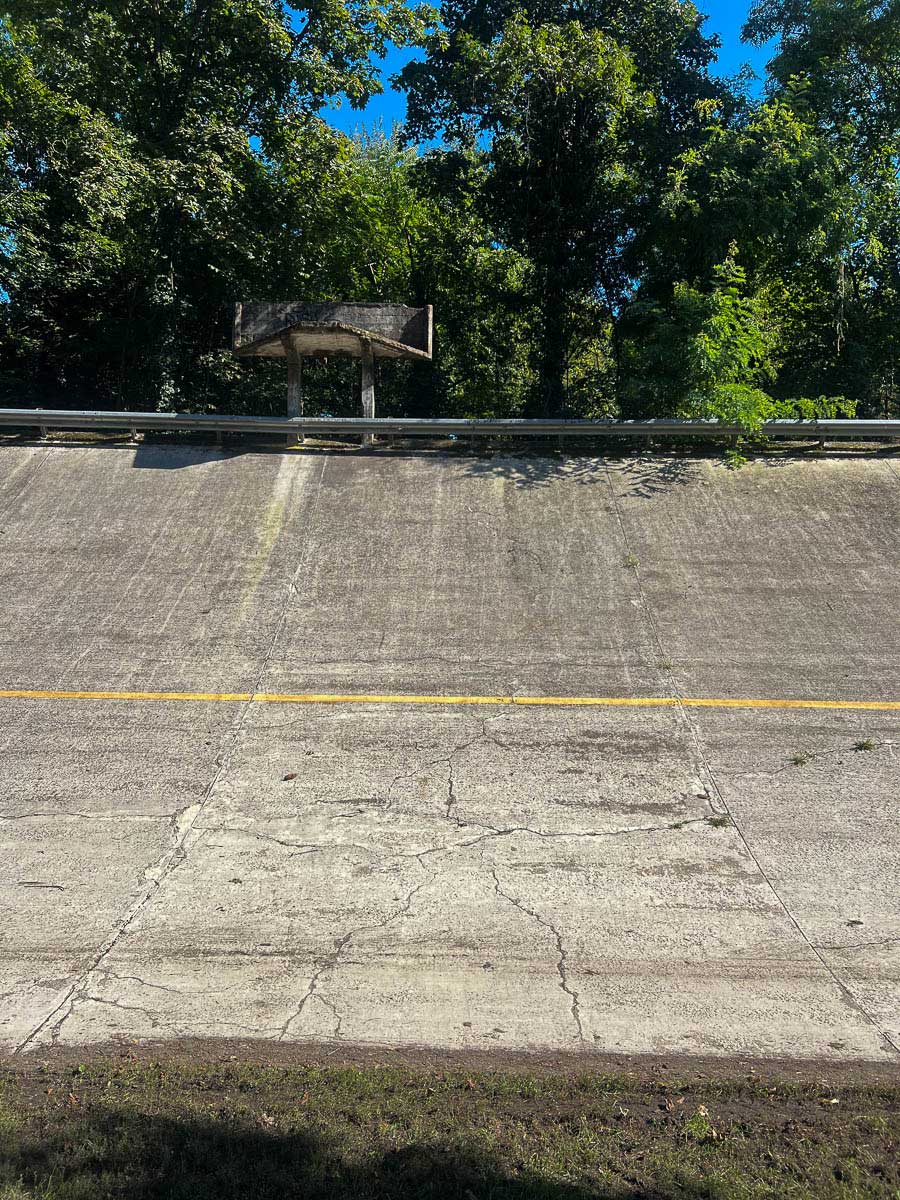
Above the tunnel runs the Banking, which was once part of the F1 World Championship – but was closed after the 1000 Kilometers of Monza (Mille Miglia/1000 km Monza) in 1969. It was not exactly safe.
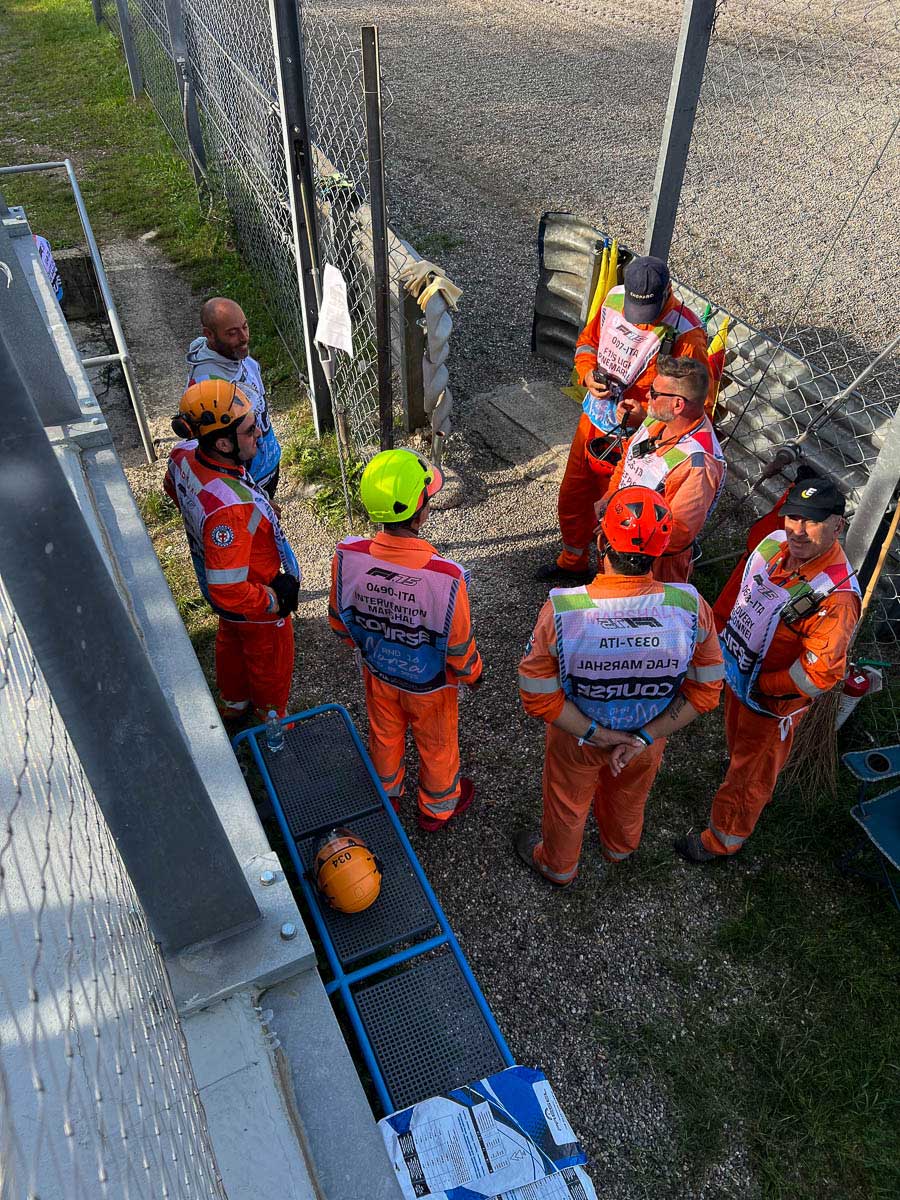
The Banking is a magically beautiful creation that is slowly becoming more a part of nature than a racetrack. When I later ask a marshal, I am told that no one takes care of the Banking – it is simply left to slowly decay and merge with nature.
At its steepest, the Banking has an 80-degree incline and is practically impossible to climb – which I tried while I was there – but the slope itself is a challenge.
During the weekend it is also not a place where you are allowed to be, as I found out when I wandered around on it later that day. Two guards rolled up in their little patrol car and asked me, in the English they could manage when they realized I did not speak Italian:
“What fuck you do here?”
After that, I was driven back to the Fan Zone, with a barrage of Italian shouted after me as I stepped out of the car.
Alberto Ascari – the saint of Italian racing
In the tunnel under the Banking bridge, I see how worn the concrete is while the Ascari chicane begins to appear at the end of the straight.
Alberto Ascari, the Ferrari driver, won for Ferrari here in 1952 and 1953 and is the only Italian ever to win the world championship title for Ferrari. He also held the record of nine consecutive GP wins, a record broken by Vettel in 2013!
In 1955, Ascari was test-driving a Ferrari 750 Monza when he completely lost control in this very corner and was thrown from the car. He died instantly.
There and then he became a saint of Italian motorsport, and the corner that later became the chicane was named after him.
In the Ascari chicane, three men are painting advertisements on the grass. One of them smiles at me and nods as I see a drop of sweat run down his forehead. I smile back and behind him the huge straight leading down to Parabolica takes shape. Almost one kilometer of asphalt lies in front of me down to the long right-hander.
The Magic of Tifosi’s
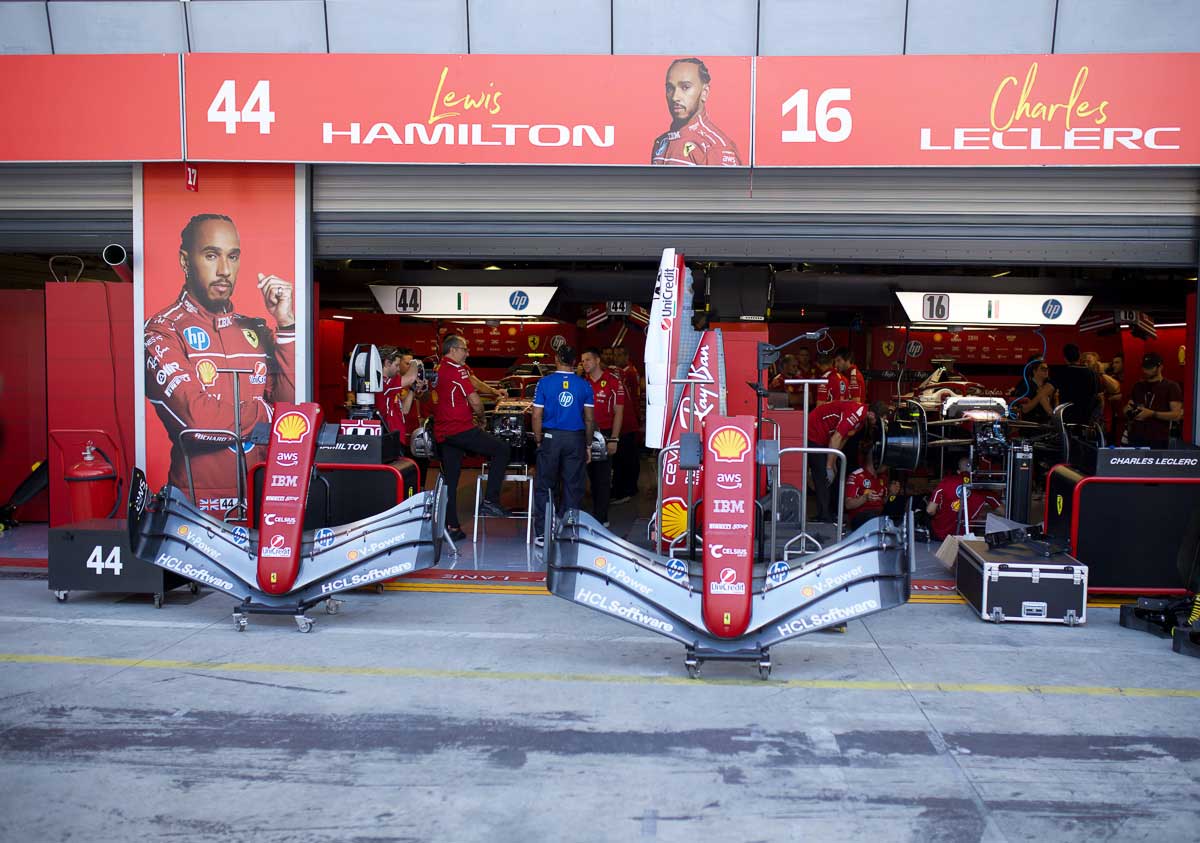
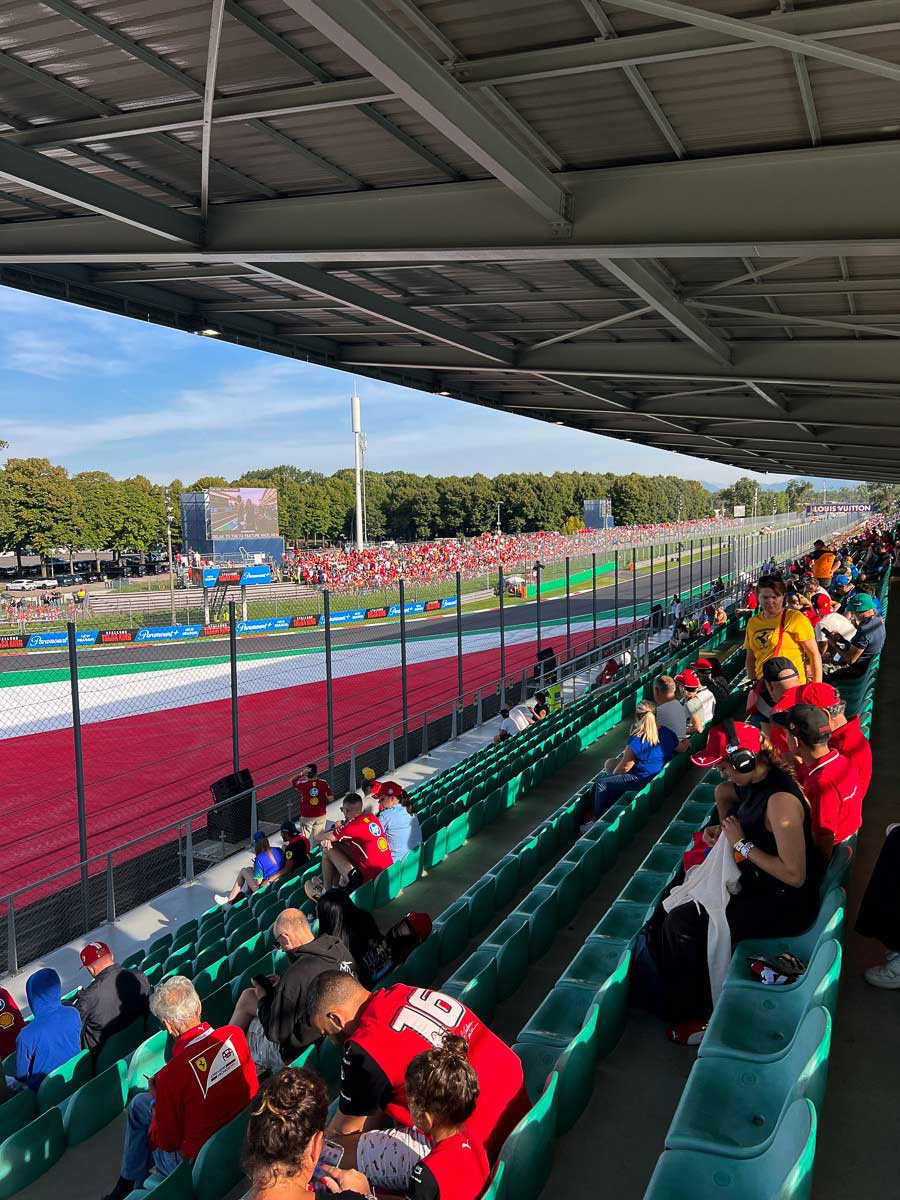
It is along this straight that the sea of red flags, caps, and flares from all the Tifosi can be seen in Sunday’s broadcasts. Tifosi (supporters in Italian) are Ferrari’s devoted followers, and they create the red sea around the entire track during the GP weekend.
I myself am a die-hard McLaren fan, but the joy of seeing how these Ferrari fans tirelessly stand, cheer, and applaud every time Leclerc or Hamilton passes by in practice, qualifying, or the race is incredible to witness.
It is not often that I walk on a perfectly straight road for a full kilometer, but this road I walk with happy steps.
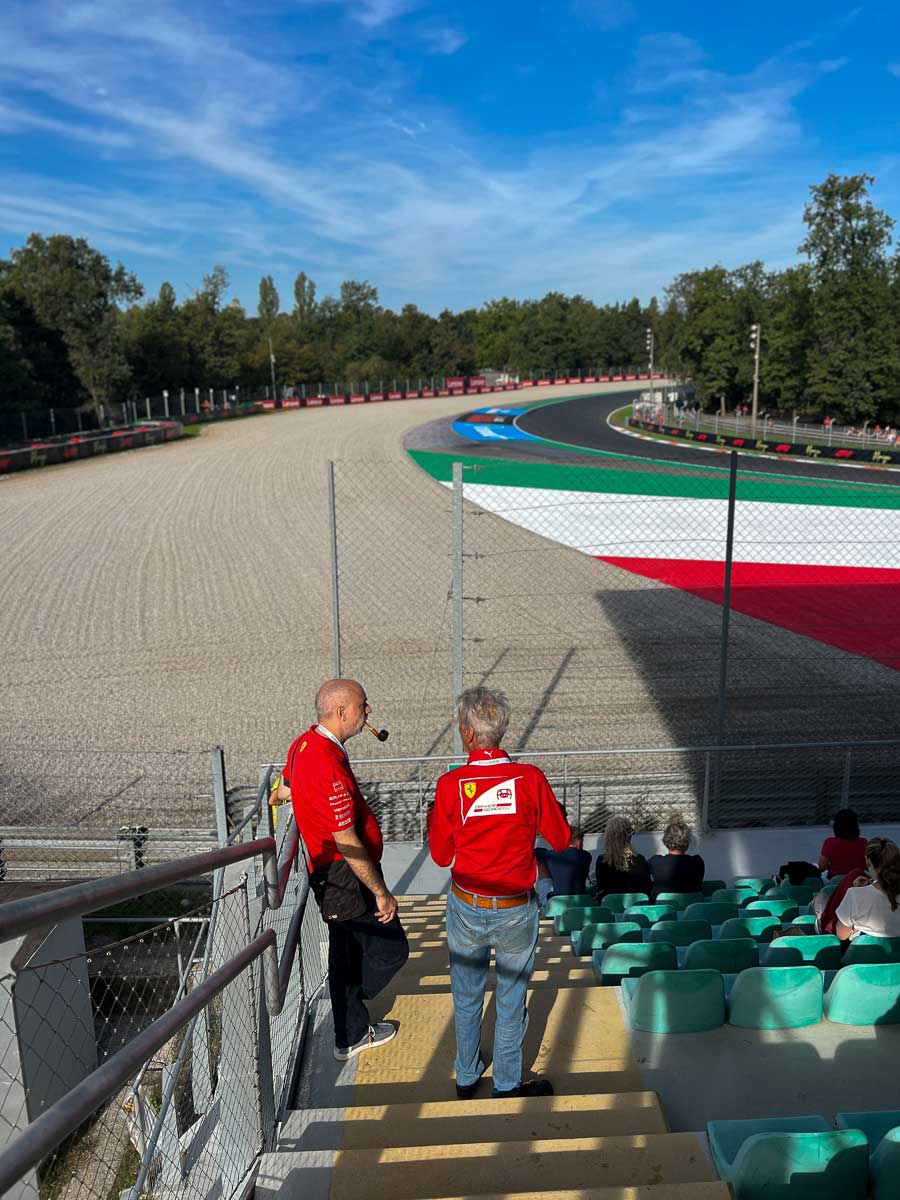
Parabolica lies ahead of me, its enormous runoff zones rising into view.
Parabolica – a tragic corner?
The sun is frying me, and I feel my shirt and cap drenched in sweat as I approach the Parabolica corner without slowing down. It was in this very corner that von Trips collided with Jim Clark in 1961 and was thrown into the crowd, with the dark outcome of 15 spectators losing their lives, as did von Trips himself.
It was also here that Jochen Rindt inexplicably lost control of his car during qualifying, and just like Marcus’s car, took a sharp left turn straight into the barrier before landing in the gravel trap. Rindt’s life could not be saved, and he became posthumous world champion that year, having collected enough points in the earlier races to secure the title.
Must forget – must move on
In Sunday’s race, Dino Beganovic had found the speed in his car again compared to Saturday when it was slow. He made two overtakes just before or in Parabolica while I sat in the grandstand above, waving the Swedish flag.
In that moment, all thoughts of Monza’s dark history were blown away, and I enjoyed following car after car through the corner, hearing how they accelerated out toward start/finish.
For Monza’s memories are not only darkness but also fantastic racing.
Like in 1971, when one of the most legendary races was held here. The winner, Peter Gethin (BRM), took victory by just 0.01 seconds ahead of Ronnie Peterson. The top five cars were within 0.61 seconds – a record in itself.
Ronnie – our super Swede – won here in 1973, 1974, and 1976.
In 1988, a month after Enzo Ferrari passed away, the Italian GP was held. That year McLaren won every race – except Monza, which Ferrari won in a one-two finish with Gerhard Berger and Michele Alboreto. Just imagine that faith of that race and being there for that. Ufff, tickles my brain.
Schumacher ended his Ferrari career in 2006 by standing on the top step of the podium here in front of the home fans, for a fifth time.
Alonso and Barrichello also created memories for the prancing horse with their three victories together, and 2024 is hard to forget, for those of us who saw it, when the crowd stood and sang the Italian Anthem loudly for Leclerc after he completely unexpectedly smashed home the race.
Hamilton is moved by the moment
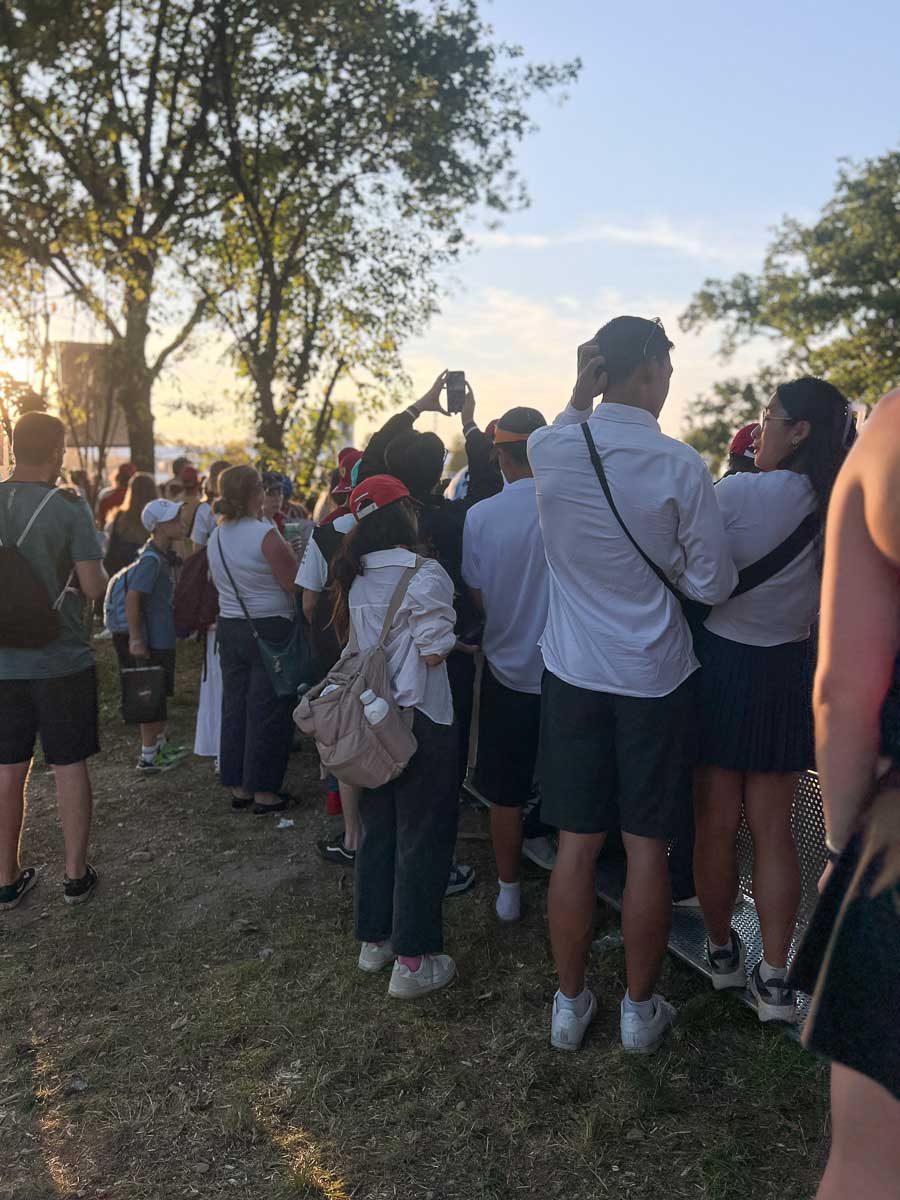
On Sunday afternoon, as I push my way through the gates at Parabolica to reach the start/finish straight, it feels like I am at a festival. People pour in from every opening in the track’s fences or barriers.
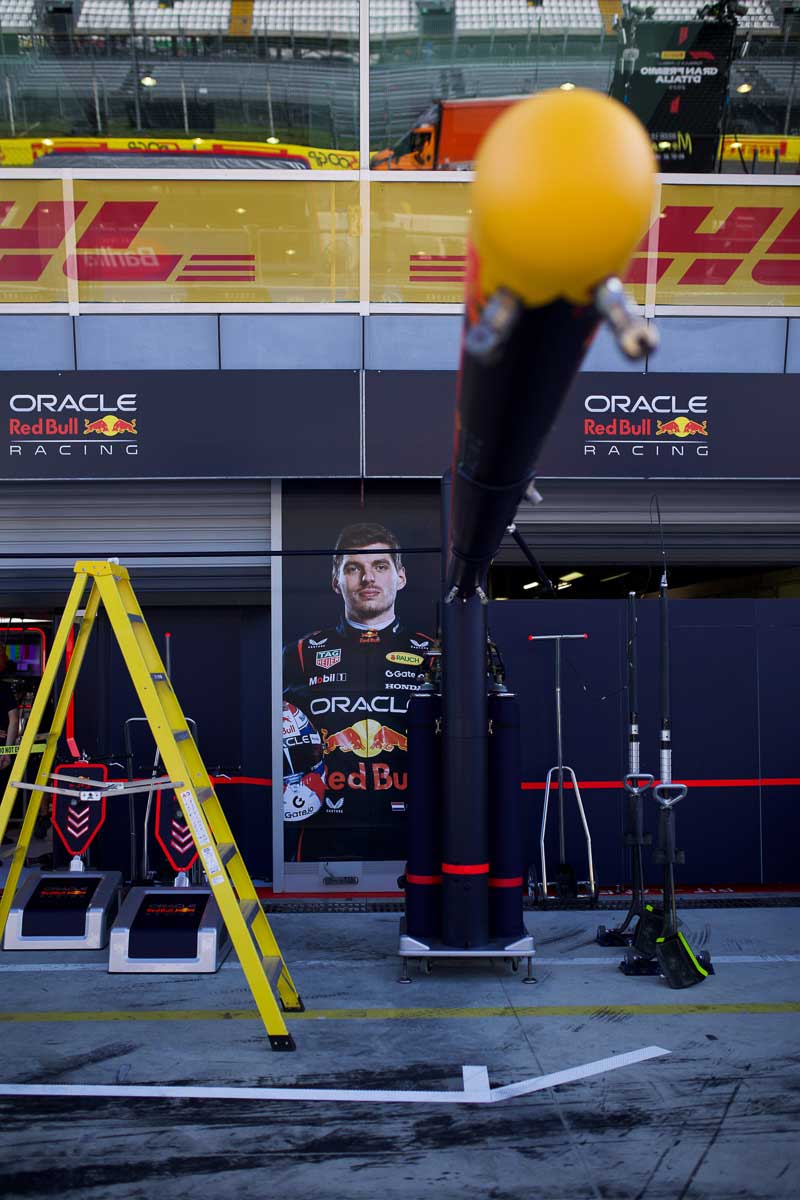
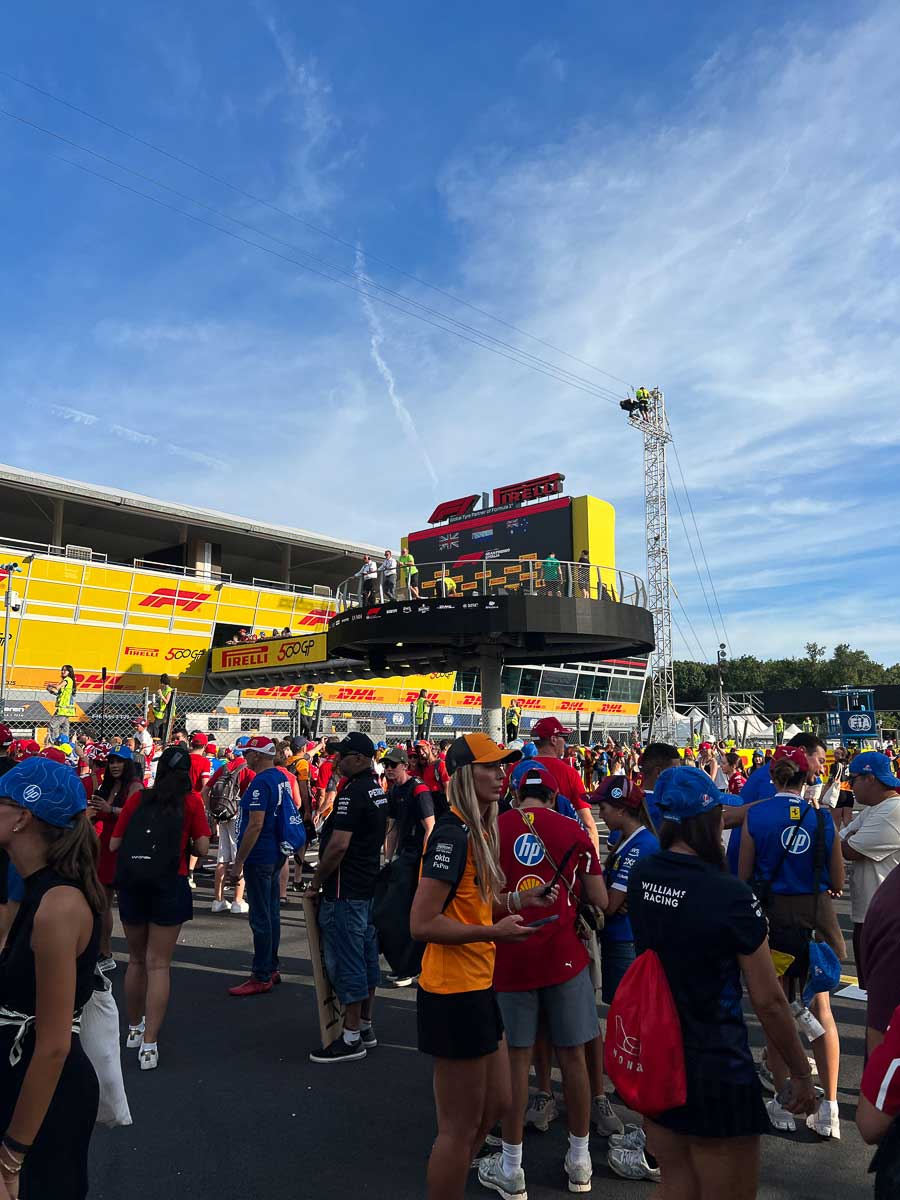
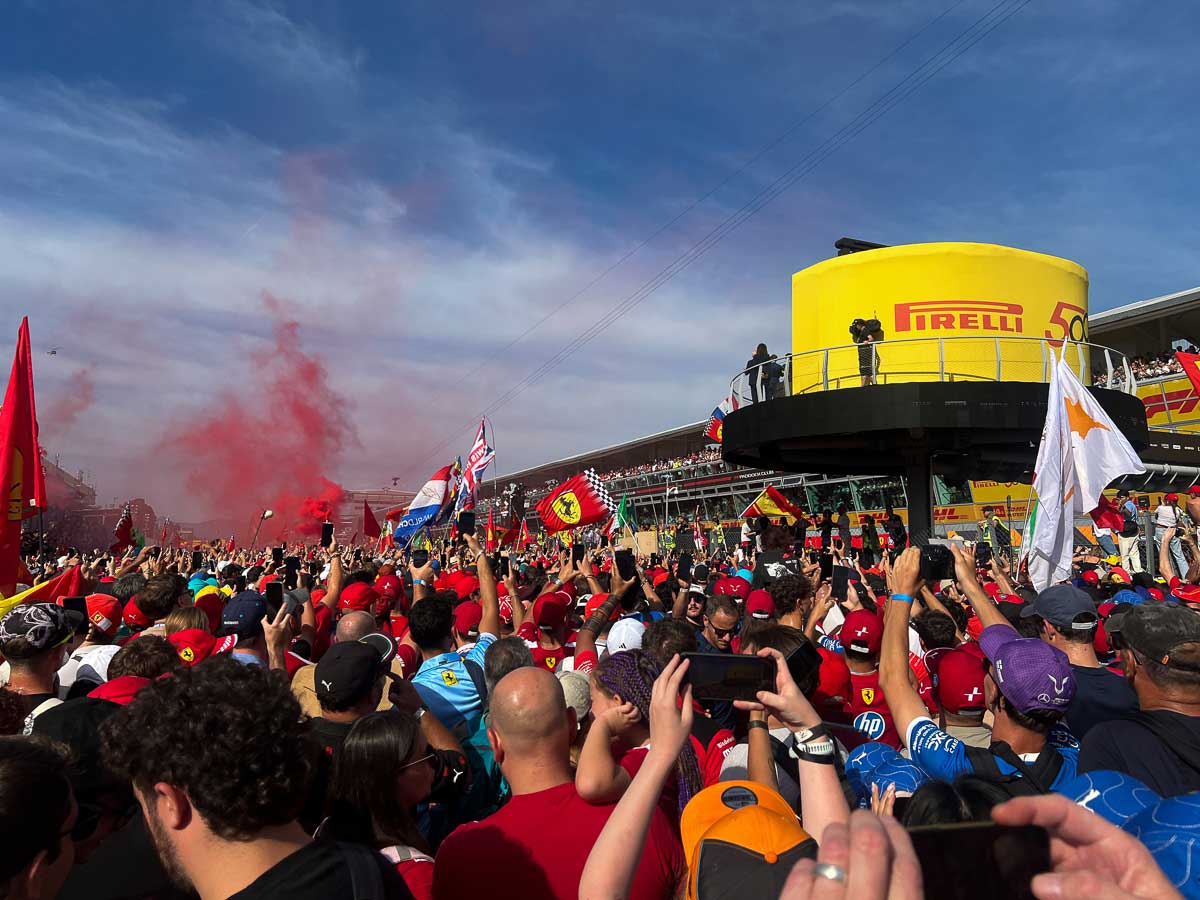
Thousands storm toward the podium, not because Verstappen took a clear victory ahead of Norris and Piastri, but because it’s a tradition at Monza.
The winners are celebrated in classic fashion with the national anthem and champagne spray on the podium – while the sea of flags, flares, and joyful people stretches far into the horizon.
Things calm down somewhat when the winners leave the podium, but 30 minutes later a roar of screams rises when we see Hamilton step up on the Pit Wall and wave to the crowd.
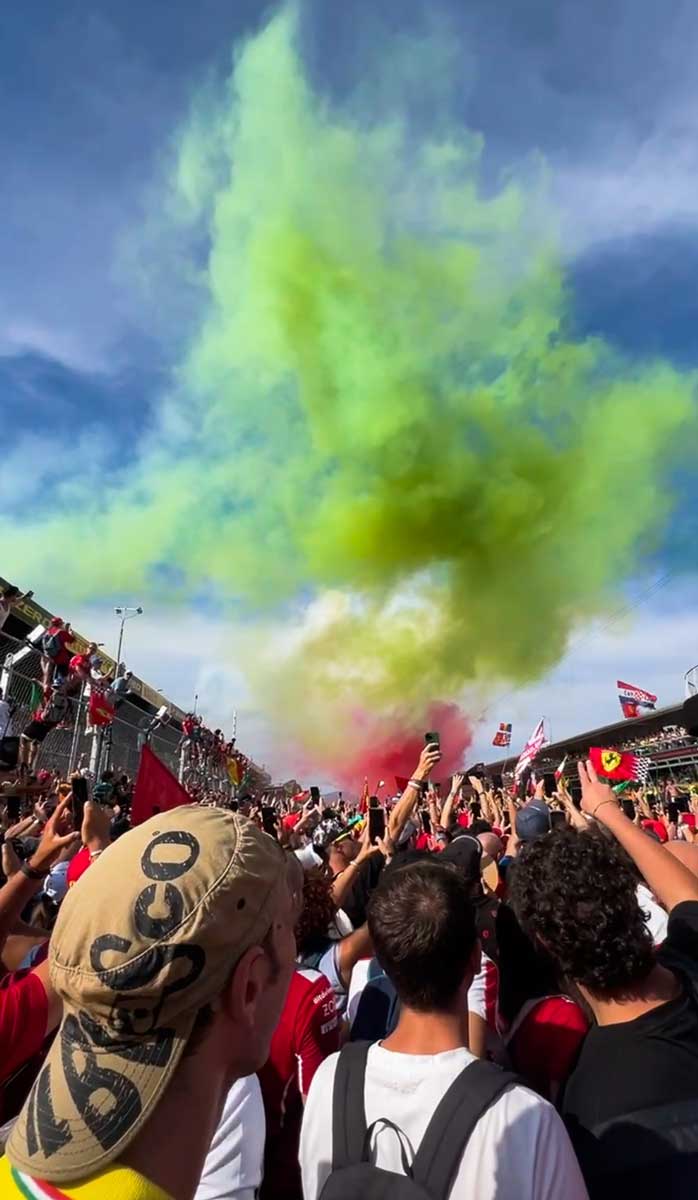
Without prompting, the Italian fans begin singing “Sará Perché Ti Amo” a cappella, while green, white, and red smoke spreads across the sky. Hamilton holds his hand to his chest, and his eyes reveal how moved he is by the moment.
See you again Monza
Monza, the legendary Temple of speed in the middle of the park, has truly left its mark.
When everything is over, I move through the leafy forest in the evening sun back toward “Enzo Ferrari via” and thinking to myself, are the safe history from now on really going to be as “exciting” as it has been?
Are we instantly going to remember 2025 as the year when Verstappen won, 30 seconds before Norris – I do not think so – In the future, we’ll have to dig deep into our memories to remember who won and what took place on the track in 2025. That´s the era of the safe time and so be it – as long we can stop tragic on our tracks.
Nevertheless – the red sea of Tifosi, the joy, the speed, and the enormous history this track carries – it still leaves me trying to process and digest my grand encounter with Monza.
Arrivederci Monza, ci vediamo presto! – See you again.
Related Articles

Related Articles

All rights reserved.
Fascinating Cars is a trademark of:
Edenberg Design AB
(559212-2617)
Näckrosvägen 19
Solna
Sweden
All content, images, and materials on this site are protected by copyright law.
© 2026 Fascinating Cars.

Travel with Fascinating Cars - get you inbox candy.


GET AROUND ON FASCINATING CARS:
ARTICLES
SHOP
ABOUT
CONTACT
All rights reserved.
Fascinating Cars is a trademark of:
Edenberg Design AB (559212 2617)
Näckrosvägen 19
Solna
Sweden
All content, images, and materials on this site are protected by copyright law.
© 2026 Fascinating Cars.