
Porsche Museum – an innovation that goes on
No matter what – this museum is for everyone
- by Peter Edenberg 2025-08-07
Porsche Museum – an innovation that goes on
No matter what – this museum is for everyone
- by Peter Edenberg 2025-08-07
Since the first time I read about the museum located right in the heart of Porsche – Zuffenhausen, Stuttgart – it has been a box to tick on my “need to experience” list.
Already as a 10-year-old, in the mid-1980s, my heart began to beat for Porsche. The colors were appealing, the snarling engine sound was fantastic, the shape was seductive on all models, and the German quality was tangible.
Then, when they launched the 959, which became the world’s fastest production car, and in 1986 put everyone in their place by winning a double victory in the Paris-Dakar, my heart remained in the Porsche camp.
So, together with my son Albin, 10 years old, traveling from Sweden through Germany with the Porsche Museum and the epicenter of the entire Porsche brand as our destination was a dream now about to come true.
When we finally park the car and start walking toward the entrance, we see how Porsche’s factories surround what has now become a landmark for both the brand and the city. The Porsche Museum rises majestically by the classic roundabout with the three Porsche 911s driving toward the sky on tall, white pillars. The sculpture, officially called Inspiration 911, symbolizes the different generations of the sports car and the constant striving upwards – toward new heights in technology, design, and motorsport.
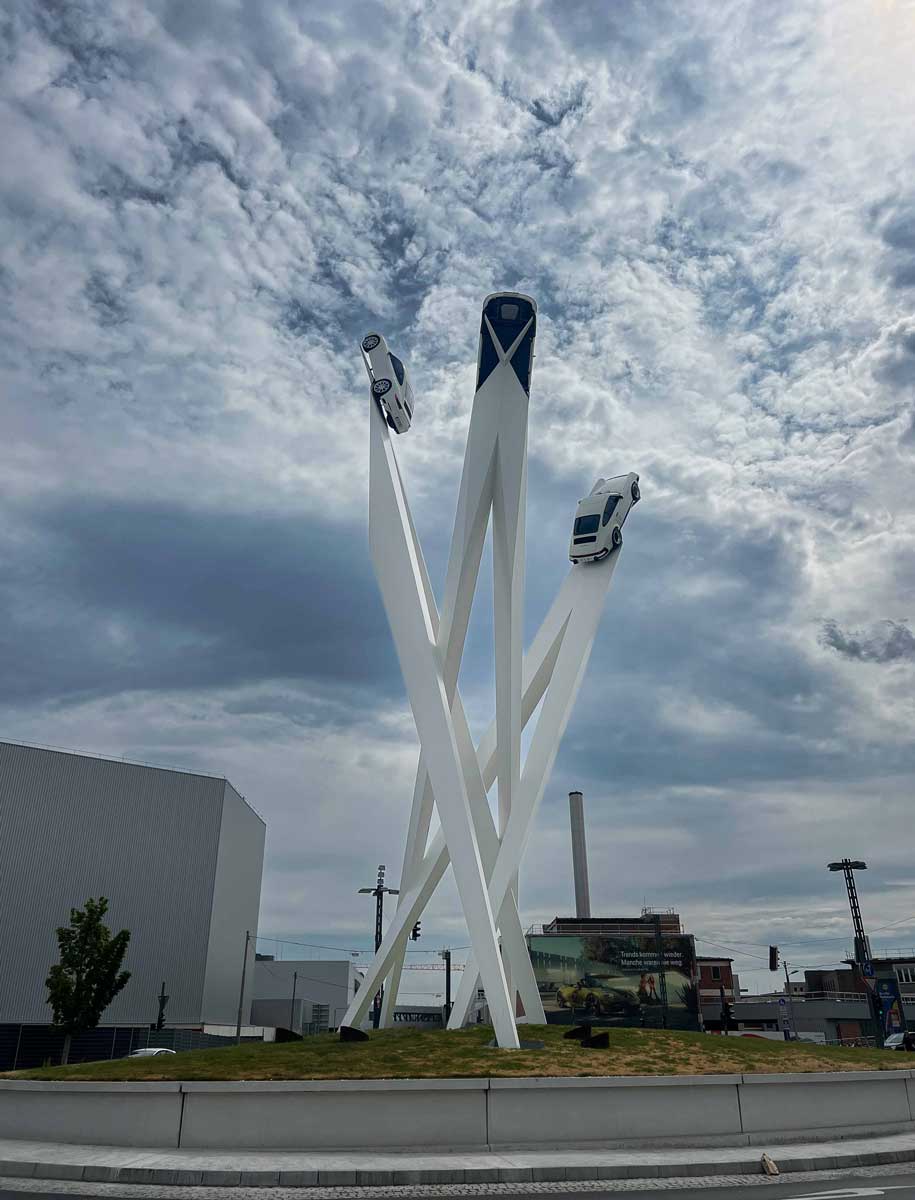
The same roundabout is like a sugar cube for car enthusiasts. Before going inside, we stand outside the museum and simply enjoy all the classic cars stopping at the roundabout’s red lights or cruising through it.
During the 15 minutes we stand there, a caravan passes by of first-generation Cayennes, at least 10 of them – 944s and 911 Turbos, a yellow 964 Cabriolet, a Ferrari 308, a Lamborghini Aventador, a mint-condition Volvo 245, an early ’80s Toyota Land Cruiser, four Subaru Impreza rally versions, a handful of modern GT3s. The list could go on, but just standing there and watching this parade of classic cars frames the experience in gold. It feels like a spontaneous car meet – no one organized it, yet it makes the place come alive even outside the museum walls.
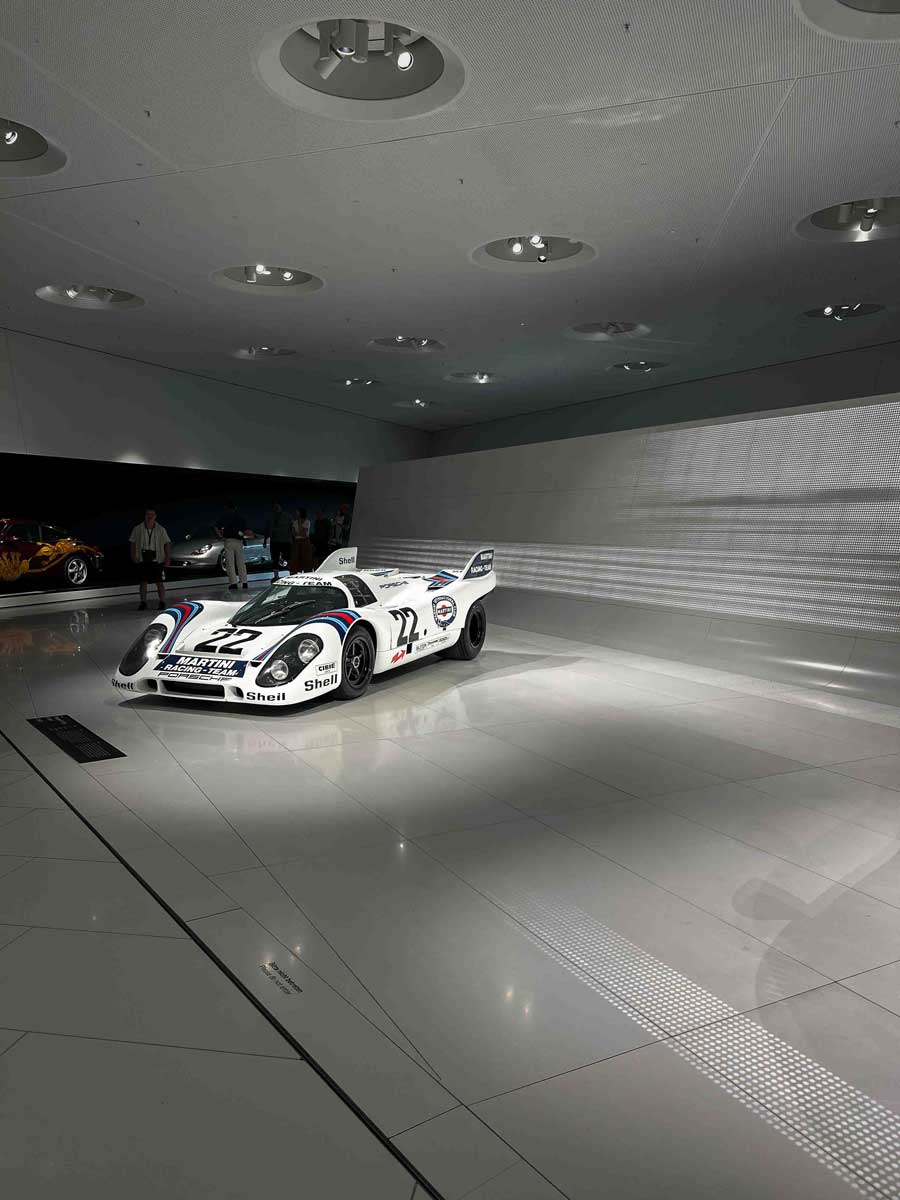
The 1971 Le Mans winner – Porsche 917 #22 driven by Gijs van Lennep and Helmut Marko (yup, that Marko)
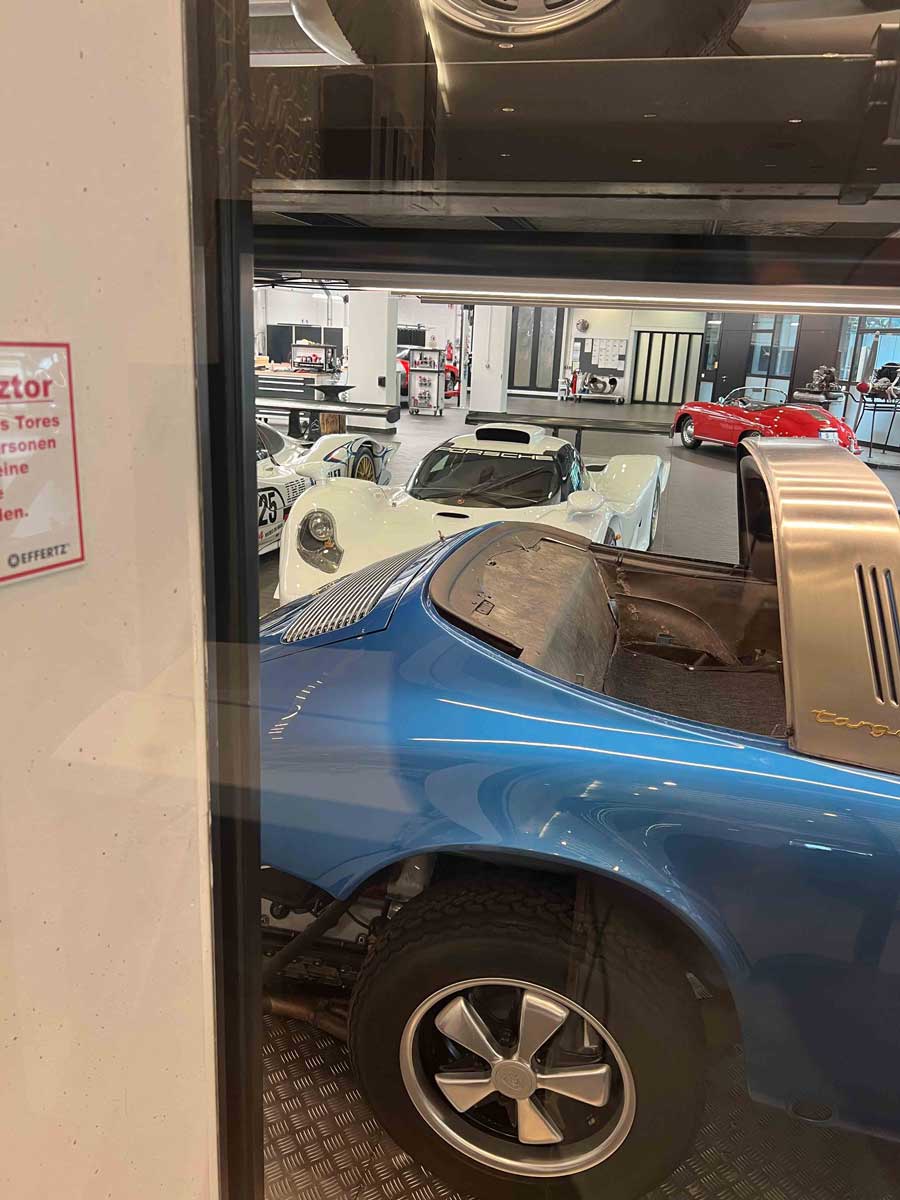
The 2 911 GT1:s – the number 25 did end second in LeMans behind Porsche number 26 that did win.
1. The 1971 Le Mans winner – Porsche 917 #22 driven by Gijs van Lennep and Helmut Marko (yup, that Marko)
2. The 2 911 GT1:s – the number 25 did end second in LeMans behind Porsche number 26 that did win
5,600 square meters of exhibition space
That the museum is located here is no coincidence. This is the place where Porsche has built cars for decades – the factory landscape all around bears witness to an industrial tradition that has shaped the history of sports cars. When the museum was planned, the ambition was to create a link between past and future: a place that both honors the heritage and showcases the brand’s continuing power of innovation, all on the very ground where so many legendary car souls and roots were born and developed.
The building itself is a work of art. It opened on January 31, 2009, and was designed by the Austrian architectural firm Delugan Meissl. It hovers high above the ground on powerful pillars, and with its dramatic design it creates a sense of motion, as if the structure could accelerate away at any moment. Before entering, you look up and see how the entire ceiling is covered in mirrors, creating a sense of endless space.
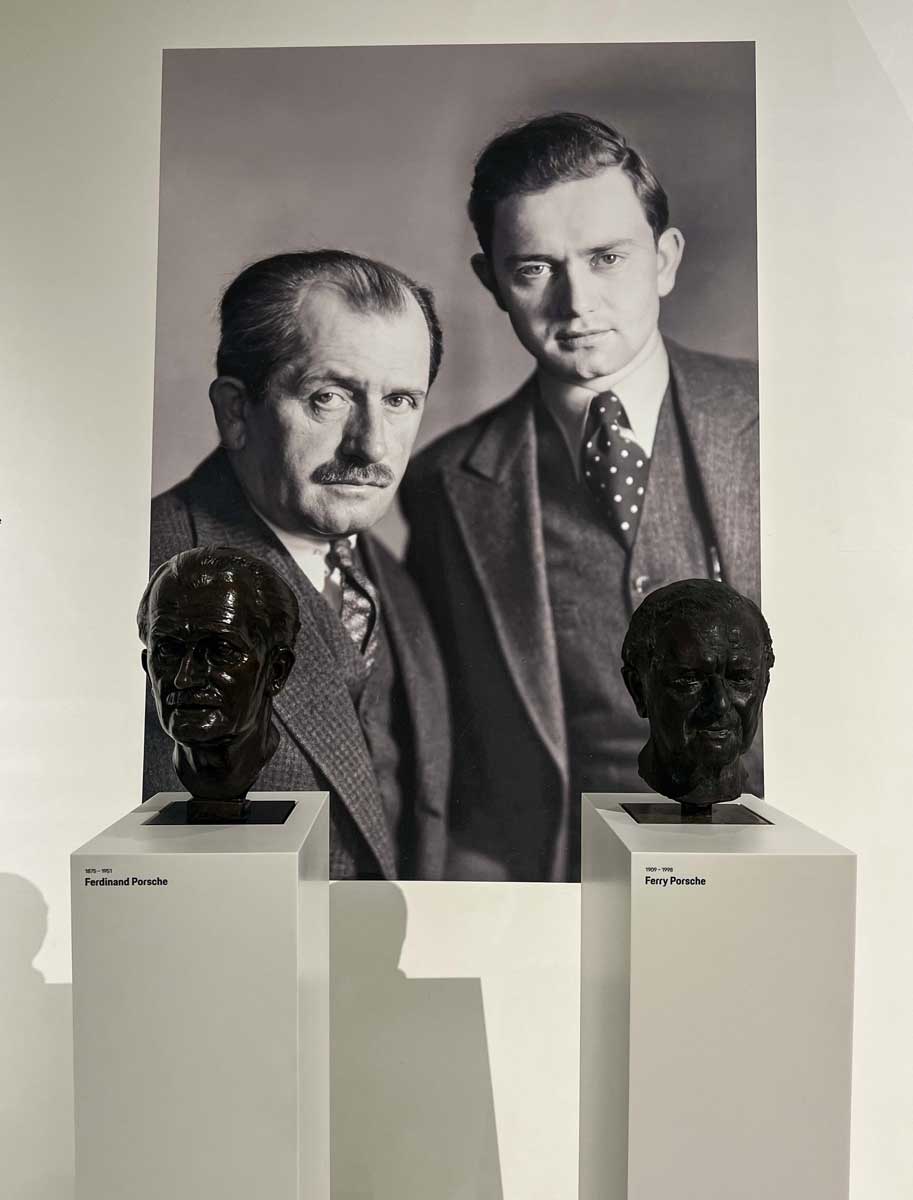
With its 5,600 square meters of exhibition space, the museum houses a constantly rotating collection of around 80 cars – from the brand’s earliest creations to modern racing legends.
At the entrance it almost feels like we are tricking the museum, since for me it only costs €12 and Albin gets in for free.We are given a media player with an earpiece and a Porsche key strap to hang around our necks, along with a quick introduction on how everything works. Educational and simple, just like German engineering.
The man behind the counter says it’s a “busy Sunday” – but inside the spacious halls, it doesn’t feel crowded at all.
The archive stores over 3,5 km of documents
In front of all the visitors, as you ride up the long escalator to the exhibition itself, you can look straight into Porsche’s own workshop for classic cars.
At the very front of the workshop window stands a freshly painted blue 911 Targa, gleaming. Its interior has been completely stripped, but it looks as if it’s soon to be restored again. Behind it, however, sit two strikingly low and wide 911 GT1s.
One of them bears number 25, the very car that Jörg Müller, Uwe Alzen, and Bob Wollek took to second place at Le Mans in 1998.
When they sit there among the “ordinary” cars, it feels almost like a scene from Lightning McQueen. Calmly resting on the workshop floor, they know that compared to all the others, they have one thing above all – speed!
We haven’t even reached the exhibition yet, and already we’ve been hit by a wave of motor history. My body shivers with joy, enthusiasm, and humility at experiencing this.
Above the workshop lies Porsche’s archive, about 1,000 square meters in size.
There you’ll find all of Porsche’s history: 4,500 books, documentation that would form a stack 3.5 km high, 3,000 hours of film, about 6 million images, and more or less every Porsche ever made in miniature form. Plus a treasure of Porsche memorabilia – notebooks from 1948 when the first car was being built, racing helmets and suits from great drivers, and much more.
Unfortunately, the archive is not open to the public.
Porsche holds your hand – decade by decade
Slowly, we ride the escalator up, and when we finally arrive, a hall of light opens before us.
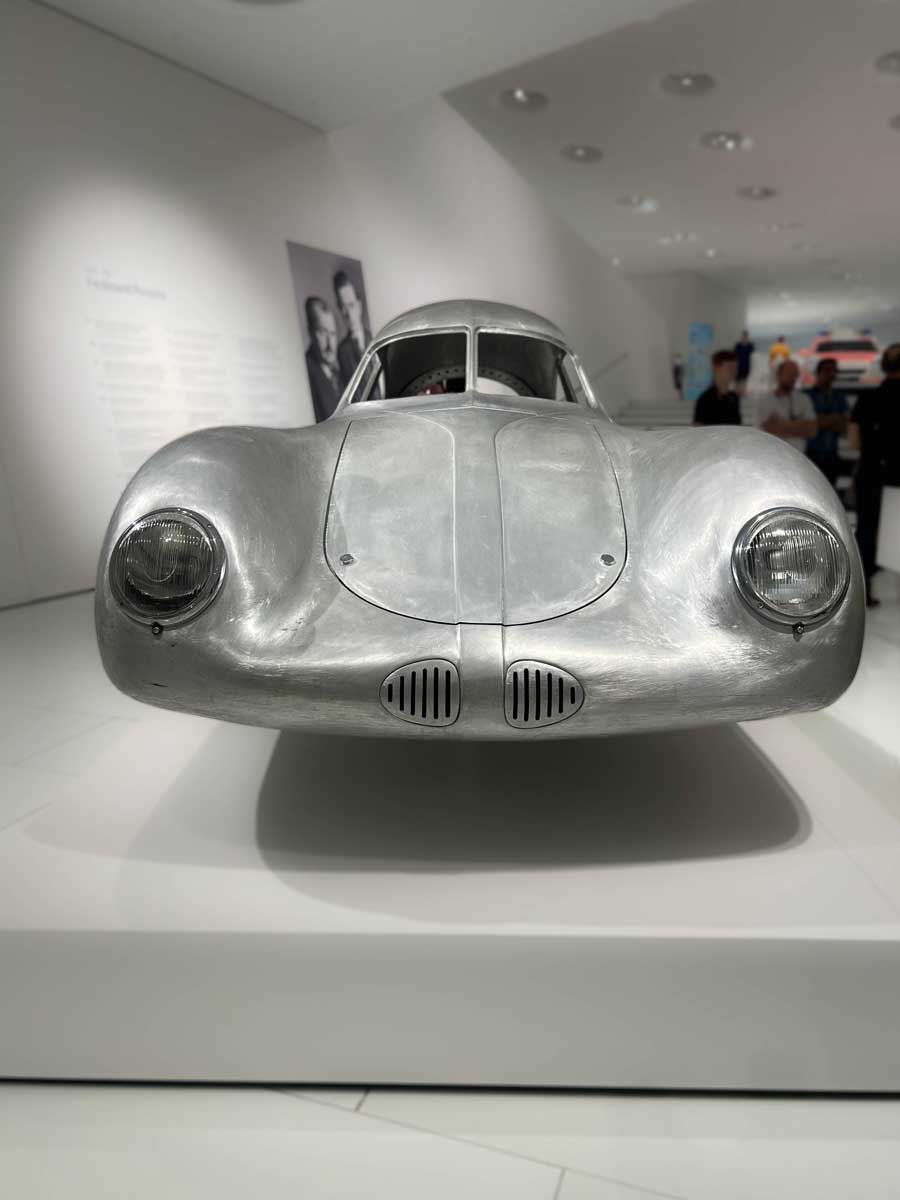
Right away, I notice the row of concept cars that were presented to Ferdinand Porsche on his birthdays. They stand up high, close to the ceiling, and I’ve read that this is where the exhibition “ends.” I think to myself that it surely won’t take too long to get up there.
But as we start moving along the circular path on which the museum is built, the most fascinating creations begin to appear before us.
You don’t have to love, or even like, Porsche to understand that this is a treasure chest for anyone who enjoys cars and history.
With the tablet as our guide and a number at each car or station, we get all the information we need through a smooth, intense narrator’s voice in our ear.
During the visit, you are taken through Porsche’s decades, one by one, where they highlight each era on a screen – showing milestones from those ten years. It allows you to follow the evolution, the design language, and gain an understanding of why Porsche is where it is today.
1. The famous James Dean 550
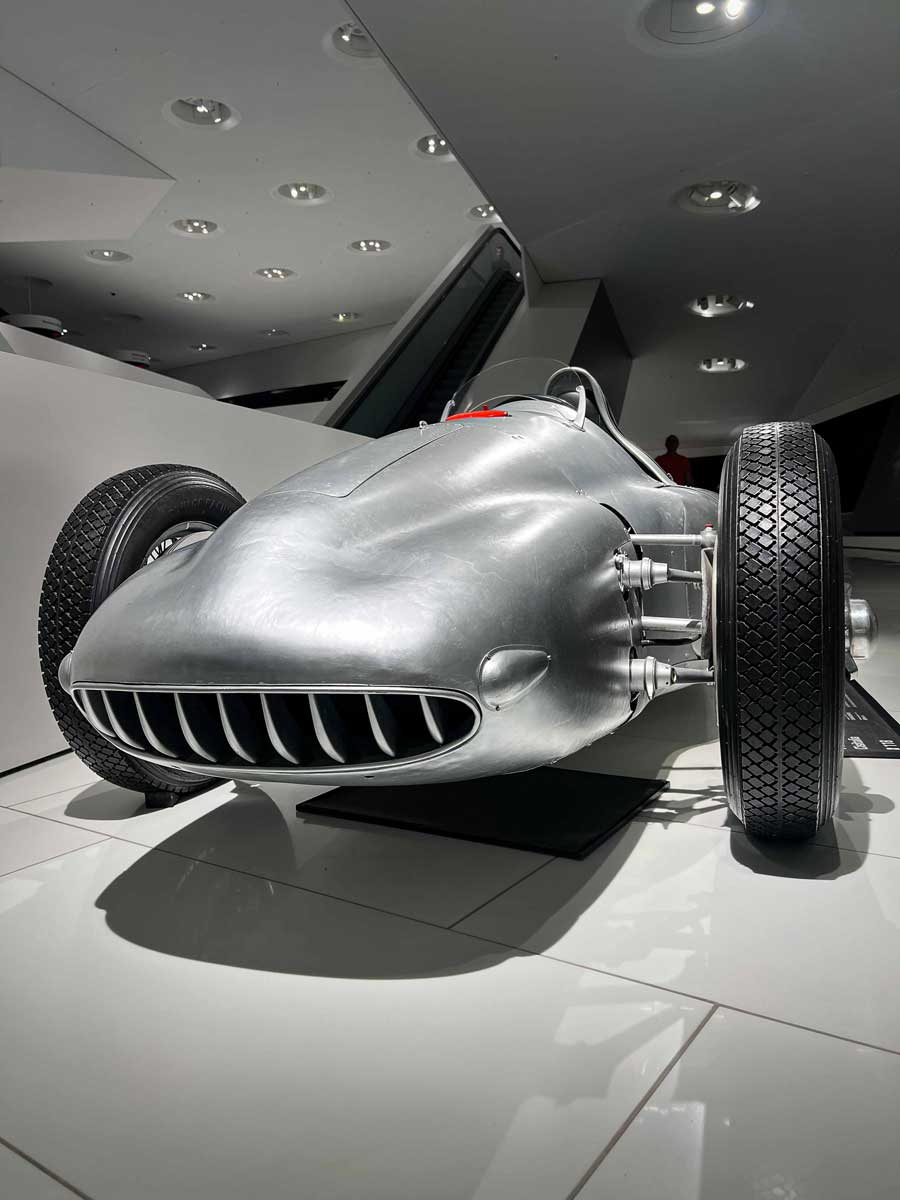
2. Porsche 804 – Formel 1
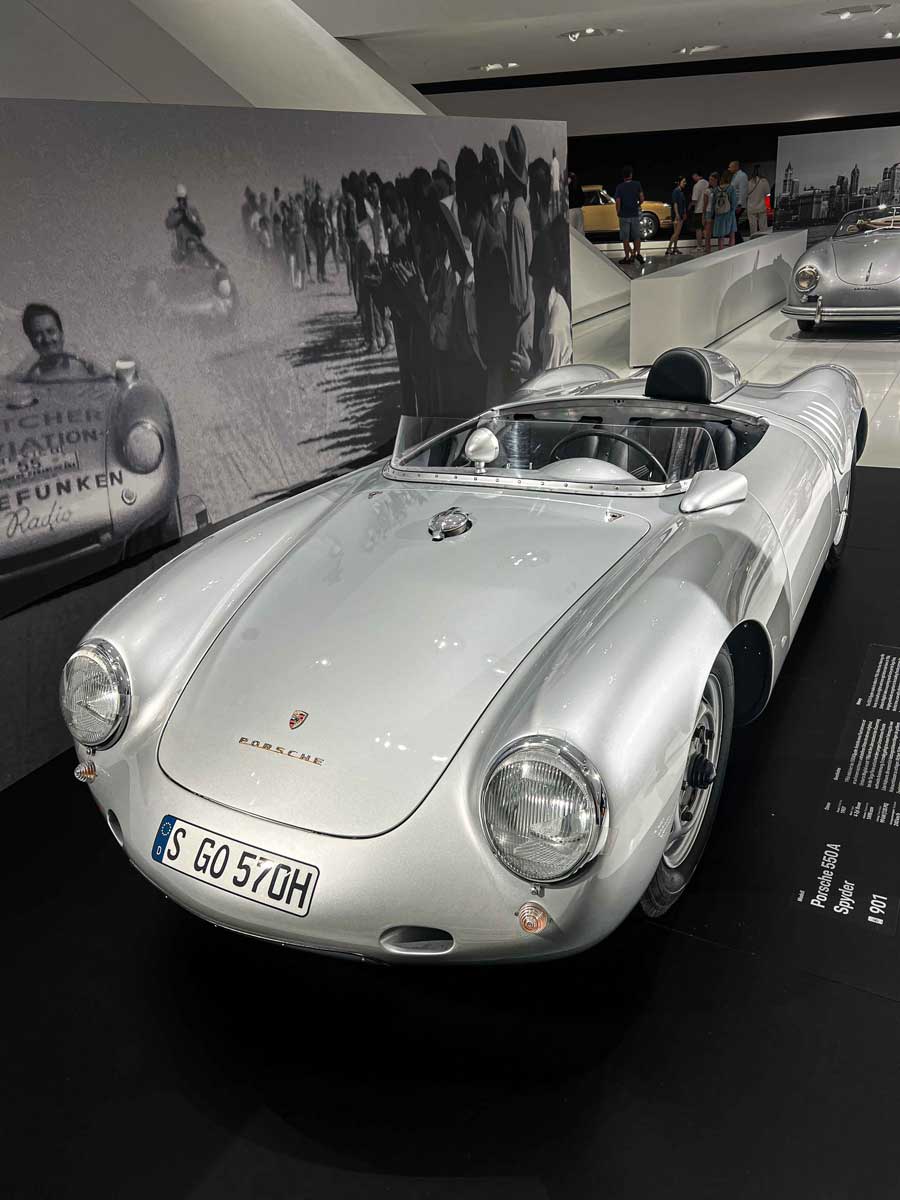
The famous James Dean 550
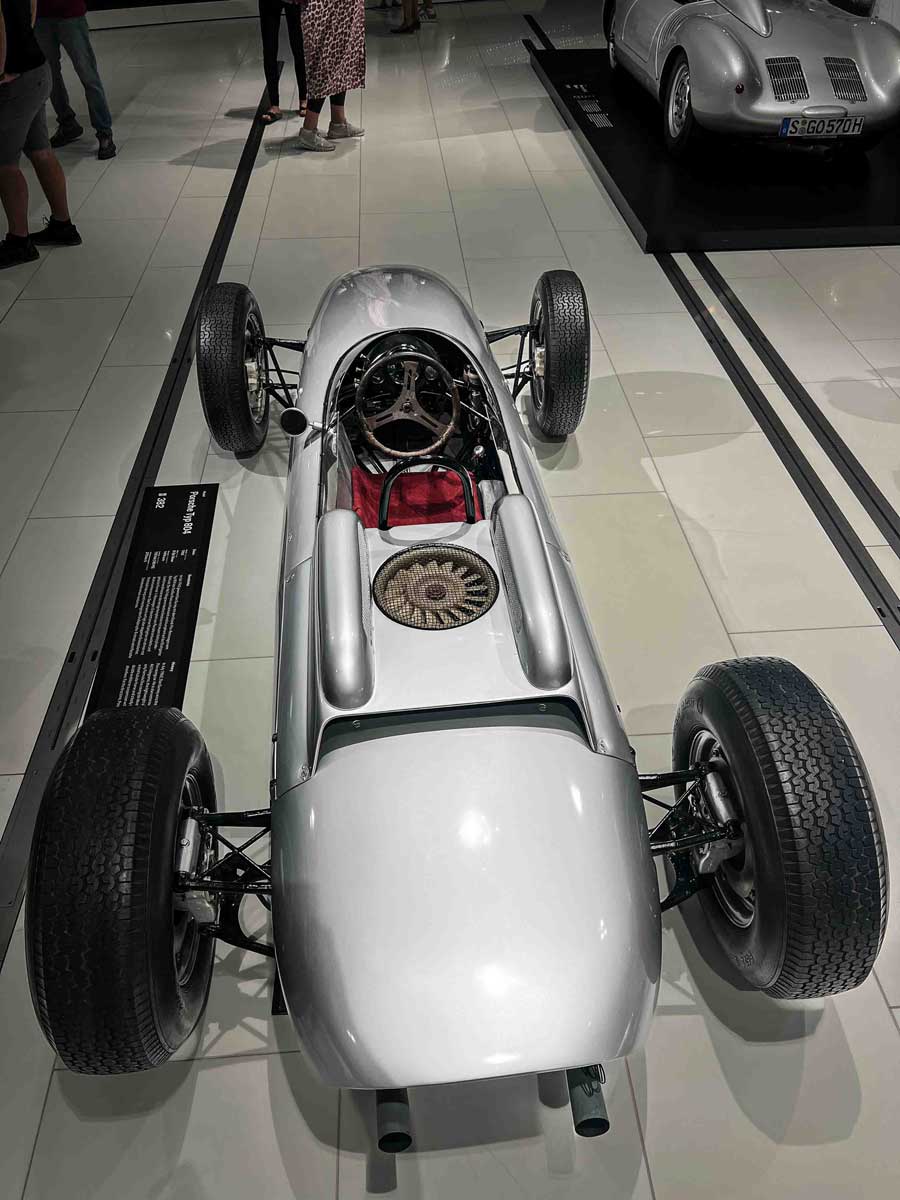
Porsche 804 – Formel 1
Best ratio in F1?
Many of the cars in the first circular arc are the kind that will probably always remain in the exhibition.
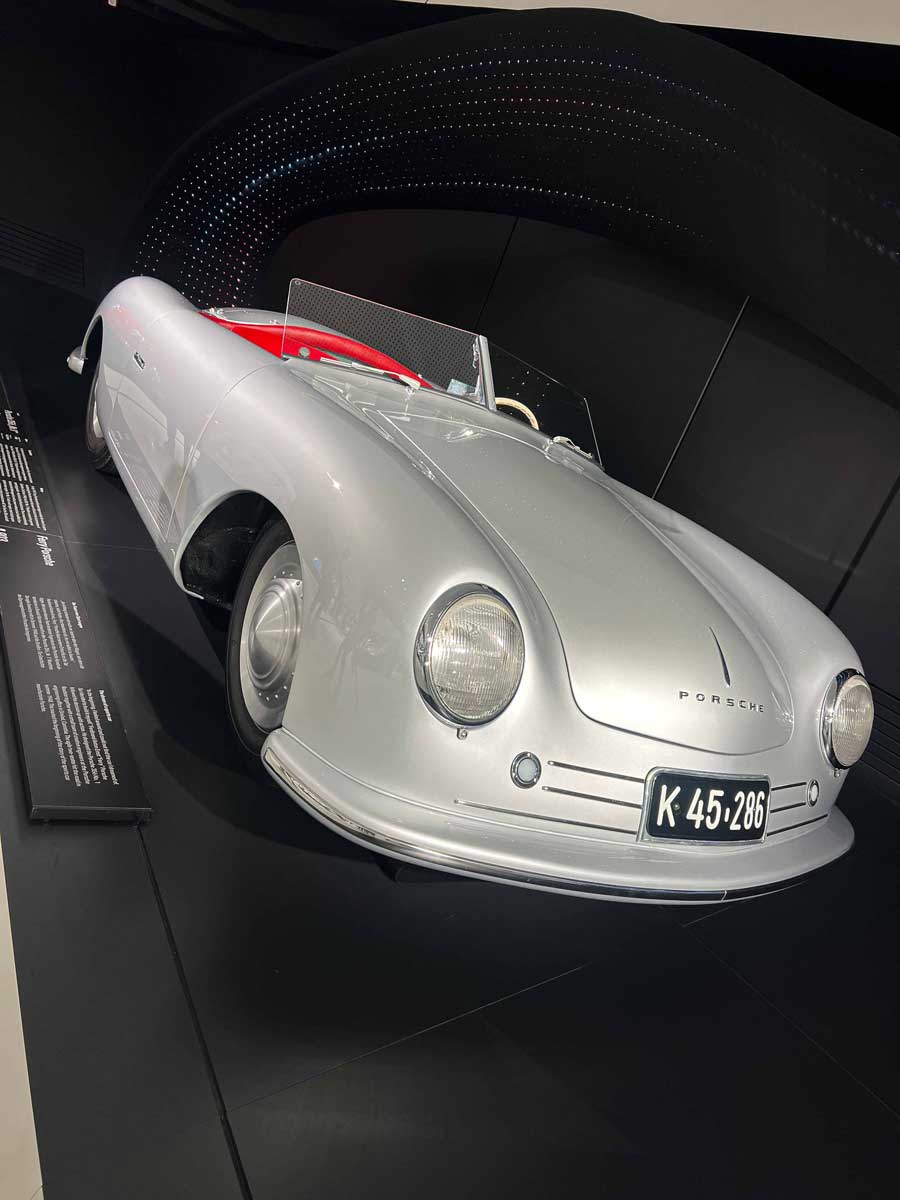
Here appear cars like the Porsche 356 “No. 1” Roadster from 1948 – the brand’s very first sports car – or the electric Egger-Lohner C.2 Phaeton (“P1”) from 1898, an innovation created by Ferdinand Porsche with a 44-cell battery that had an incredible range of 80 km. Charging time, however, was between 8–14 hours, so you couldn’t be in too much of a hurry between drives.
Among the silver cars in the first rows stands the Porsche 804 – Porsche’s only self-developed Formula 1 car. With its eight-cylinder boxer engine and low weight, it claimed a historic victory at the 1962 French Grand Prix before Porsche withdrew from Formula 1. Today it stands as a symbol of the brand’s short but successful involvement in Formula racing.
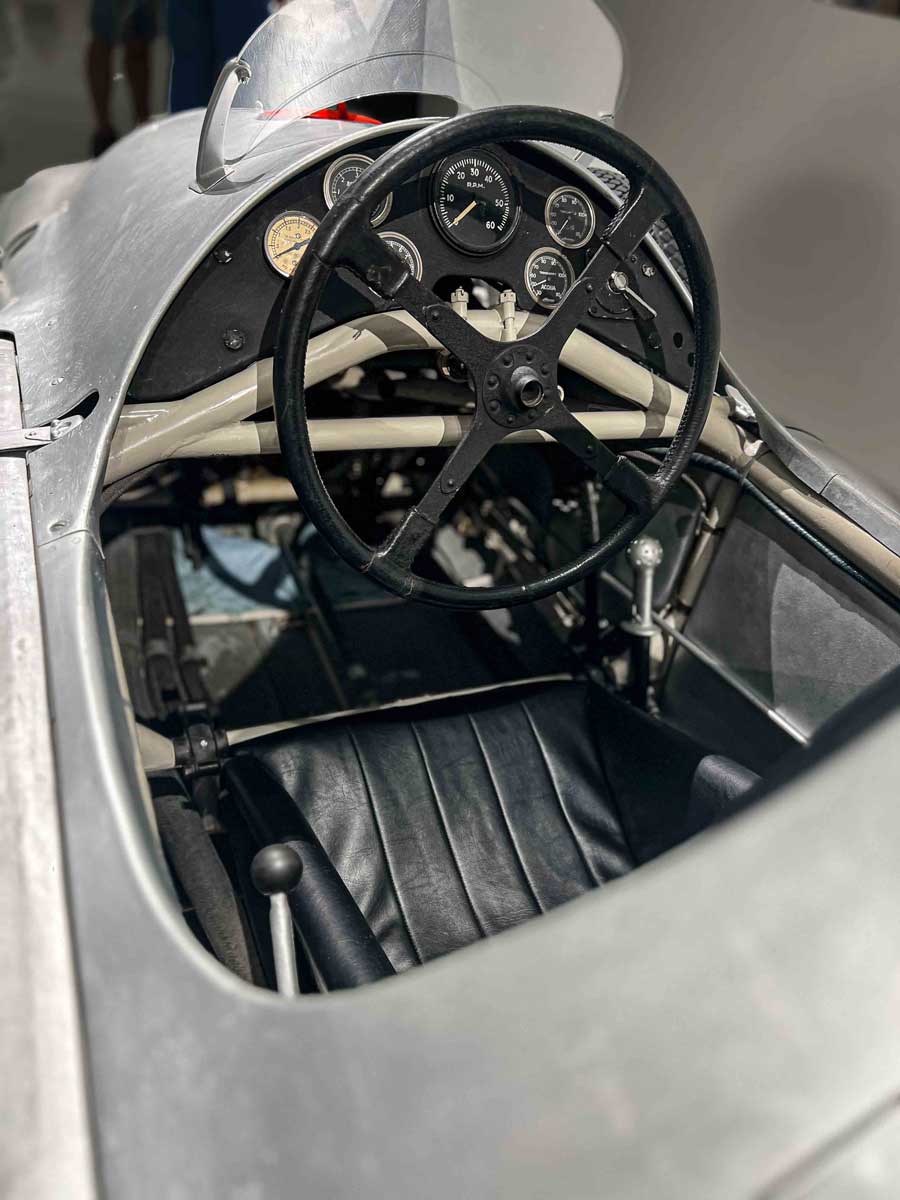
Looking down into the driver’s cockpit of this car and seeing the level of “safety” makes me shiver – if you crashed in this car you were almost guaranteed to die, be paralyzed, or be seriously maimed.
Still, this is probably the car with the best ratio of races started to races won in Formula 1 history.
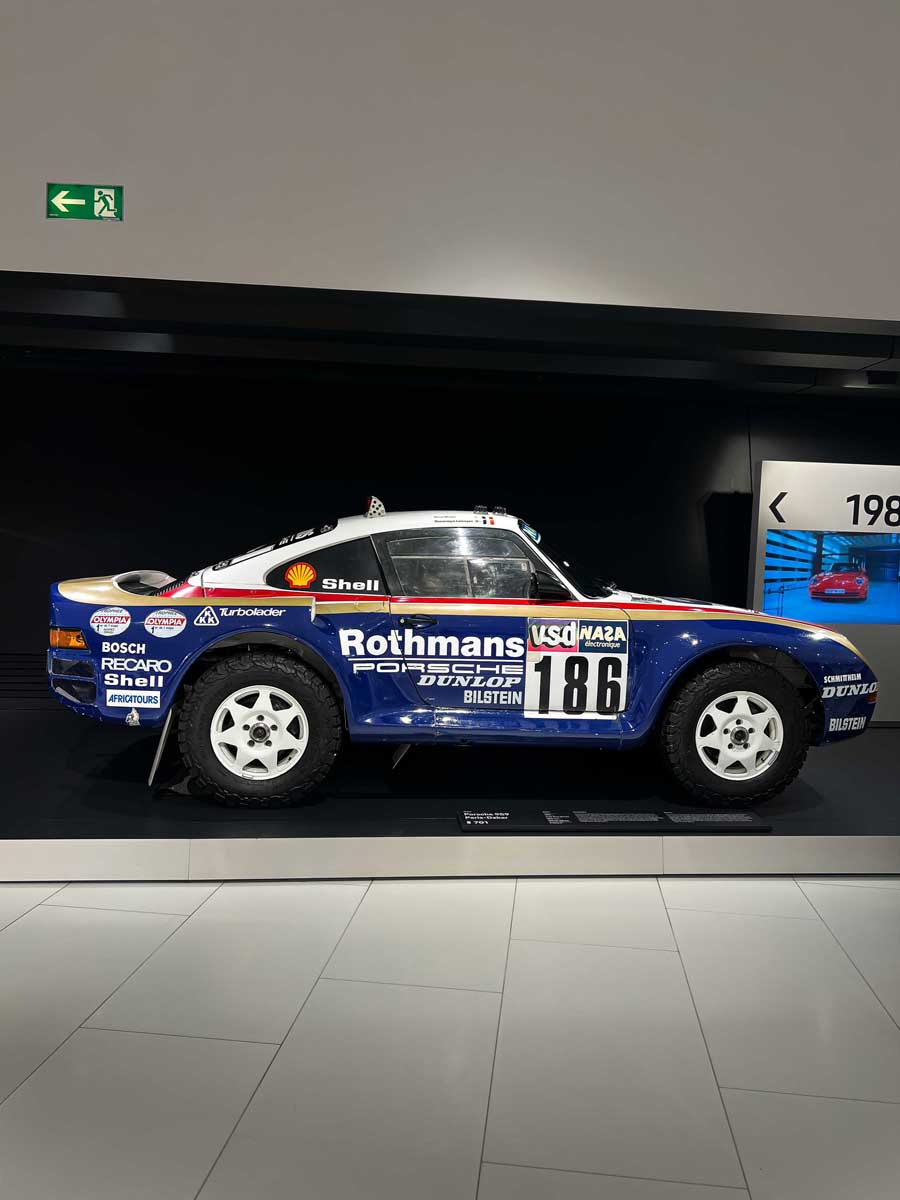
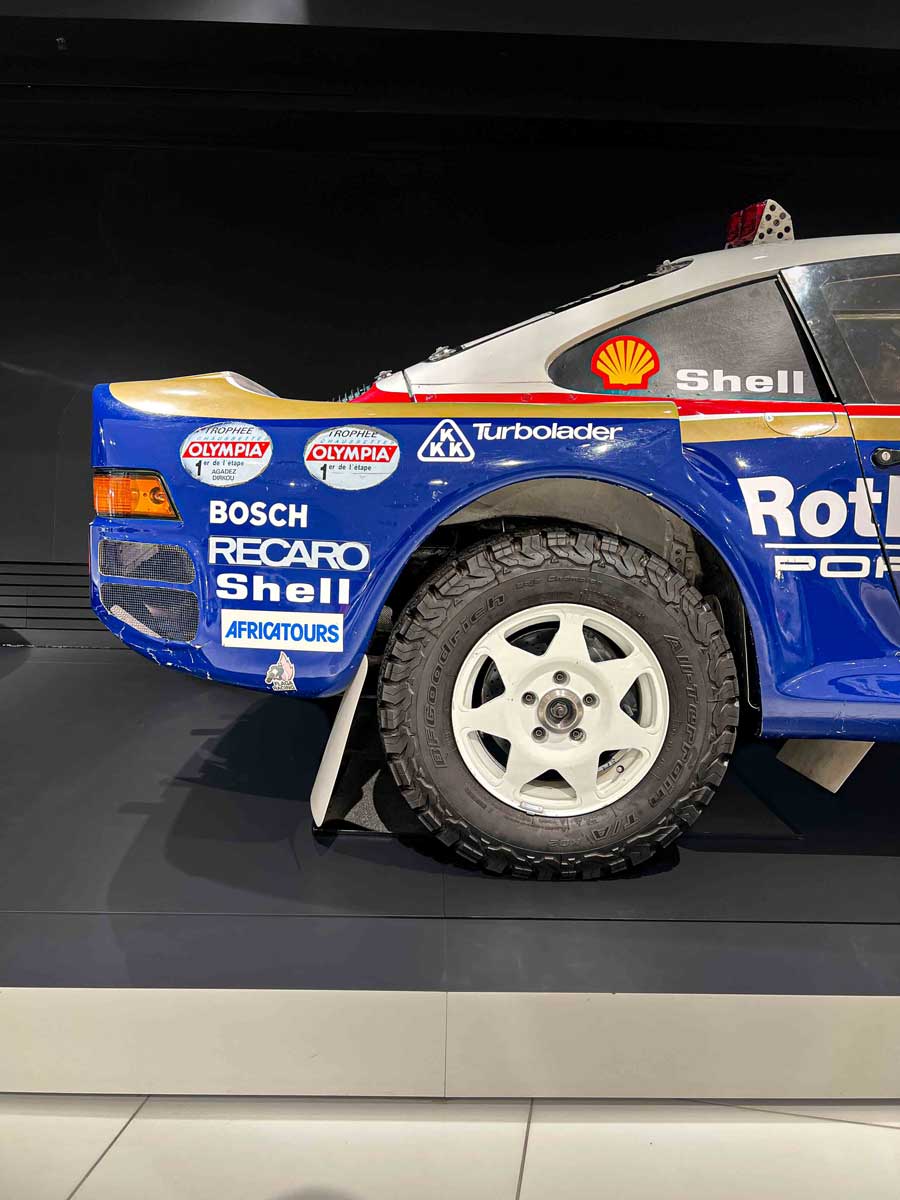
The magic number 186
Albin and I walked together past the first cars, but soon realized our interests were different and split up – only to reunite a few minutes later and discuss what we had listened to and which car one really “had to look at and listen to.”
As we moved further through the bright, tall, square-shaped space, it was impossible to rush – one fascinating car after another seemed to jump out at you.
Along one wall hangs a 956 upside down, with an explanation that this car was built so aerodynamically perfect that at a speed of 321 km/h it could theoretically drive along the ceiling without falling to the ground.
A little further ahead appears the wild Porsche 917/10 Can-Am – a brutal machine built for the unregulated Can-Am series with minimal rules. Equipped with a 5-liter V12 engine, turbocharged to more than 800 hp and extremely lightweight, it dominated the 1972 season with Roger Penske and George Follmer behind the wheel. They won six out of nine races, securing Porsche the championship title that year.
Just a few steps further on stands a classic that lies close to my heart: a Rothmans Porsche 959 with number 186 on the side.
In 1986, the Paris-Dakar rally was broadcast on Swedish television, and I was glued to the screen every time they showed something from this incredible endurance race. The year before – 1985 – Porsche had retired all three of its cars.
In 1986, three cars entered, but only two were allowed to compete. The third had to serve as a support vehicle and “putter” along in the background. But just to underline Porsche’s dominance that year, it still finished in 6th place.
The 959 with number 186 on its side was driven by René Metge and Dominique Lemoyne and came out victorious, beating its sister car driven by Jacky Ickx and Claude Brasseur, which finished second.
With its 2.85-liter twin-turbo flat-six producing nearly 400 hp and advanced all-wheel drive, they completely outclassed the competition.
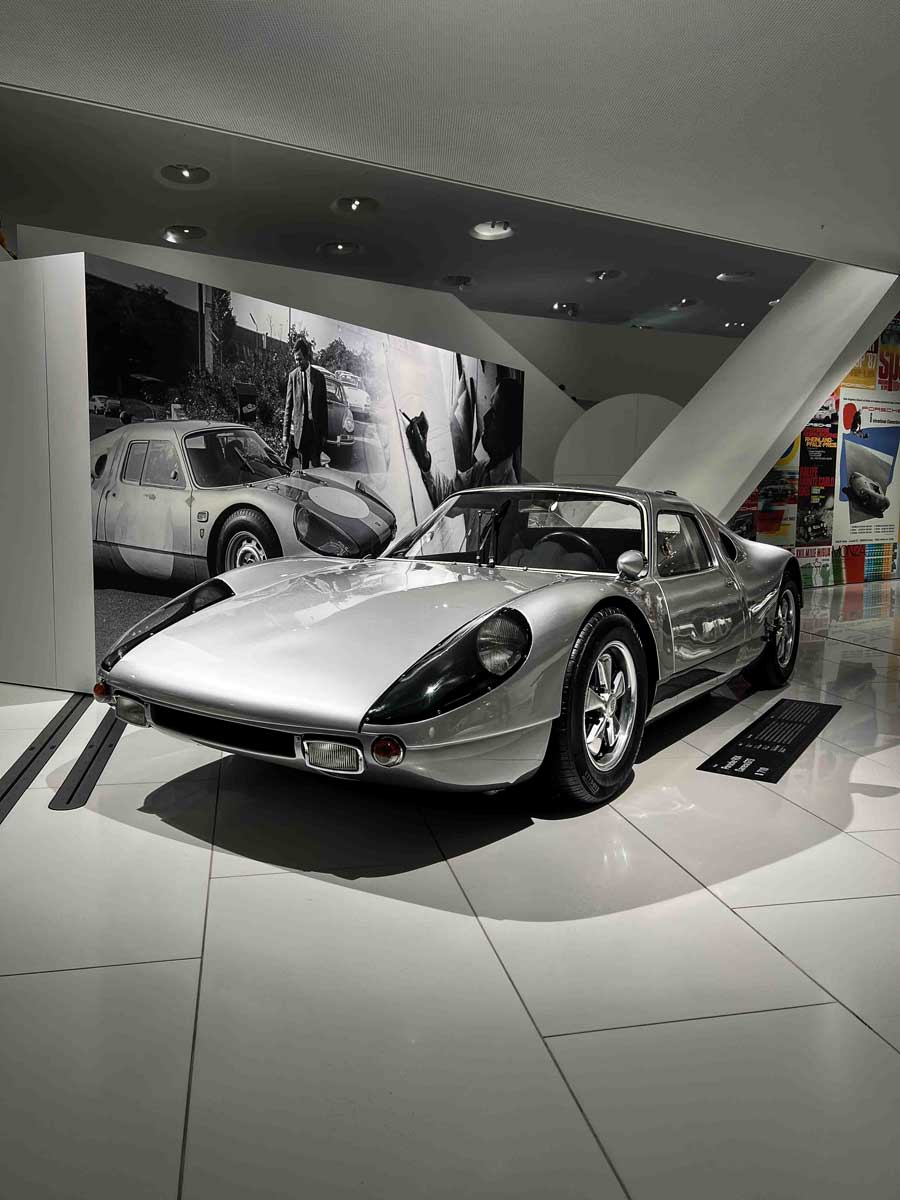
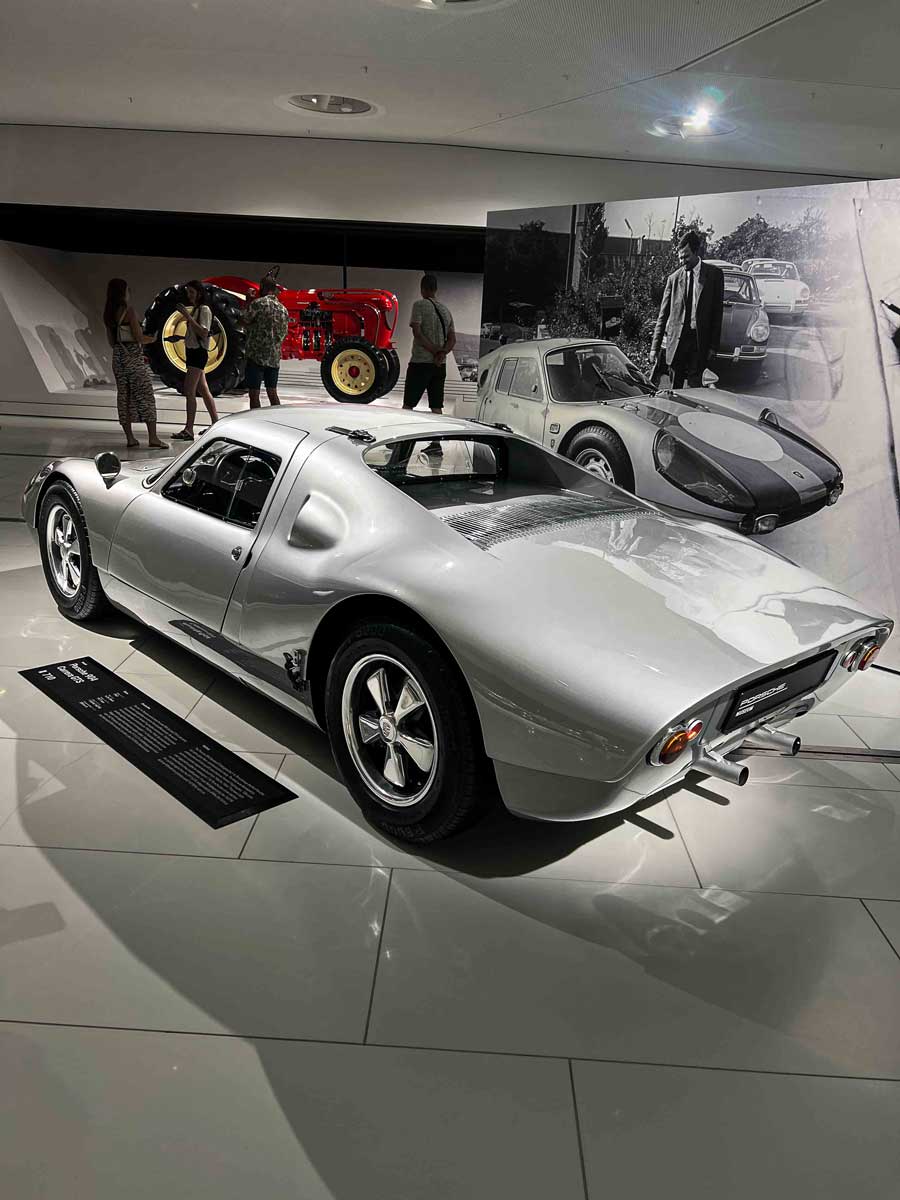
A living museum
Car after car, Albin and I slowly move back and forth through the exhibition. We even take time for lunch in the restaurant, where the dishes are named Cayman, Panamera, Macan, and Spyder RS.
What strikes me is how much of the exhibition is “in motion” – many of the cars I had seen in photos and films from the museum before had either been moved, replaced, or weren’t there at all.
Porsche itself calls it a living museum, where they rotate the cars, send them out to drive on tracks and roads, and then bring them back again for display. This is wonderful to hear – because every car deserves to roll as much as possible.
1. The Porsche 917/10 CanAm
2. The Porsche 956 up side down
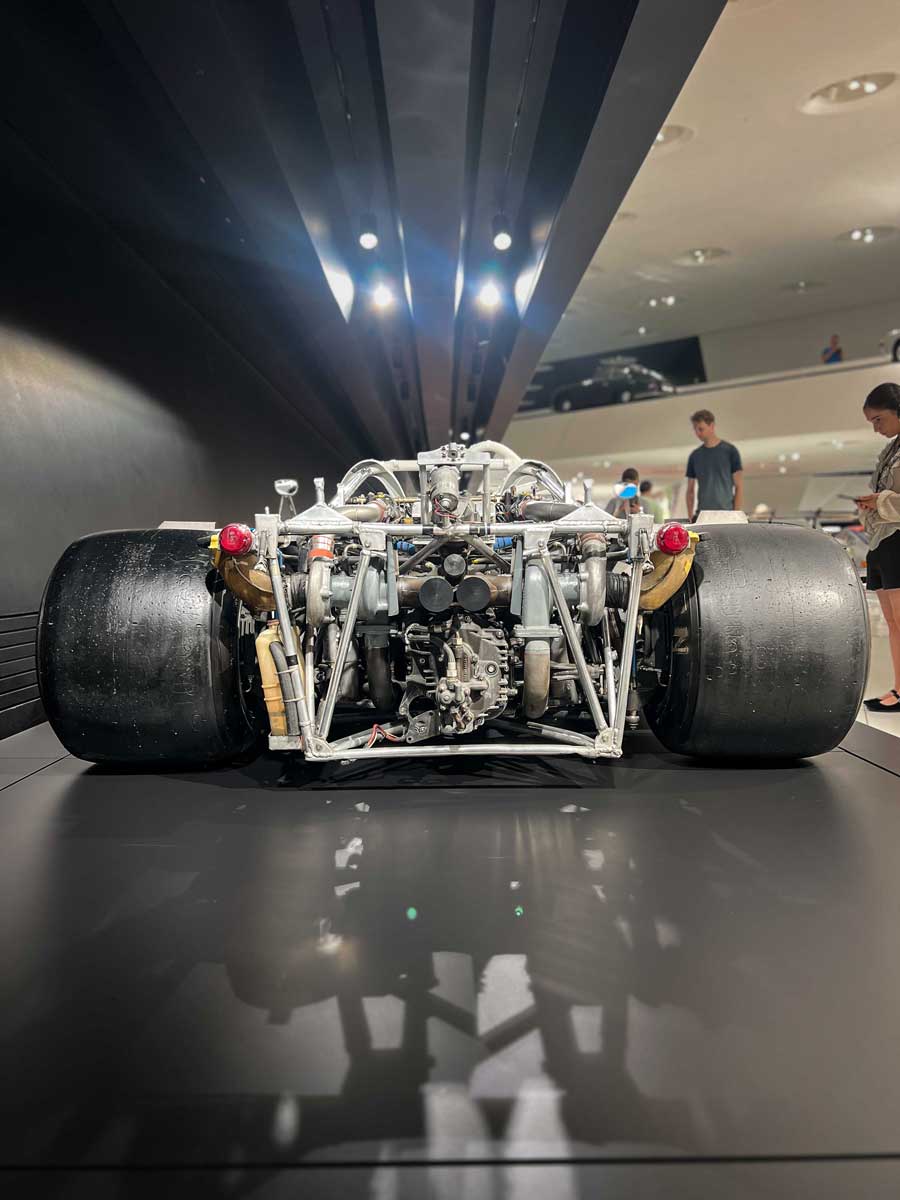
The Porsche 917/10 CanAm
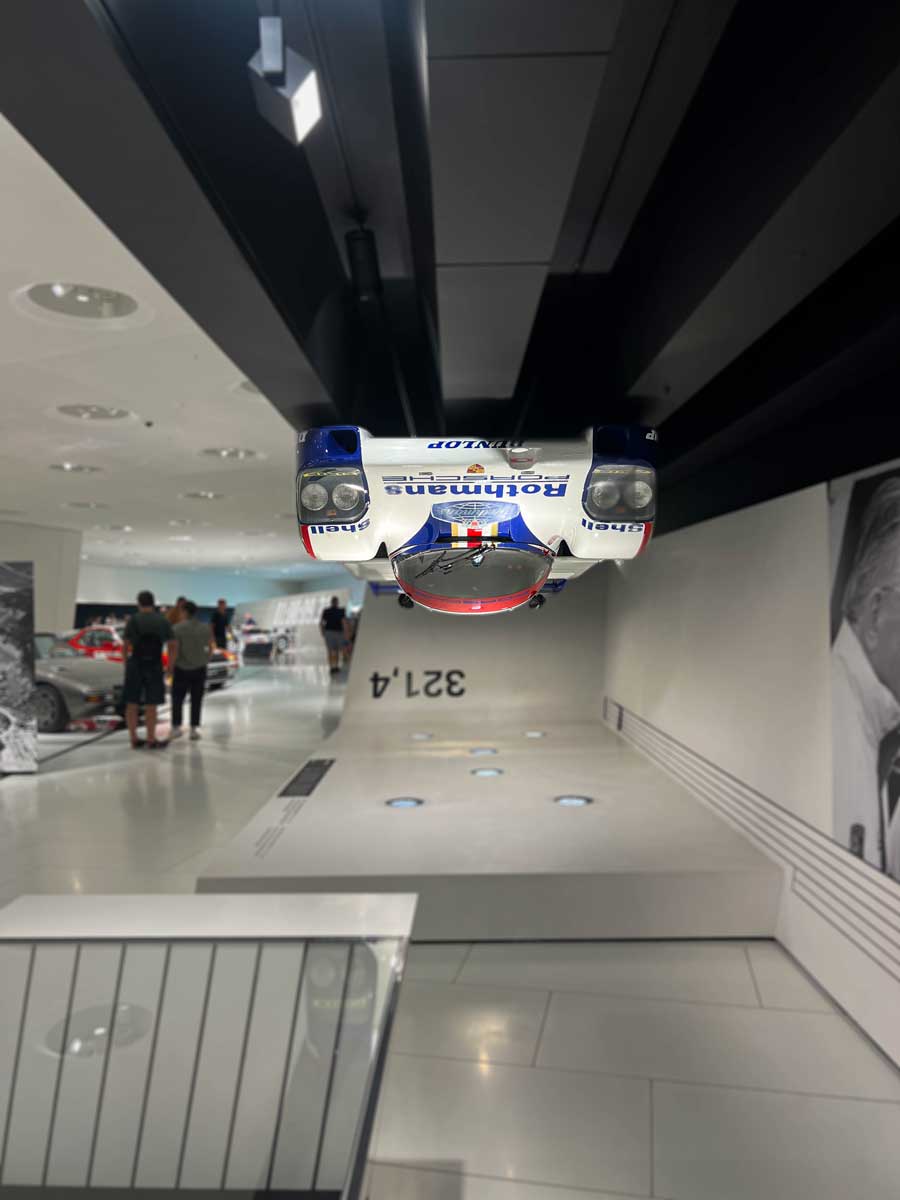
The Porsche 956 up side down
A Carrera GT disappears among this cars
A museum like this must also give Porsche an incredible ego boost. Even when certain cars are away, they simply replace them with another that has probably also won a race – usually Le Mans or Daytona. There are just so many in their collection.
And speaking of that ego boost, Porsche’s trophy exhibition deserves mention. Le Mans trophies and other prizes float in the air like art installations. Especially prominent is the trophy Porsche got to keep after three consecutive Le Mans victories with the 919 Hybrid between 2015 and 2017 – a tangible testament to the brand’s motorsport heritage.
Slowly, Albin and I make our way through shapes, design, horsepower, racing history, and not only unique cars but also “ordinary” Porsches that demonstrate what the brand has achieved over the decades.
By the time we reach the Carrera GT and the 918, it’s no longer quite as exciting – because by then we’ve already been overwhelmed by Porsche’s enormous successes, both on the racetrack and with their road cars. After all, how many companies can celebrate their iconic best-selling model turning 50?
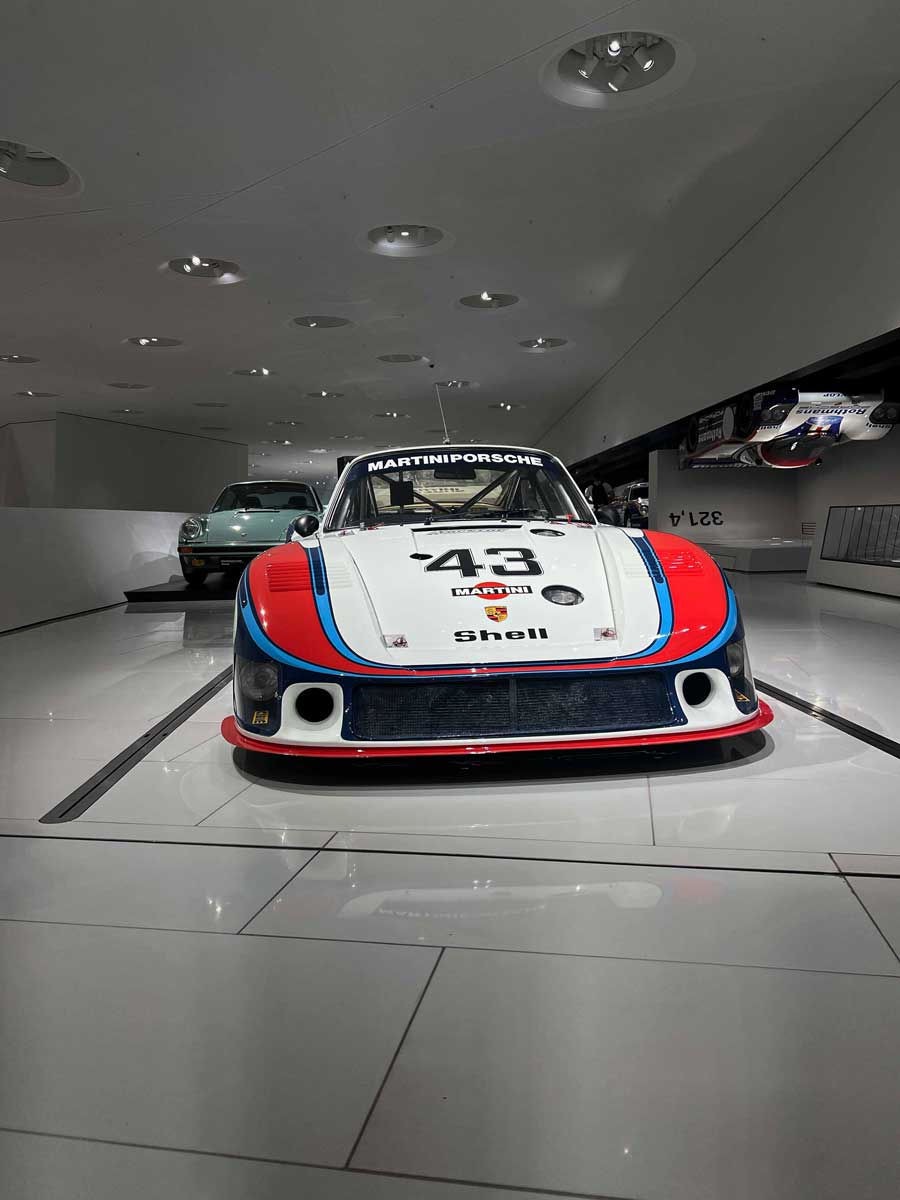
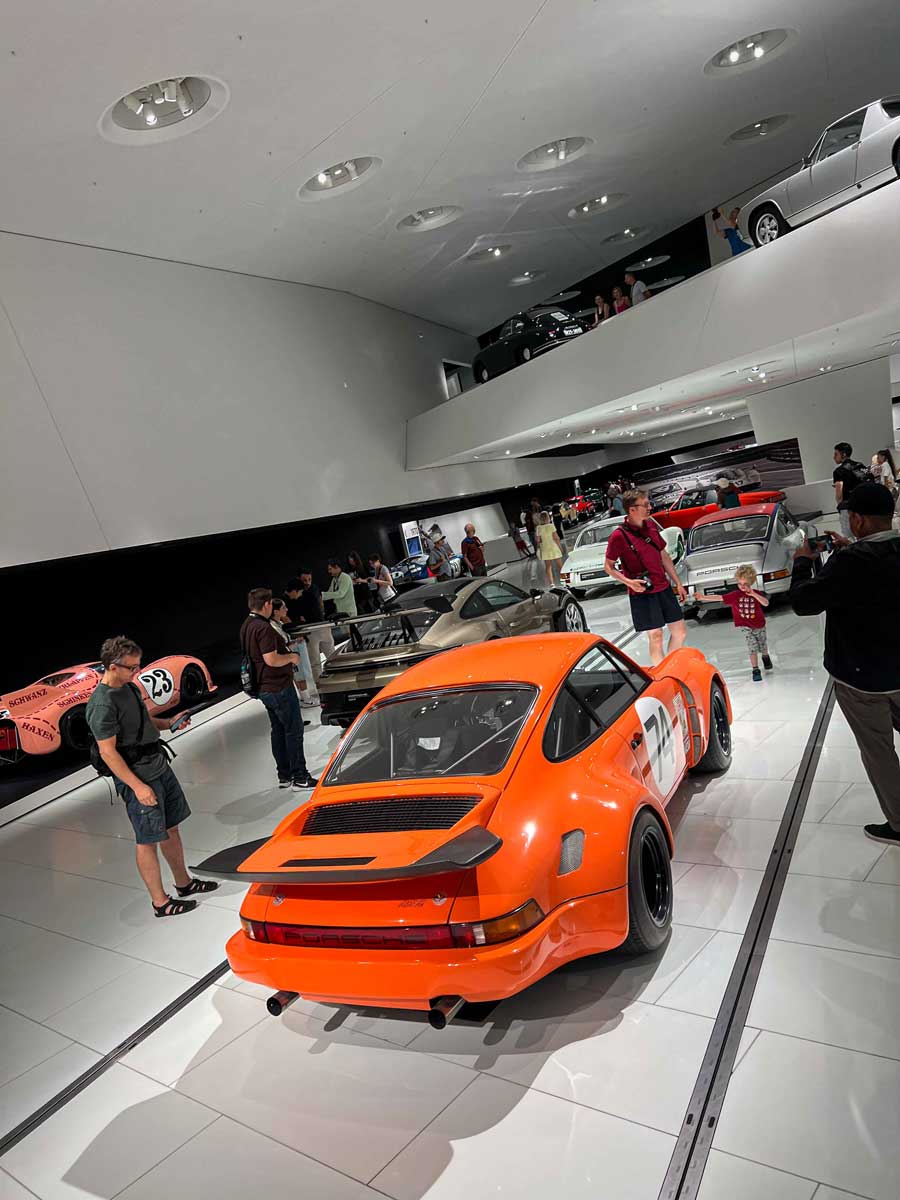
Five out of five wheels
After nearly five and a half hours, we suddenly find ourselves at the concept cars – ten meters above the starting point. Time has quietly slipped away as Albin and I have walked through the entire museum.
The atmosphere of the Porsche Museum is truly special. Within its impressive architecture, there is a calm, even on a busy day. Throughout the day we were able to immerse ourselves in every car, in the history, the technology, and the design, without feeling rushed or pressured to move aside for others.
We spent hours moving through Porsche’s different eras and got to experience a living cultural heritage, a place where innovation, passion, and design meet – right in the heart of where it all began.
Five out of five wheels – we will be back.
Related Articles


Related Articles

All rights reserved.
Fascinating Cars is a trademark of:
Edenberg Design AB
(559212-2617)
Näckrosvägen 19
Solna
Sweden
All content, images, and materials on this site are protected by copyright law.
© 2026 Fascinating Cars.

Travel with Fascinating Cars - get you inbox candy.


GET AROUND ON FASCINATING CARS:
ARTICLES
SHOP
ABOUT
CONTACT
All rights reserved.
Fascinating Cars is a trademark of:
Edenberg Design AB (559212 2617)
Näckrosvägen 19
Solna
Sweden
All content, images, and materials on this site are protected by copyright law.
© 2026 Fascinating Cars.