
AC 3000Me - Came to late for its own future
After six years of promotion - it became a flop
- by Peter Edenberg 2026-08-25
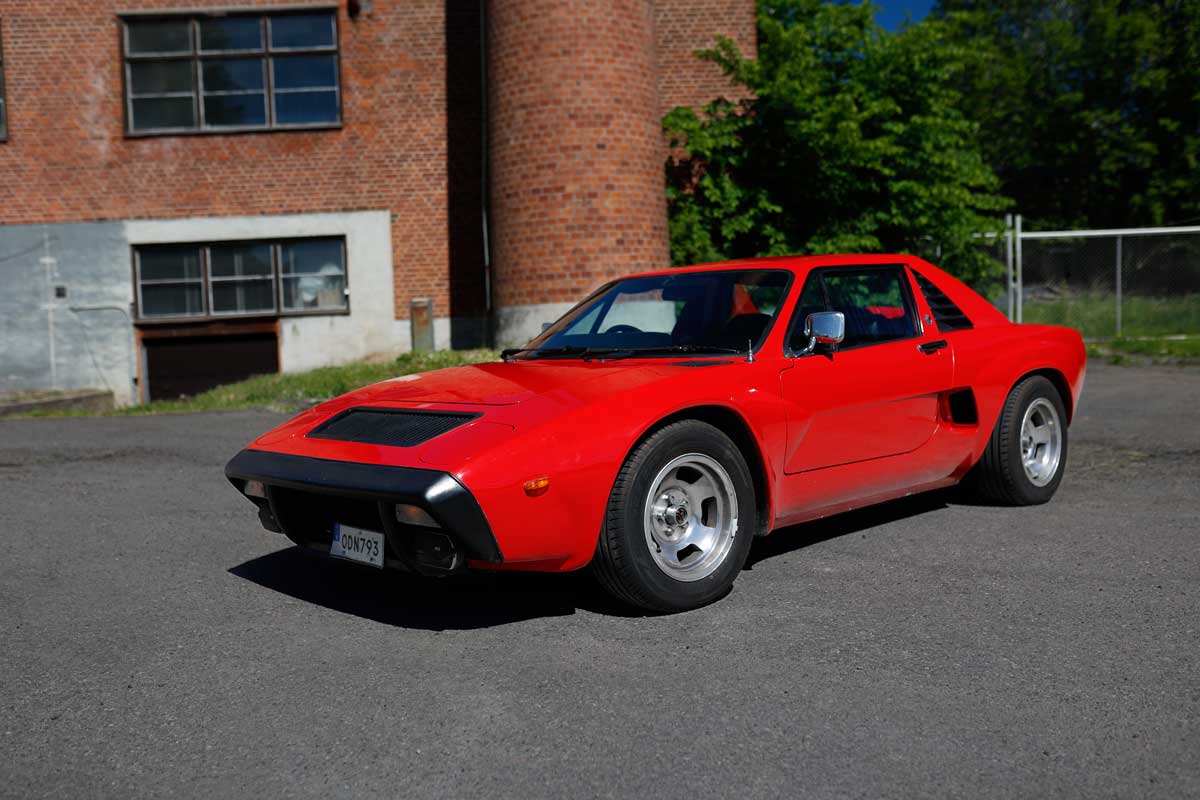
I’m sitting on the bus home after an evening in town. Casually scrolling through the latest ads on Blocket (Swedish Sell-page) when suddenly I spot a small, red, Ferrari-like car with bulging wheel arches, beefy wheels, and a roofline sitting somewhere around thigh/hip level.
I could not stop looking at it and in just a swoop I had sent the seller a message - being one of those people I don’t particularly like myself — the kind who has no intention of buying the car but still asks questions and even wants to meet up to talk about it and maybe photograph it.
Ingvar, the owner, an Anglophile since the 1960s, writes back saying that it could be fun.
When we meet up a couple of days later, I immediately hear the rumbling sound coming from the intersection, and suddenly the little low red car is heading straight towards me - if that cars rams you, your kneecaps would be gone in a milli second - I have to fold my self in 90 degrees to lean down to talk to Ingvar when he sits in the car.
We say hello and position the car for the photoshoot.
When it rolls away to the place we agree up on - the car sits hard towards the ground and the small square behind is telling you - do not mess with me.
The sound makes me smile, like all the rumbling cars does.
t’s fells sad that such a cool little car was never produced in more than around 110 examples.
Full-scale production stumbled during the 1970s, and this rising star of a car somehow struggled to cross the factory threshold by centimeters and roll out into the world - to become an every mans icon.
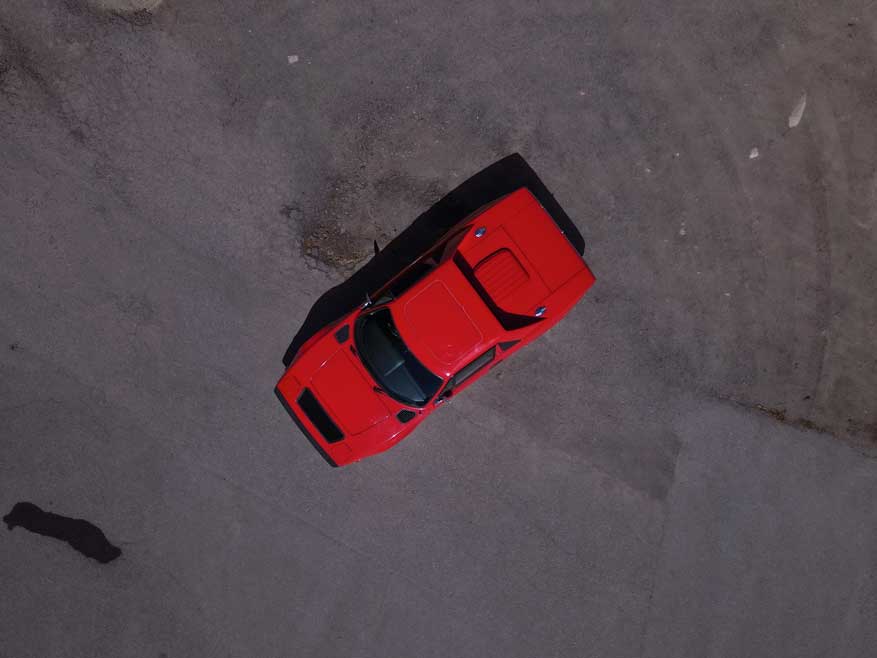
1973 did it became public
Some sports cars are defined by their victories, others by their sales figures or iconic status. Other cars are defined by what almost became something great — cars whose stories are more fascinating than podium finishes or production numbers would suggest. The AC 3000ME definitely belongs in the category of “what almost became something great.”
When AC first showed the car at the London Motor Show in 1973, it looked like the future. A quiet buzz went through the crowd, and it was going to become the sports car for the everyday man, with its engine mounted in the middle. The low, wedge-shaped design would compete with the big elephants: the Lamborghini Countach, Lotus Esprit, and Ferrari Boxer.
The only problem with the AC 3000ME was that the future had already passed by the time customers finally got their hands on it.
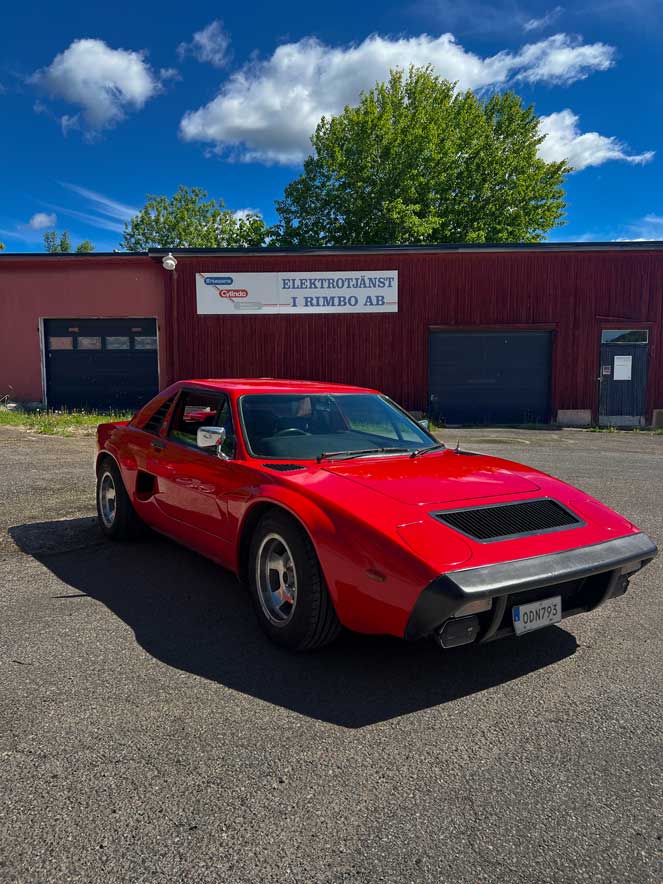
From show to street, it took six long years, which meant that customers more or less just yawned when the launch finally came — because year after year, AC had said exactly the same thing: now it’s coming!
The story of the AC 3000ME is not only the story of an unusual British sports car that many people have never heard of, but also part of the story of how small car manufacturers struggled for survival during the economic crises of the 1970s, tougher safety regulations, and an automotive industry that was rapidly becoming too expensive and too complicated for small-scale, hand-built sports car manufacturers.
It All Started with Diablo
Like so many exciting sports car projects, this story also begins far away from large factories and boardrooms with long tables where 25 board members are supposed to sit.
Behind the car were two engineers: Peter Bohanna and Robin Stables.
Bohanna had experience from Ford Advanced Vehicles and worked, among other things, on the GT40 project, while Stables had a background in racing and development at Lola Cars.
A wealthy British aristocrat named Piers Weld-Forrester wanted to own his own sports car company. He put the concept out to bid, and it would be Bohanna and Stables who won the contract, and with that came the money for the development of the project.
Together, in the late 1960s, they began sketching out a compact mid-engined sports car for road use that the average person could own and drive around in.
The car was designed to be powered by the then-new BMC 2.2-liter inline-six SOHC E-series engine, though development delays meant that a working engine wasn’t available until 1972. That made things a little tight for time, so instead the prototype used a transverse drivetrain from the Austin Maxi, which would make the car cheaper and more efficient to develop.
The result was the Bohanna-Stables Diablo prototype, which was presented at the Racing Car Show in London in 1972.
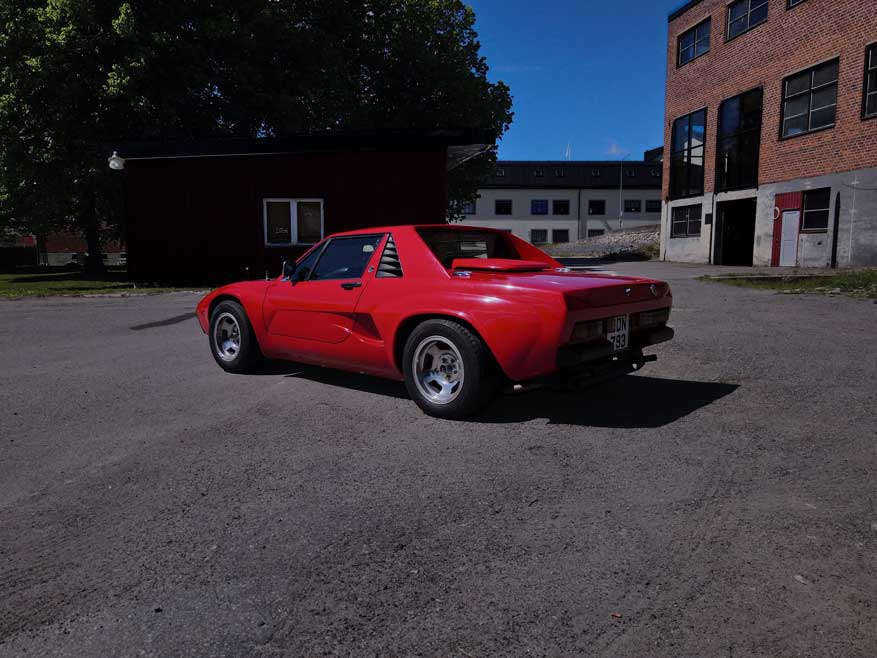
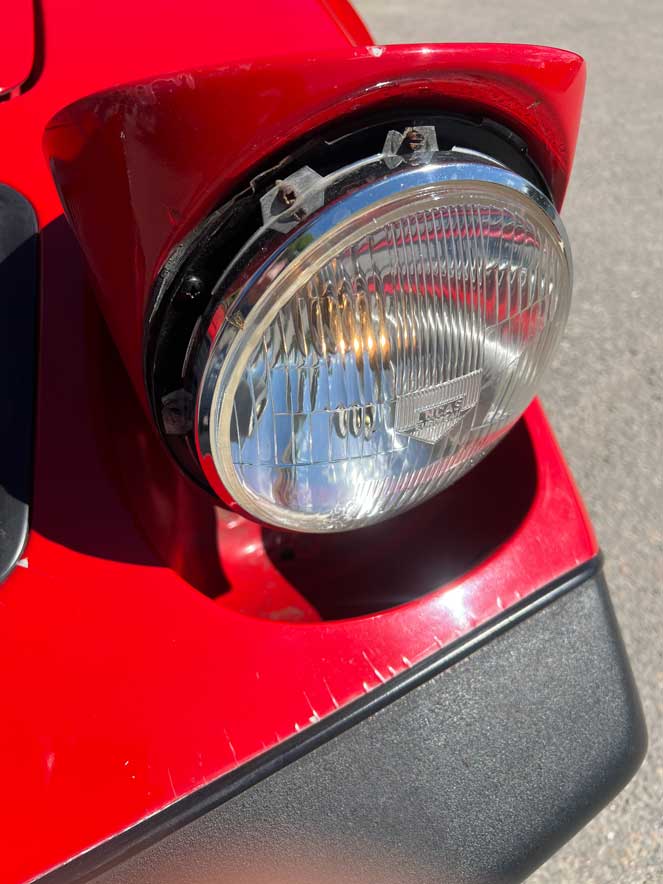
The Bohanna-Stables Diablo looked sensationally modern for its time. It had a sharp wedge shape, a low front end with pop-up headlights, and a mid-engine layout — a configuration that was still unusual among more affordable sports cars.
The original idea was actually quite ingenious: create something that looked like an exotic supercar but could be built using relatively simple components.
But during the development of the project, Weld-Forrester disappeared at some point, so for Bohanna and Stables to get the car into production, they needed to find an established automotive manufacturer willing to take on their design and put it into production.
Derek did sign the contract right away
When Diablo was shown it attracted a great deal of attention, and both TVR and AC showed interest in producing the car, instantly.
In the end, it was AC that drew the winning ticket when AC’s Keith Judd personally drove the car to the company’s headquarters in Thames Ditton and managed to convince AC owner Derek Hurlock that this could be the company’s future.
Derek Hurlock, who bought the rights to the car from Bohanna and Stables, also asked them to work alongside AC’s Alan Turner and Bill Wilson to undertake the development work needed to get the car into production.
At the time, it seemed like a logical decision, as AC had started to feel like an old-fashioned company by the beginning of the 1970s. Even though it had an enormous history behind it with the Ace, Cobra, and 428 Frua, the sports car market was changing rapidly, and the mid-engine layout was the new ideal.
The Diablo was intended to become the car that modernized AC and created larger production volumes.
Unfortunately, tiny margins and bureaucracy got in the way.
From Delight to delay
When AC showed its further-developed version of the Diablo at the London Motor Show in 1973, the car was presented as the AC 3000ME.
Production was planned to start in 1974, and interest was huge, incredibly huge. Orders from hyped-up customers were placed on the spot, and everyone was excited for production to begin.
The press loved it and celebrated its high-quality glass-fibre body and robust steel-perimeter chassis. The styling was lauded, as was its spacious interior and open-gate gear selector. It was a taste of Ferrari from the factory at Thames Ditton.
The price wasn’t confirmed, although AC management hinted that it would be only £3,000–£4,000 and that deliveries would begin in July 1974.
Unfortunately, AC almost immediately began to see the delays piling up, and perhaps the launch of the car had been pushed forward a little too quickly.
The first major problem was that the Diablo prototype was really more of an advanced concept car than a finished production model.
In order to be sold in larger volumes, it needed to be thoroughly re-engineered.
The original tubular steel frame would need to be replaced with a more rigid frame made from bent and welded steel panels. This would form a strong central chassis onto which the front and rear monocoques were bolted.
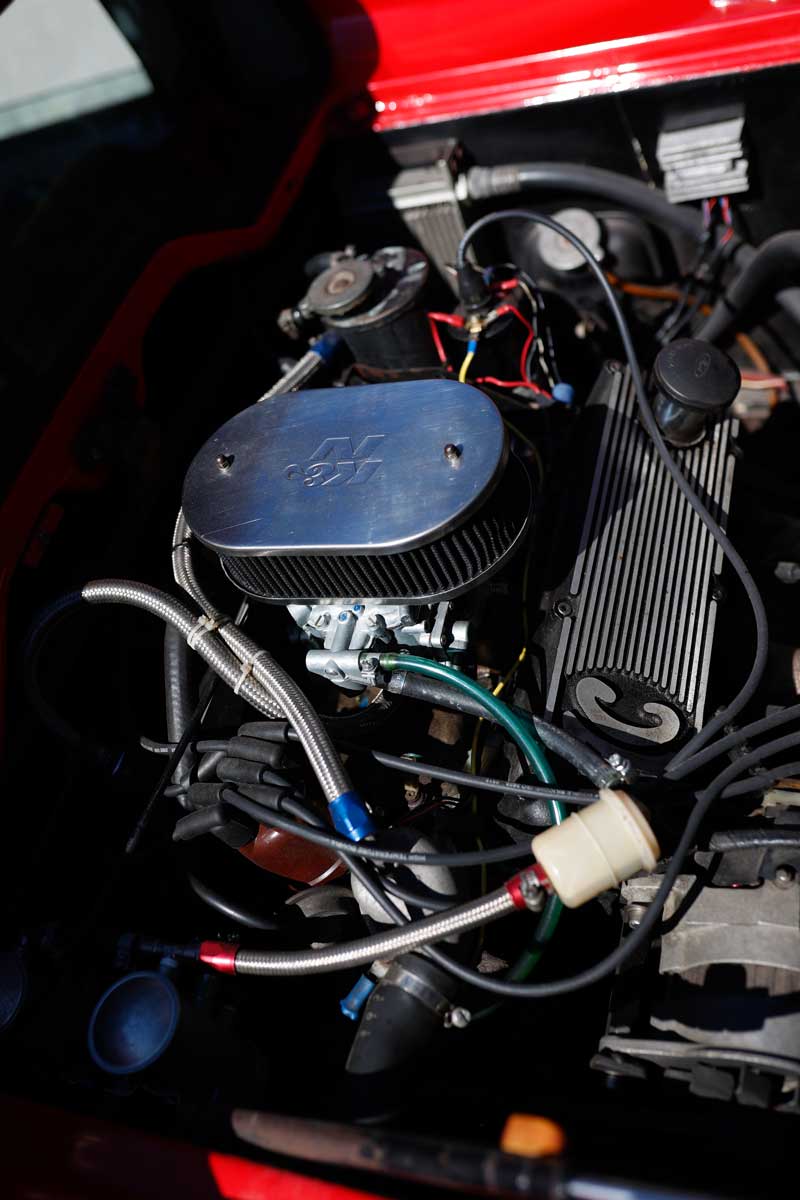
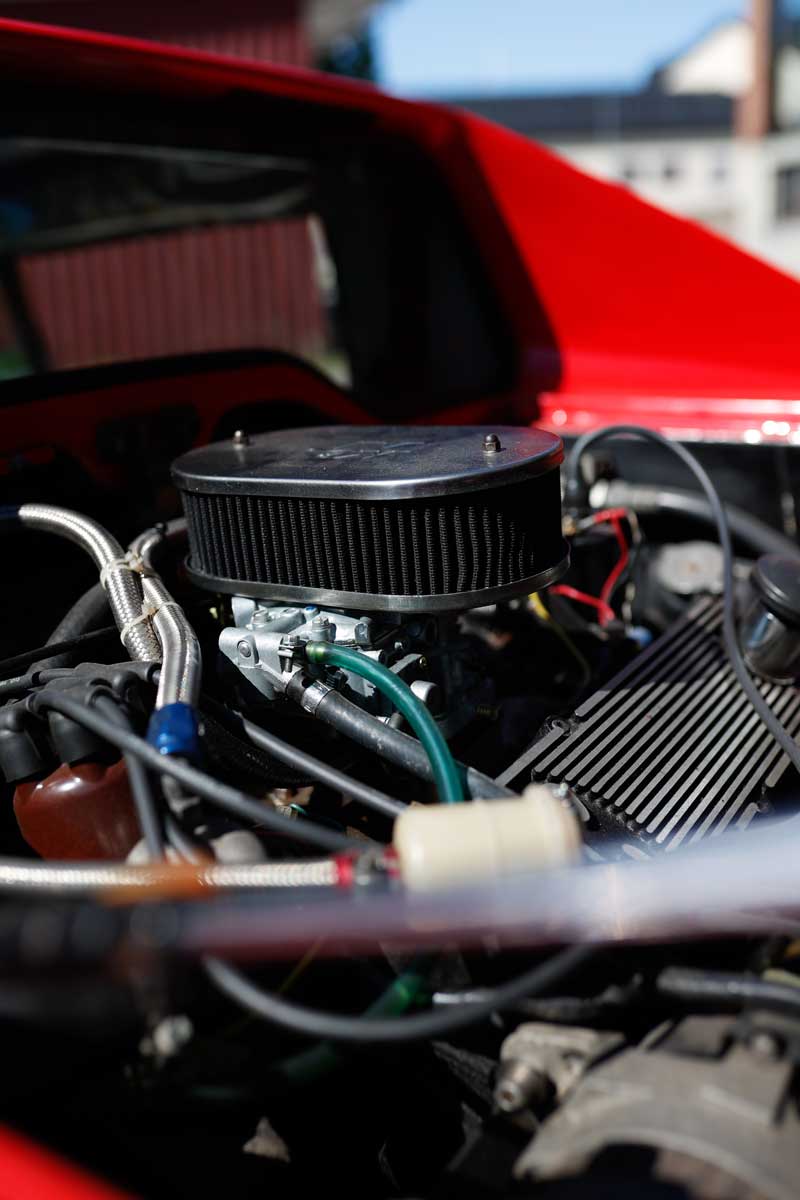
This included fitting the Ford Essex 3-litre V6 engine and a new AC/Hewland-designed gearbox.
The V6 gave the car the right character and significantly better performance, but it also created technical challenges as the engine was mounted transversely behind the passenger compartment.
Normally, small manufacturers tend to use ready-made components, but as mentioned, AC chose to develop and build its own five-speed gearbox using components from Hewland.
The V6 configuration made the car somewhat more exotic at the time, but designing and building your own gearbox is complicated, financially demanding, and above all, extremely time-consuming.
AC was standing on the starting line, ready for the launch and about to fire its future icon out onto the market ...
... but the world surrounding the project changed radically, at exactly the wrong time ...
It wasn’t only the oil and economic crises of the 1970s that hit car manufacturers hard, especially small sports car manufacturers with gas consuming V6's, but more or less society as a whole.
Financing became more difficult, customers held onto their money more tightly, and production costs increased dramatically during the global “crisis.”
And to top the mountain of setbacks during this period, the new “Type Approval regulations” were introduced in the UK — requiring car manufacturers to build cars according to a more standardized, modern approach to safety.
This is where the real delays began.
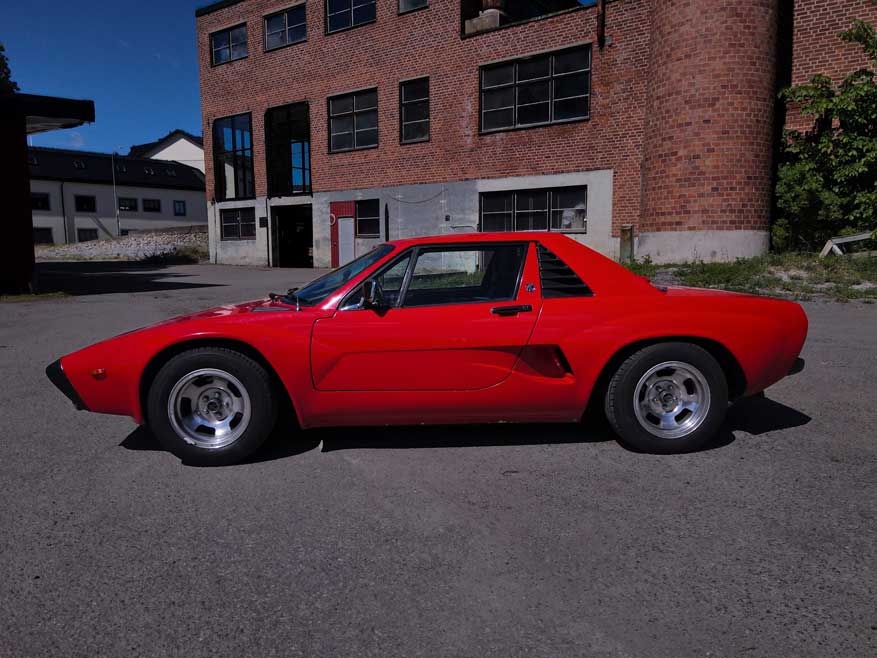
the crash test that almost killed the car
For large manufacturers, the “Type Approval regulations” were expensive but manageable.
For a small manufacturer like AC, they could be existential.
During the mandatory 30 mph crash test, the prototype failed just on the edge of being approved. The steering column moved 1.5 cm too far into the passenger compartment for the car to pass.
Yep — 1.5 cm — that’s less than the length of an average person’s little fingernail.
Because of that, the chassis had to be extensively redesigned for the car to be approved.
Since AC was a small manufacturer, they didn’t have the resources to quickly turn production around.
They were forced to redesign the entire front of the car, modify the chassi, and reinforce the underbody.
AC had neither enormous resources nor large engineering teams.
Rebuilding the car meant years of additional development work and — of course — enormous costs.
All of this was happening while the competition kept moving forward.
Lotus developed the Esprit. Porsche improved the 911. Ferrari and Lamborghini continued to define the exotic mid-engine world.
Meanwhile, AC was almost standing still, and as the icing on the cake, while AC was struggling to get the 3000ME approved, the British government announced in 1976 that it would stop purchasing the three-wheeled vehicles for disabled people (invalid carriages) that AC built for the state.
This had been AC’s stable cash cow that was supposed to finance the sports car, and suddenly the company was left without that income.
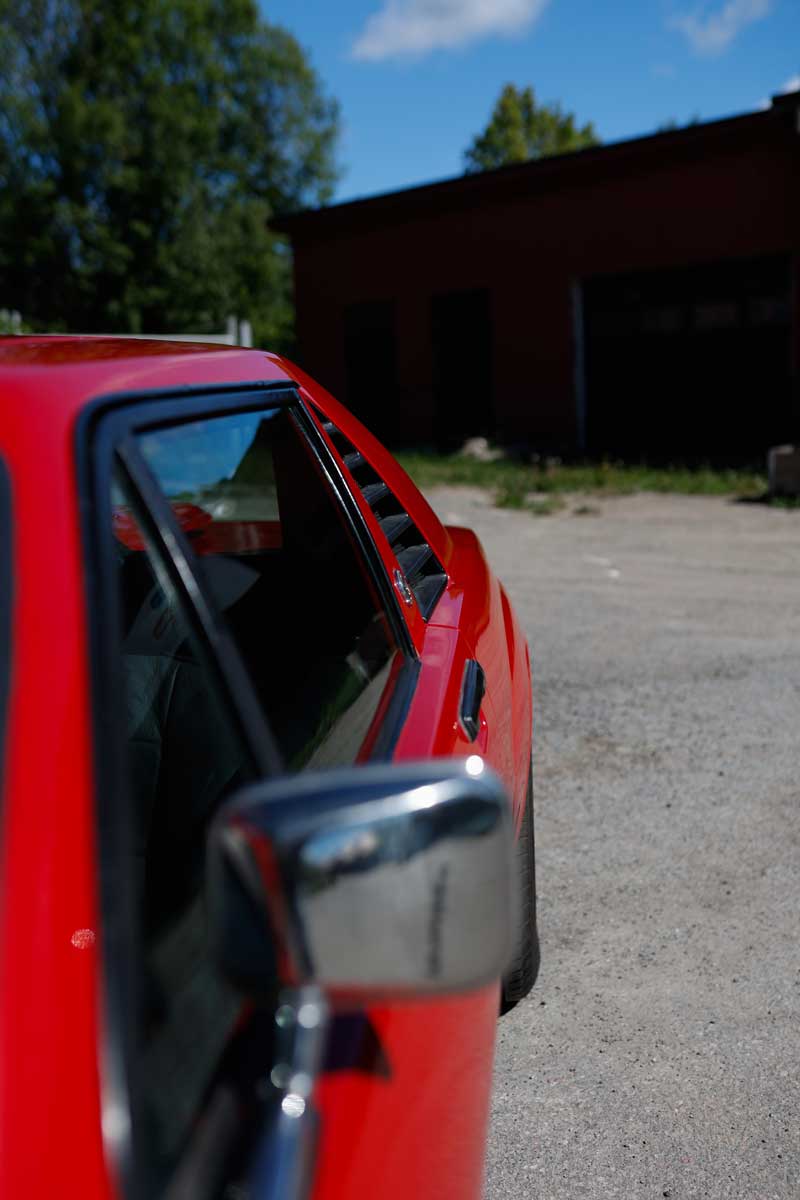
a car from 1973 that was launched in 1979
After the car had been rebuilt, the finished solution was, ironically, technically impressive.
The chassis was redesigned with significantly better structural strength, and the car subsequently passed the tests with very good results.
Contemporary reports noted that AC performed better than some considerably larger manufacturers, such as Vauxhall, which failed several of its attempts.
But the victory came at a high price.
With every year that passed, the car became more expensive and less attractive — two factors that rarely work well together.
When the first production cars were finally delivered in 1979, the market looked completely different compared with when the car was first shown.
In 1973, the AC 3000ME had looked radical with its pointed nose, bulging wheel arches, and compact body.
In 1979, it looked interesting, which it still does today — but by then, the “revolution” was gone and the shine of the wow factor had faded.
At the first show in 1973, there are rumors that around 200 people had shown their interest and put down a deposit, and at that point the plan was still for AC to offer a sports car for the everyday man at a relatively “affordable” price.
But the delays and redesigns pushed the final price up to a level similar to its bigger cousin, the Lotus Esprit — while direct competitors such as Fiat, for example, offered the X1/9 at half the price of the 3000ME.
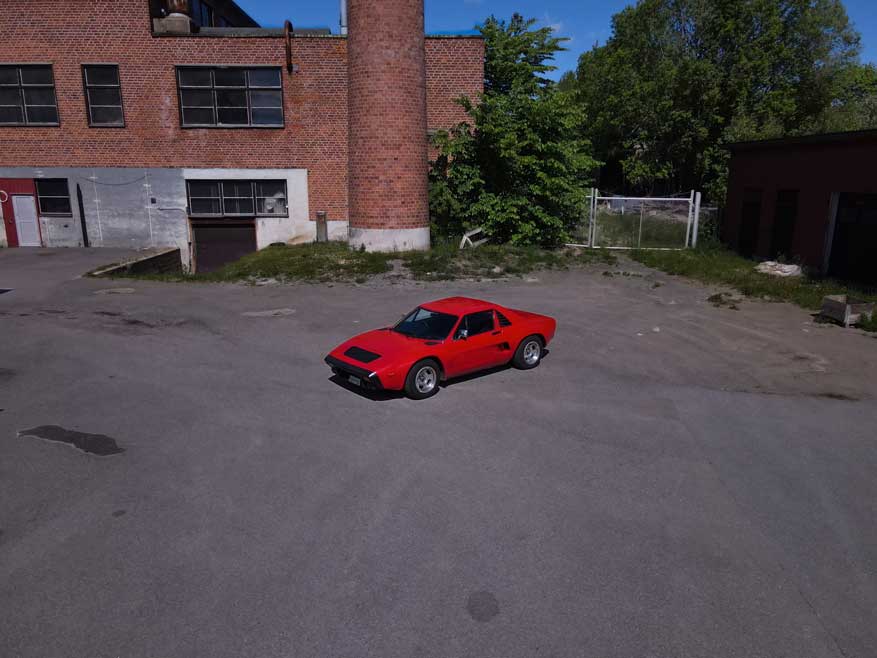
How good was the car, really?
Almost everyone who drove the car agreed that the chassis was impressive. The mid-engine layout gave it excellent balance, with 40% of the weight at the front and 60% at the rear, but the car received criticism for its handling and for a gearbox that perhaps wasn’t all that enjoyable to use.
The Ford Essex V6 may not have been the world’s most exotic engine, but it delivered strong torque and still suited the car’s GT character, and many loved the car’s Ferrari-like sound under acceleration.
With around 138 horsepower, the performance was perfectly respectable for the time, even if the car was never truly fast.
Personally, I can say that the car feels like a go-kart when sitting behind the wheel.
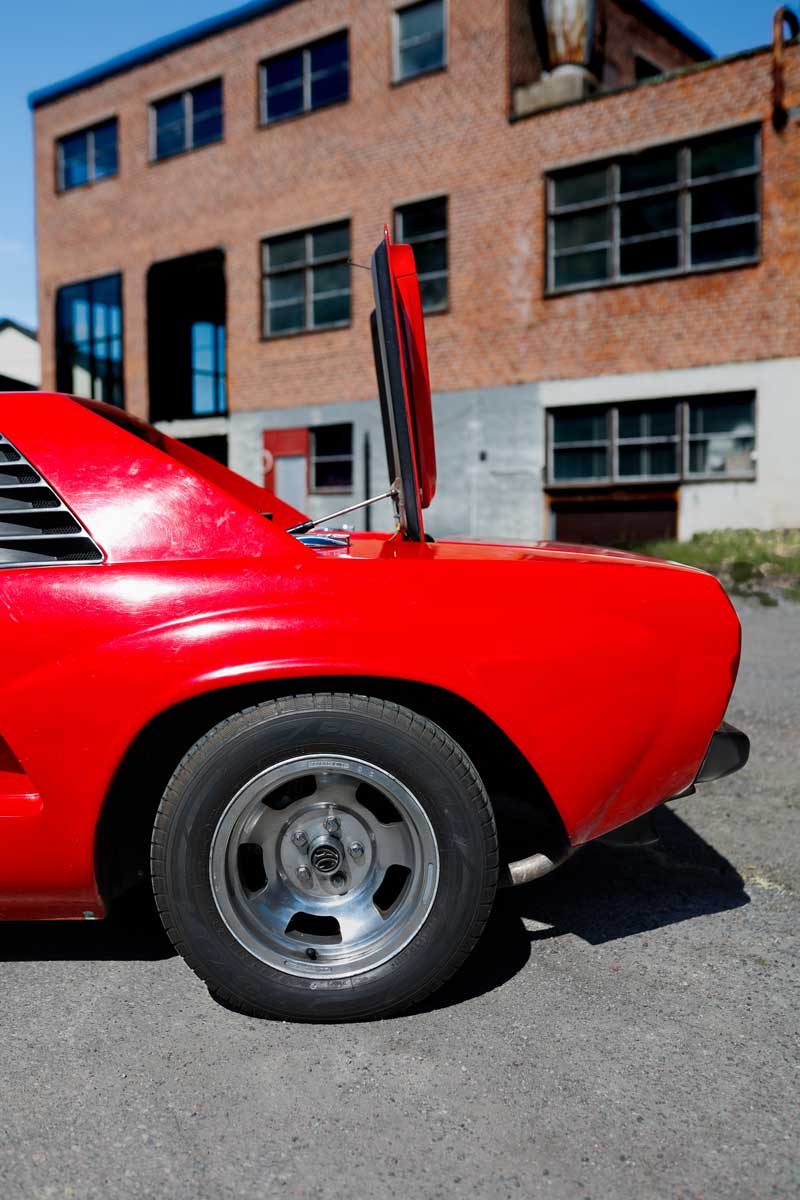
When I climbed in backwards, I literally ended up sitting 20 cm from the ground. I looked up at the owner, Ingvar, who suddenly felt like a giant standing next to the car.
It’s always a little nerve-racking setting off in a right-hand-drive car in a country with right-hand traffic, but the car felt stable and sat beautifully planted on the road.
The car’s minimal size, short nose, and tight waist maid me almost see everywhere, and the feeling of control over the car was 100% — no blind spots like you sometimes get in the sports car world.
An SUV overtook me on the first straight as I was having a bit of trouble finding third gear — and it felt like all I could see was the hubcap of the car as it passed me, that’s how low I was sitting.
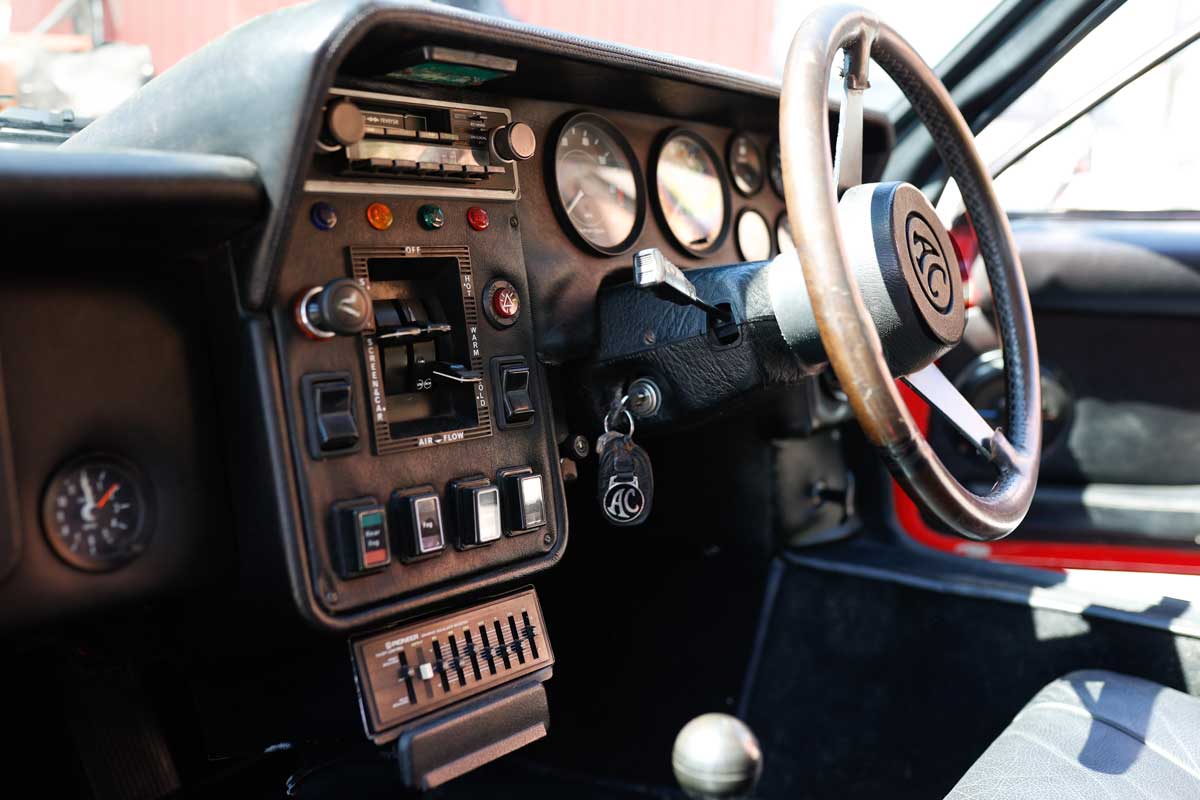
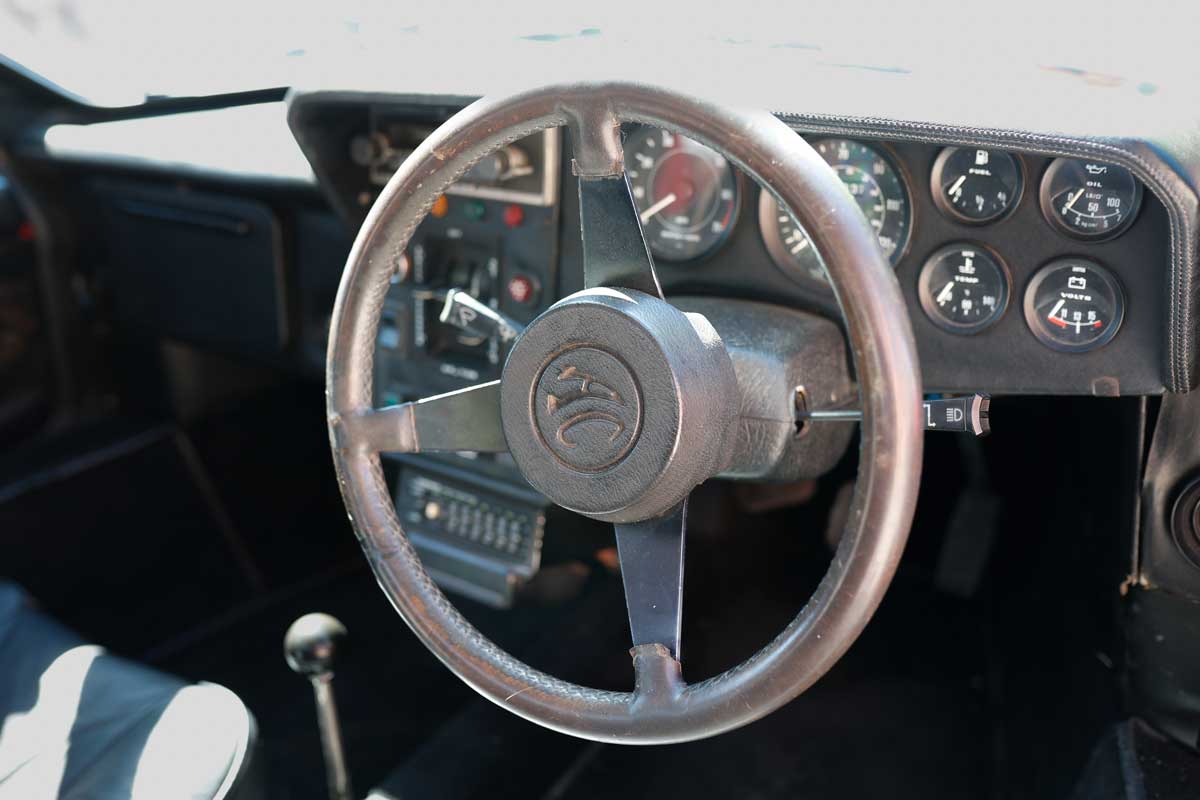
Everything inside the cabin was close at hand to adjust, but the gearbox wasn’t the easiest to find your way around.
I had to feel and search for the right gear, and once I finally understood it, I realized that this isn’t a gearbox where the gears sit close together — it felt more like an old Ford Mondeo gearbox, where first gear feels almost 20 cm away from both second and third.
Inside the cabin, everything is calm and quiet, and even when I push the engine, very little of it can be heard.
I find the switches for the electric windows and lower them to get a sense of how the car sounds from the outside, and it doesn’t disappoint.
A beautiful engine roar sweeps across the fields as I downshift and push the accelerator towards the carpet.
Its´s not blistering fast - but the move makes me smile.
the slow collapse
Once the press started publishing lukewarm reviews, it became difficult for AC to recover.
AC had hoped to sell around 250 cars per year. The reality was a negative knockout.
Production remained extremely low, and many cars were left sitting unsold.
Orders that had been placed several years earlier had been cancelled long before customers could actually receive their cars.
In the end, only around 70–80 examples were built at the Thames Ditton factory, depending on how prototypes and pre-production cars are counted.
At the same time, Derek Hurlock’s health deteriorated, and the company began approaching the end of an era.
The 3000ME effectively became the last completely new AC model from the classic Thames Ditton company.
But the story didn’t end there.
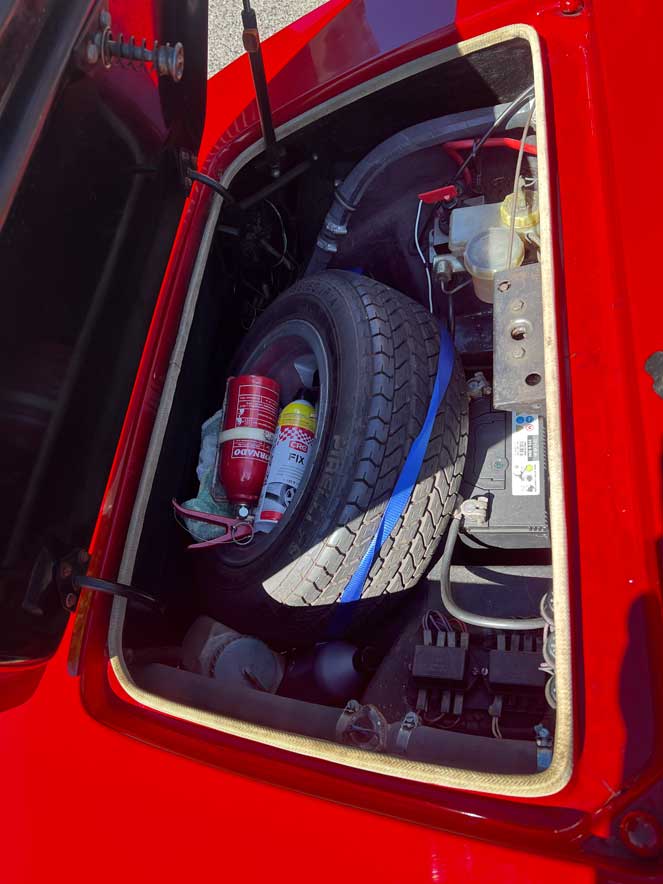
Scottish continuation
In 1984, production moved to Scotland through the newly formed AC (Scotland) plc under the leadership of entrepreneur David McDonald. AC (Scotland) plc had big ambitions and the idea was to modernize the car and build significantly more examples.
The factory was located in Hillington near Glasgow, where there was a good supply of workers following closures within British industry. There were even hopes of government support, and optimistic talk of dramatically increasing production.
But the problems followed the car north.
Costs were still high and sales remained low. Only around 30 additional cars were built in Scotland before this company also collapsed in 1985.
In Scotland, there was a prototype tested with an Alfa Romeo Busso V6 drivetrain, and later the Ecosse Signature was also created — a redesigned version styled by Peter Stevens and powered by a turbocharged Fiat engine.
But none of this ever reached production.
The AC 3000ME was simply a car that never managed to escape its own delays.
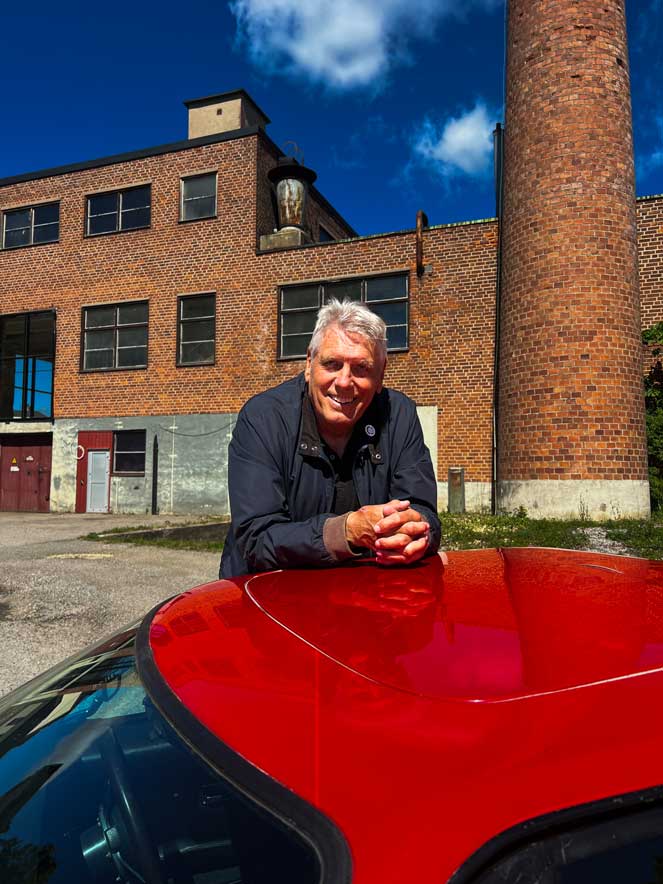
The owner Ingvar
a fascinating "What if?"
It’s almost impossible not to wonder what could have happened if the car had actually managed to squeeze through that 1.5 cm eye of the needle and been launched in 1974 as planned.
At that point, it would have been a sensationally modern and futuristic mid-engined sports car, with a design that probably wouldn’t just have cut through the air on the motorway, but also divided buyers over what they should choose — Lotus, Porsche, TVR, or AC.
If you allow yourself to dream a little, the 3000ME could have helped AC establish itself more firmly in the market and continue its journey from the Ace, through the Cobra, to the 3000ME — before taking the next step into the future with the legendary reputation AC had built through three successful cars.
Instead, the 3000ME became a time capsule from the early 1970s that still managed to hold its own into the 1980s — but stumbled at the finish line because of bureaucracy and its own development.
What I find so likeable about the car is that it represents a period when small British companies still dared to think big.
When two engineers could build a mid-engined prototype and actually convince an established manufacturer to put the car into production.
When enthusiasm could still outweigh spreadsheets and large corporations’ long-term plans for the future, along with the obsession of having to fit in.
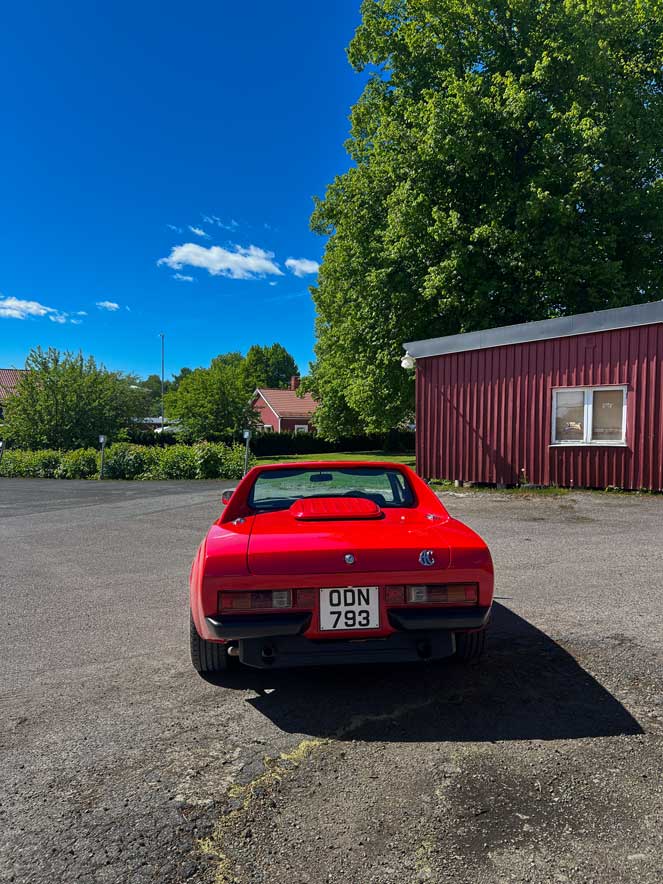
today - one of the rarest british sports cars
That is exactly why the AC 3000ME deserves cult status today.
It is extremely rare and a fascinating document of the British car industry’s struggles during the 1970s and 1980s.
Based on the cars I’ve driven throughout my life, I would say that the reputation for poor handling doesn’t really seem fair. For a car from the late 1970s, I think it handles corners well, sits nicely on the road, and has that classic sports car design.
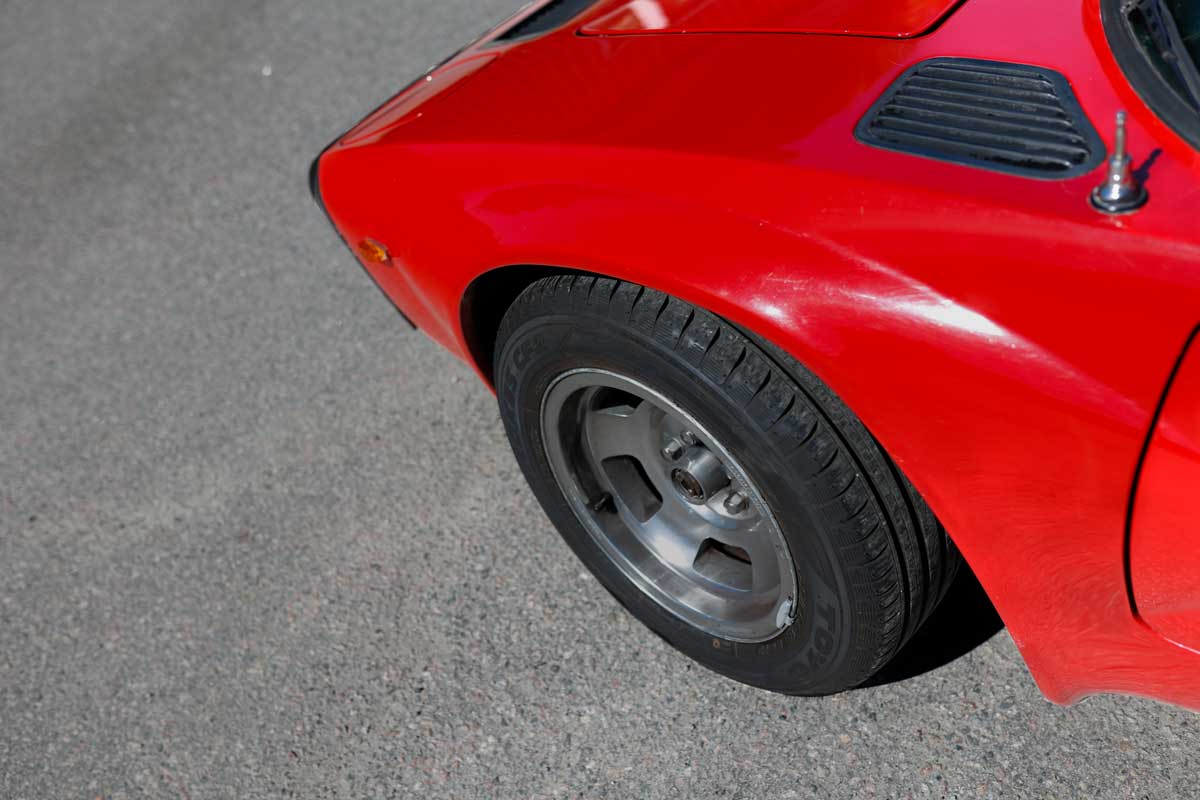
The junior-Ferrari from Great Britain, bold, unusual, and completely uncompromising in its ambition, with its wedge-shaped nose, pop-up headlights, bulging wheel arches, period-correct wheels, and low stance, is something that will always make my heart beat a little faster.
Related Articles


Related Articles


All rights reserved.
Fascinating Cars is a trademark of:
Edenberg Design AB
(559212-2617)
Näckrosvägen 19
Solna
Sweden
All content, images, and materials on this site are protected by copyright law.
© 2026 Fascinating Cars.

Travel with Fascinating Cars - get you inbox candy.


GET AROUND ON FASCINATING CARS:
ARTICLES
SHOP
ABOUT
CONTACT
All rights reserved.
Fascinating Cars is a trademark of:
Edenberg Design AB (559212 2617)
Näckrosvägen 19
Solna
Sweden
All content, images, and materials on this site are protected by copyright law.
© 2026 Fascinating Cars.